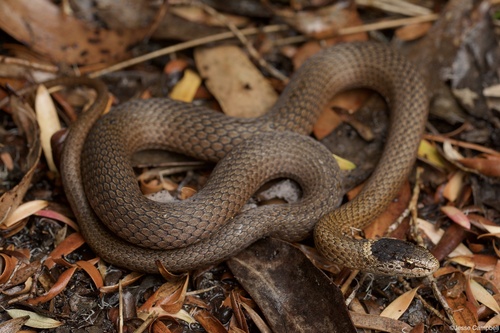
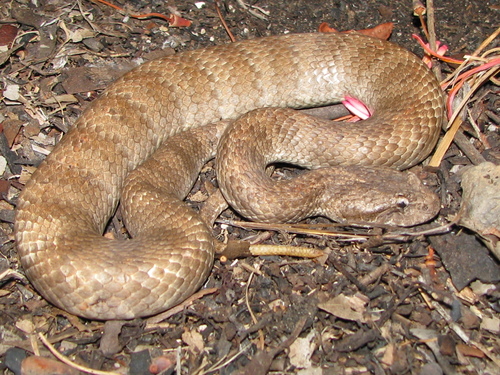
About Aspidelaps lubricus (Laurenti, 1768)
Common Name and Classification
Aspidelaps lubricus, commonly called the Cape coral snake, is a relatively small, slender-bodied elapid (a member of the family of venomous snakes typically found in tropical and sub-tropical regions worldwide).
Adult Body Length
Adults reach a total length (including the tail) of 1.6–2.0 ft (49–61 cm), and some individuals can grow up to 2.5 ft (76 cm).
Rostral Scale Feature
This species has an enlarged rostral scale, the scale located at the front of the snout, above the mouth opening.
Head Proportion
Its head is very short relative to its body, making it easy to distinguish from the neck and the rest of the body.
Base Body Color
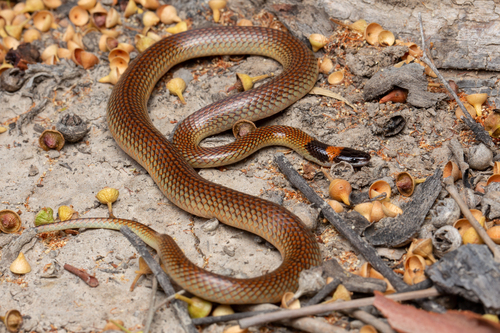
Its body color ranges from red-orange to yellow, a color pattern that is slightly similar to that seen on some corn snakes.
Black Ring Pattern
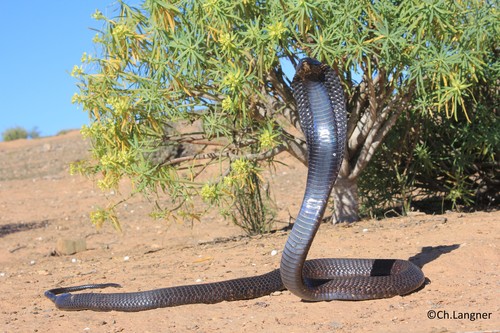
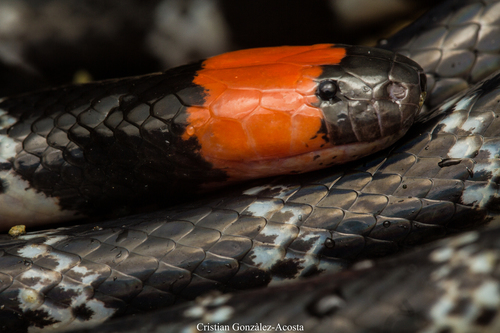
The Cape coral snake has thick black rings that run along the full length of its body; these rings fully encircle the body, but do not fully encircle the tail.
Black Ring Count
There are 20 to 47 total black rings along the snake's body.
Hood Feature
Like many other cobras, this species has a narrow hood just below its head.
Geographic Range
Aspidelaps lubricus is found in the Karoo region, the former Cape Province of South Africa, and ranges northward into Namibia.
General Habitat Type
It mostly lives in very arid regions, including deserts and rocky or sandy ecosystems.
Karoo Habitat Characteristics
The Karoo areas it inhabits have low, unpredictable rainfall and little vegetation, which is mostly made up of shrubs and scrubs.
Reproduction Data Source
Little is known about wild populations of Aspidelaps lubricus, but data on its reproduction is available from captive individuals.
Captive Breeding Ease
In captivity, this species is exceptionally easy to breed.
Breeding Period Trigger
Breeding occurs in winter, triggered by cooling winter temperatures.
Pre-breeding Feeding Behavior
Before breeding, the snakes increase their food intake to get the extra energy required for reproduction.
Egg Laying Timeline
If mating is successful during this period, eggs are usually laid in May or June.
Egg Incubation Period
Eggs hatch after around 65 days.
Clutch Characteristics
Clutches contain 3 to 11 eggs on average, and a single breeding period can produce multiple clutches.
Hatchling Length
Hatchlings measure around 17–18 cm (6.7–7.1 inches) in total length.