About Ardeola idae (Hartlaub, 1860)
Size
Malagasy pond herons (Ardeola idae) reach 45–50 cm (18–20 in) in height and weigh 250–350 g (9–12 oz). Males and females have little weight difference, as their skeletal and body structure are very similar.
Plumage Variation Factors
Feather, eye, and bill color vary by life stage (chick, juvenile, adult) and reproductive status. Adult appearance differs between non-breeding and breeding plumage.
Non-breeding Plumage Coloration
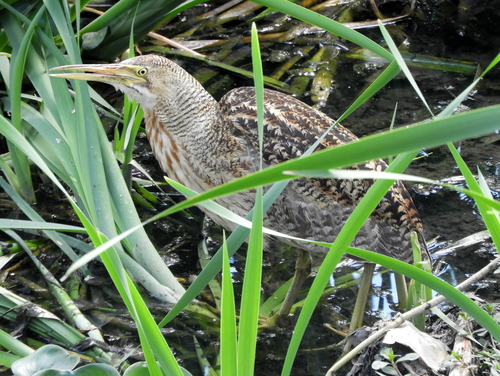
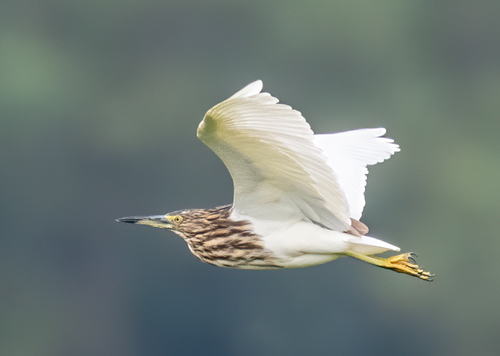
During the non-breeding season, the crown and posterior have a mixed buff and black coloration, with brown being the most prominent color across the rest of the body. The bill is mostly green with a black tip, and the iris is yellow.
Non-breeding Plumage Structure
The flight feathers, which are clearly visible in flight, are mostly white. Feathers on the lower mantle and upper scapulars are loosely structured and elongated, while lower foreneck feathers have fine elongated tips that cover the upper breast.
Breeding Plumage
The main appearance difference in breeding plumage is that the entire body is mostly snow white, and the bill is deep azure blue. After the breeding season ends, an intermediate plumage develops on the back, and dense plumes grow on areas including the neck and breast.
Juvenile Plumage
Before reaching adulthood, Malagasy pond herons have a juvenile plumage that they develop just before leaving the nest, and which lasts for several weeks. Juveniles differ from adults in having a dull orange bill and pale green eyes.
Chick Appearance
Chicks are distinguished by their thick, buff-yellow down.
Breeding Range
Malagasy pond herons breed in Madagascar, Réunion, and the Seychelles.
Non-breeding Range
They migrate to eastern mainland Africa during the non-breeding season, where they occur in Kenya, Tanzania, Uganda, Rwanda, Burundi, DR Congo, Malawi, Zambia, Zimbabwe, and Mozambique.
Madagascar Distribution Sites
In Madagascar, they are commonly observed at Lake Alarobia and Tsimbazaza Park (both near Antananarivo), in wetlands around Ampijoroa, and at Berenty. Their total estimated area of occurrence is 553,000 km2 (214,000 sq mi).
Madagascan Habitats
They occupy a wide range of Madagascan habitats, including small grassy marshes, lakes, ponds, streams, and rice fields.
Aldabra Region Habitats
Populations in the Aldabra region are most commonly found in mangroves, inland pools, and lagoon shores.
Elevation Range
They can be found from sea level up to 1,800 metres (6,000 ft) in elevation.