About Apalone mutica (Lesueur, 1827)
Apalone mutica, commonly called the smooth softshell turtle, has an anapsid skull, a skull structure that originated among the earliest groups of prehistoric reptiles and is still retained by modern turtles. An anapsid skull is primarily defined by the lack of openings behind the eye sockets, which distinguishes it from synapsid and therapsid skull types.
Carapace Traits
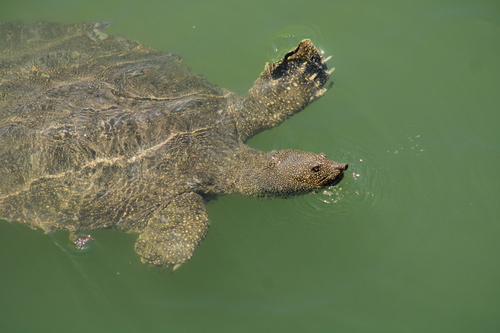
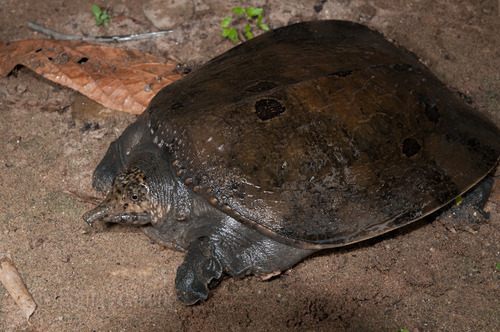
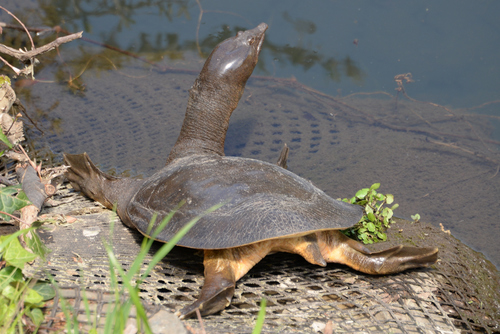
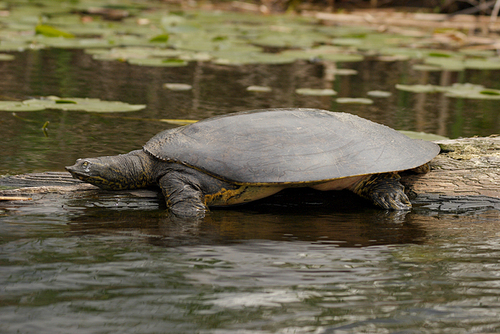
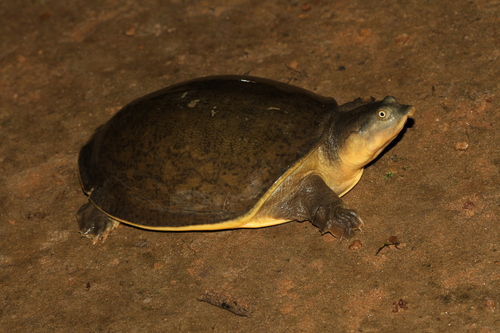
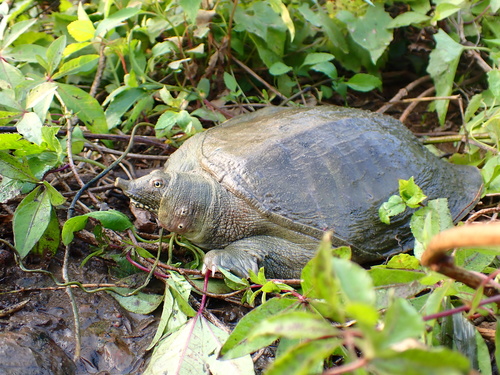
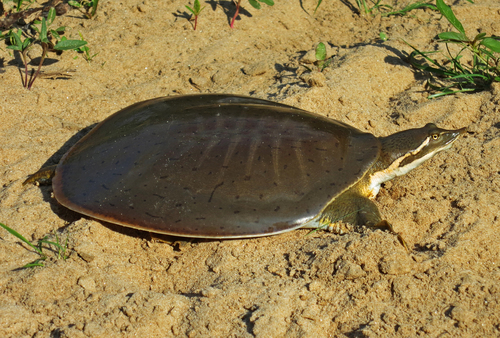
Like all softshell turtles, the smooth softshell turtle has a smooth, relatively soft, flexible, leather-like carapace (upper shell) covered in skin, unlike the hard bony scutes that cover the shells of most other turtle species.
Plastron Features
Its plastron (lower shell) is light white or gray, with no prominent markings other than occasional spots. Because it lacks the hard shell typical of most other aquatic turtles, the internal anatomy of the smooth softshell turtle—including its bones and some organs—may be visible through the plastron.
Snout Characteristics
It has a tubular snout with round nostrils, a feature often compared to a pig's nose.
Native Range
Apalone mutica is native to the United States, where it is distributed across central and south-central states. Its natural geographic range extends from western Pennsylvania in the east to New Mexico in the west, reaches as far north as the Dakotas, and extends south to the westernmost Florida Panhandle, where it is replaced by the Florida softshell turtle (Apalone ferox).
Specific River Habitats
Smooth softshell turtles are common in the Mississippi River system, from its delta in Louisiana north to North Dakota, and also live in the Texas portion of the Colorado River, as well as the Brazos, Sabine, Pearl, Alabama, and Conecuh (Escambia) river systems.
Moving Water Preference
Both subspecies of Apalone mutica most often inhabit medium to large, unpolluted freshwater waterways with moderate to fast currents. Even in fast-flowing rivers, they swim directly to the sandy bottom and bury themselves, leaving only their nose or eyes exposed while they wait to ambush passing fish or amphibians.
Still Water Habitation
They can also be found in standing or still bodies of water including lakes, vernal pools, swamps, and marshes, and may occur in some canals, reservoirs, and man-made ponds.
Substrate and Basking Needs
They prefer water with bottoms made of fine sand, silt, or mud, and avoid areas with heavy boulders, gravel, or dense aquatic vegetation. Sandbanks are also required, as the turtles sunbathe on them to warm themselves.
Breeding Season
Breeding for the smooth softshell turtle takes place from April to June. These turtles have a polygynous mating system, meaning individual males mate with multiple females.
Mating Behavior
Males actively search for females by approaching other adults. If the approached individual is a male or a non-receptive female, aggression may occur. If the approached individual is a receptive female, she remains passive to the male's advances. Copulation usually happens in deep pools, with the male mounting the female.
Nesting Period
The nesting period typically runs from May to July, and females lay eggs only once per year. During nesting, adult female A. mutica lay clutches of 3 to 28 eggs, in sandy areas no more than 100 meters (330 feet) from water.
Hatching and Maturity
The eggs generally hatch 8 to 12 weeks after laying, with most hatching occurring between August and September. Newly hatched smooth softshell turtles average 5.4 grams (0.19 ounces) in weight, with a carapace length of 4 centimeters (1.6 inches). Males become sexually mature during their fourth year of life, while females become sexually mature during their ninth year.
Prenatal Care
Female smooth softshell turtles provide prenatal care to their offspring. They produce high levels of non-polar lipids that supply energy to growing embryos, enough to sustain the embryos through development.
Lipid Benefits
The high lipid concentration also benefits hatchlings after birth, acting as a food source until the young turtles are mature enough to start feeding on their own. This form of care is a type of parental investment in embryogenesis. No physical parental care is provided to hatchlings after they emerge from eggs.