About Anguis fragilis Linnaeus, 1758
Scientific and Common Names
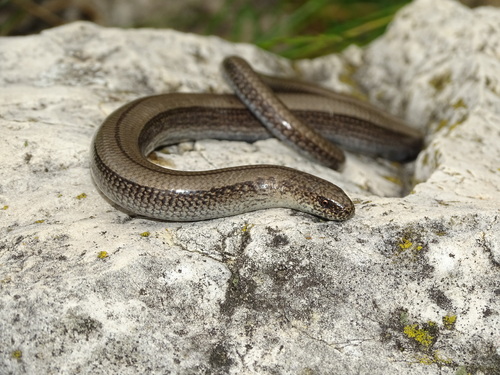
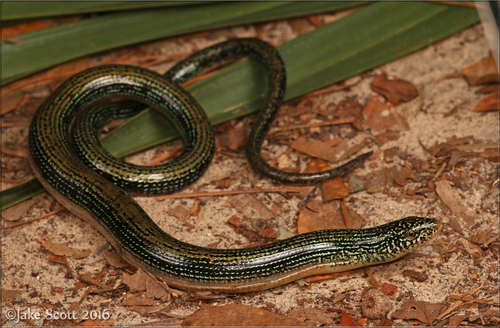
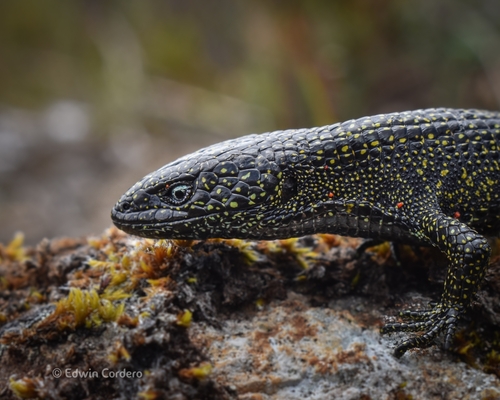
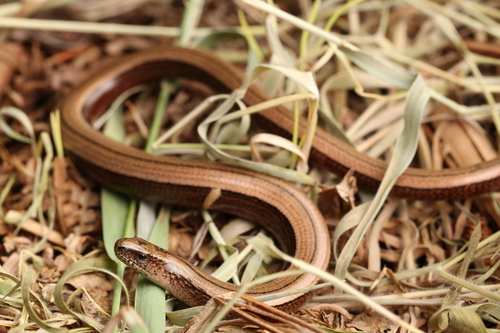
Anguis fragilis Linnaeus, 1758, commonly known as the common slow worm, is a species of legless lizard native to Europe. It also goes by the common names deaf adder, blindworm, and regionally long-cripple, steelworm, and hazelworm.
Blindworm Etymology
The "blind" in the name blindworm refers to this lizard's small eyes, which are similar to the eyes of blindsnakes, even though the eyes of the slow worm are fully functional. While the species Anguis fragilis is often called simply "slow worm", all species in the species complex that makes up the genus Anguis are also referred to as slow worms.
General Behavior and Body Covering
Common slow worms are semifossorial burrowing lizards that spend most of their time hiding under objects. Their skin is smooth, with scales that do not overlap.
Tail Autotomy
Like many other lizards, common slow worms can autotomize — they are able to shed their tails to escape predators. Though the tail regrows after shedding, it never reaches its original length.
UK Habitat and Garden Presence
In the United Kingdom, slow worms are commonly found in gardens and allotments. People can encourage slow worms to enter these spaces to help remove pest insects by placing black plastic sheeting or providing shelter such as log piles, corrugated iron sheets, or tiles.
Shelter Usage
One or more slow worms can often be found underneath these heat-collecting objects on warm days. The "slow" in the modern name "slow worm" does not reflect the original meaning of the term.
Slow Worm Name Etymology
In Middle English, the name was written as slowurm, which comes from the Old English slāwyrm: slā- means earthworm or slow worm, and wyrm means serpent or reptile. This root is related to the Norwegian slo and Swedish ormslå, which both share the same meaning.
Mating Season
In Central Europe, the mating season for Anguis fragilis usually runs from late April to June. Males are often in the majority across most populations, and they frequently fight violently to compete for females.
Male Mating Combat
Opposing males try to push each other to the ground, bite each other, and wrap themselves tightly around one another. During mating, the male often bites the female on the head or neck before inserting his two hemipenes into the female's cloaca.
Copulation and Gestation
Copulation can last for several hours, and females sometimes mate with multiple males later in the season. The female gestation period lasts 11 to 14 weeks.
Offspring Production
After gestation, females usually give birth to between 8 and 12 young between mid-July and the end of August, though births can sometimes happen even later. Litter sizes can range from 2 to 28 individuals at the extremes.
Reproductive Strategy
Slow worms are ovoviviparous. When born, the 7 to 10 centimetre long young are enclosed in a very thin, transparent egg shell, which they pierce immediately after birth.
Newborn Characteristics
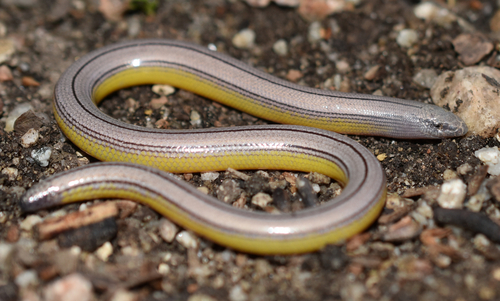
Newborn slow worms initially weigh less than a gram and still retain a yolk remnant. Juvenile slow worms have a contrasting colour pattern: the upper side of their body ranges from silvery white to golden yellow, while their sides and underside are black.
Thermoregulation
These reptiles are largely nocturnal, and do not bask directly in the sun like many other reptiles. Instead, they warm themselves indirectly under sun-warmed objects such as rocks.
General Habitat Preferences
They are often found in long grass and other moist environments. A 2009 study of a Danish population of slow worms found that their diet includes slugs, snails, earthworms, caterpillars, and pill millipedes.