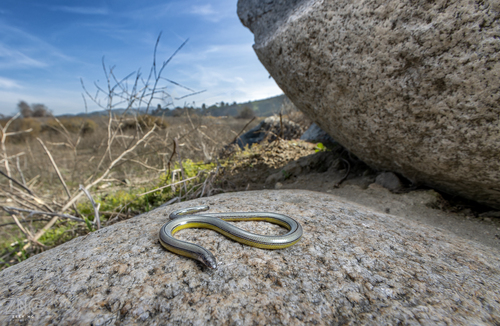
About Gerrhonotus infernalis Baird, 1859
Taxonomy and Common Name
Gerrhonotus infernalis Baird, 1859, commonly called the Texas alligator lizard, is a medium-sized lizard that reaches a maximum total length including tail of 24 to 25 inches (61 to 64 cm). It is the largest lizard species native to Texas, and one of the largest alligator lizard species in the world.
Head Shape
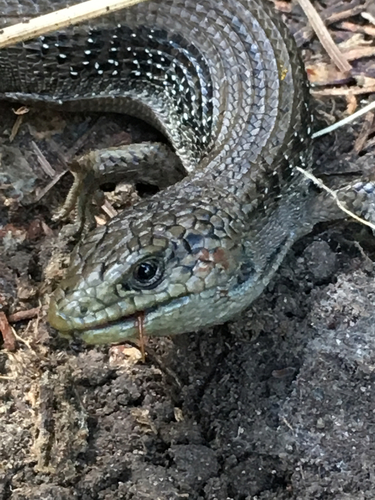
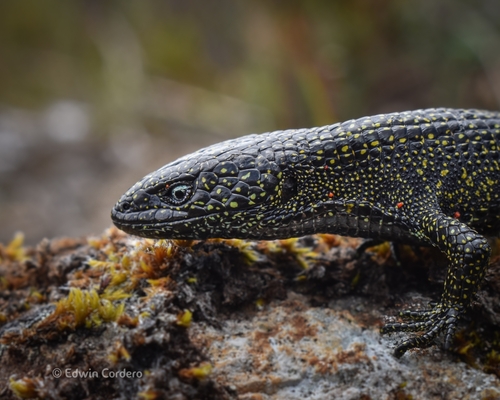
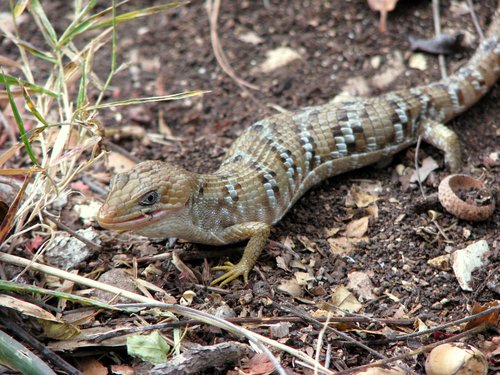
This lizard has a flat, wedge-shaped head.
Coloration
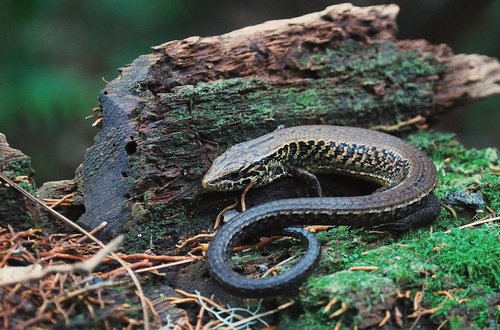
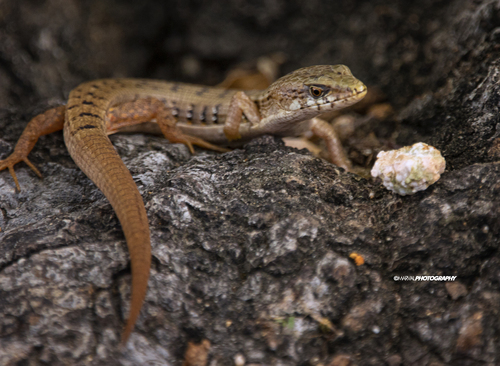
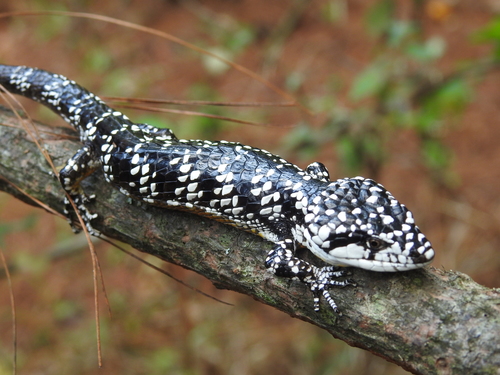
Its body is typically yellow-brown, often with darker brown and white checker patterning on its upper (dorsal) surfaces; its lower (ventral) surfaces are uniformly light-colored, white, or grey.
Scale Characteristics
Its scales are very stiff and plate-like.
Limb and Tail Traits
It has short limbs, and a tail that can autotomize (fall off) to distract potential predators, and will regrow over time.
Alligator Lizard Etymology
Elgarine (errhonotine) lizards are known for their broad heads, short limbs, and heavy scale armor, which is the source of the common name 'alligator lizard'.
Osteological Traits
This species specifically matches traits for the group: osteological characteristics include supranasal expansion, prefrontal-superciliary contact, a single preocular, loss of one canthal/loreal element, and two temporals that contact the orbit.
Age-Related Color Change
Its color pattern changes considerably as individuals age.
Hatchling Appearance
Hatchlings are deep metallic brown with distinct white crossbands, and measure around four inches in total length.
Adult Coloration
Adults have a color range from tan yellowish to reddish brown, with eight to ten lighter crossbands on the dorsum that are weakly edged with brown.
Adult Marking Details
The head and ventrum are unmarked, and the tail has the same patterning as the dorsum; crossbands become vague in older specimens.
Adult Size
At full maturity, this lizard can reach up to 20 inches in total length.
Habitat
Gerrhonotus infernalis is most often found on rocky hillsides, where it hides among stones or in limestone crevices.
Population Observability
It is uncommonly seen even in its most suitable habitats.
Geographic Range
Its range extends from the Edwards Plateau of Central Texas, south through low to mid elevations in eastern Mexico.
Breeding Cycle
Breeding occurs year-round, and females sometimes lay multiple clutches of eggs per year.
Nesting Behavior
Females usually stay near the nesting site to protect it, but no parental care is provided after the young hatch.
Newly Hatched Traits
Newly hatched young have more striking markings, and measure around 3–4 inches (7.6–10.2 cm) in total length including tail.