About Angelica atropurpurea L.
Size and Stem Features
Angelica atropurpurea L. is a perennial plant that reaches 6 feet (180 cm) in height. Its erect, branching stem is purple, smooth, hollow, and sturdy.
Leaf Structure
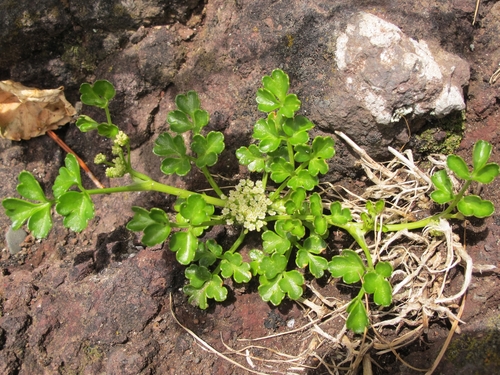
The leaves are compound and bipinnate, with 3 to 5 leaflets per leaf. A fully grown lower leaf can be up to 2 feet (61 cm) wide; individual leaflets measure 0.75–4.5 inches (1.9–11.4 cm) long and 0.5–2.5 inches (1.3–6.4 cm) across.
Leaflet Characteristics
Leaflets are generally ovate with serrated margins, and some are split into either shallow or deep lobes.
Flower Structure
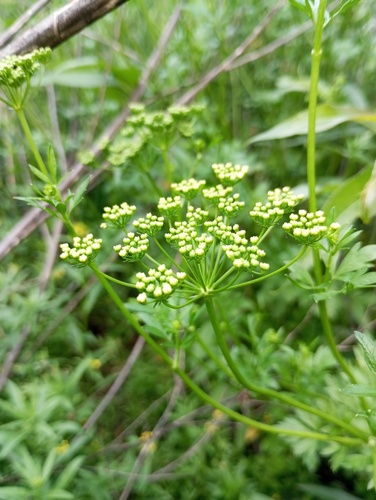
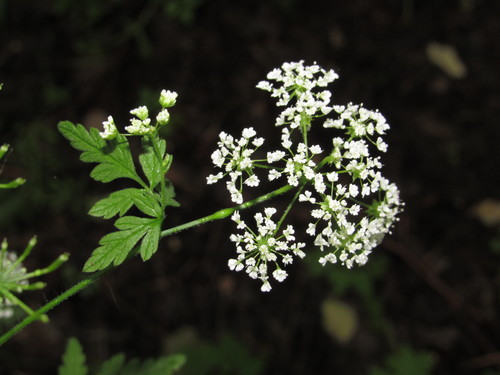
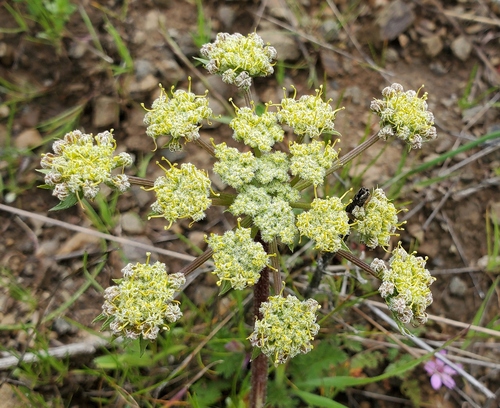
This plant produces white to greenish flowers arranged in umbrella-shaped umbels. A single umbel can have up to 40 branches and reach 8 inches (20 cm) across, while each individual flower has 5 petals and grows up to 0.25 inches (0.64 cm) wide.
Canadian Distribution
This species occurs in eastern Canada, including Nunavut, Ontario, Quebec, Labrador, Newfoundland, and all three Maritime Provinces.
United States Distribution
In the United States, it is found from New England south to North Carolina, and west to Minnesota, Iowa, and Tennessee.
Habitat Preferences
It grows in swamps, wet thickets, woodland edges adjacent to wetlands, marshes, fens, and seeps, and typically occupies consistently moist calcareous habitats.
Flowering Period
Flowering occurs from late spring to early summer.
Host Plant Roles
Angelica atropurpurea acts as a host plant for the black swallowtail butterfly (Papilio polyxenes), the short-tailed swallowtail (Papilio brevicauda), and the moths Agonopterix clemensella, Papaipema harrisii, and Idia americalis.
Pollinator Attraction
Small bees are attracted to the nectar of its flowers.
Edible Stalk Use
The stalks of Angelica atropurpurea can be eaten like celery, and have a similar flavor.
Early Settler Uses
Early American settlers boiled parts of the plant to make candy and added it to cakes.
Historical European Belief
In Europe, the plant was historically believed to cure alcoholism.
General Native American Root Use
Its aromatic root is widely used as a purification herb across many Native American cultures.
California Ceremonial Use
In California, it is often burned during a shaman's prayers as part of a healing ceremony.
Arkansas Traditional Use
Native peoples in Arkansas have traditionally held the plant in high regard, often carrying it in medicine bags and mixing it with tobacco for smoking.
Mvskoke Creek General Use
For the Mvskoke Creek tribes of Alabama, Oklahoma, and Northwest Florida, Angelica atropurpurea (called notossv in the Creek language) has both medicinal and ceremonial uses.
Mvskoke Creek Medicinal Uses
Medically, the Creeks use notossv to treat adult back pain, calm people experiencing panic attacks or hysterics, act as a children's vermifuge, and address stomach disorders.
Mvskoke Creek Ceremonial Uses
Ceremonial uses among the Mvskoke Creek include preventing heat stroke during the Ribbon Dance of the Green Corn Ceremony, supporting ceremonial singers, and aiding people facing legal trouble.