About Anaxyrus cognatus (Say, 1822)
Common Name & Body Coloration
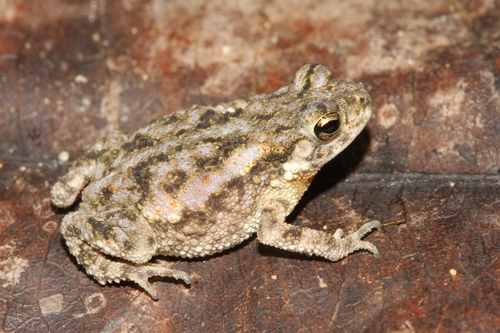
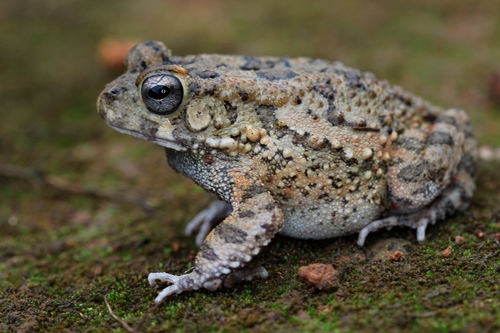
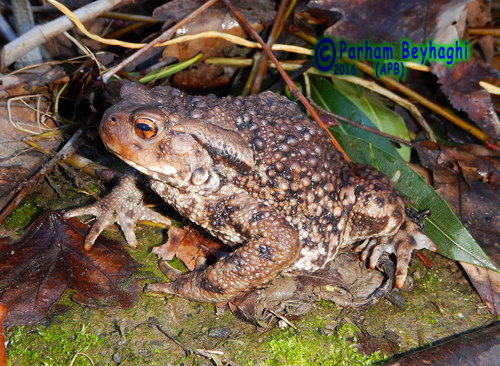
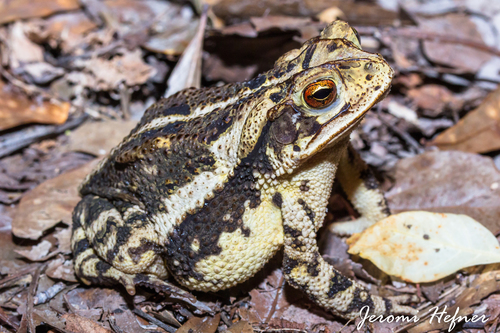
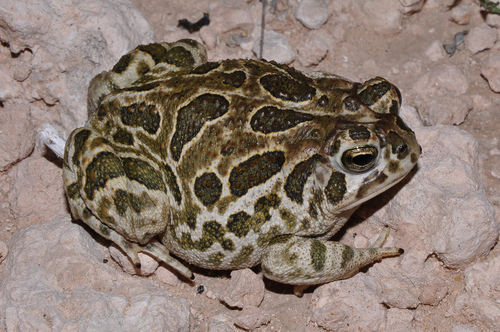
Anaxyrus cognatus, commonly called the Great Plains toad, has a grey, brown, or green body covered with darker blotches.
Adult Size
Adults reach a total length between 5.1 and 11.4 cm (2 to 4.5 inches).
Diet Composition
Its primary diet is cutworm species, and it also feeds on a wide range of other insects including lepidopterans, dipterans, hymenopterans, coleopterans, ants, and termites.
Preferred Habitats
This toad prefers grassland habitats with loose, easy-to-burrow soil, and can also be found in deserts, semi-desert shrublands, open floodplains, and agricultural areas.
Inactivity Behavior
When inactive, it burrows underground.
Activity Patterns
In dry regions, it may only emerge from its burrow for a few weeks when conditions are suitable, and is usually active at night; in areas with permanent water bodies and abundant rain, it can be active throughout the day.
Predator Detection
The Great Plains toad uses chemoreceptors to detect chemical cues left by its predator, the plains garter snake Thamnophis radix, which preys on it among other animals.
Breeding Timing & Location
Breeding takes place from spring through summer, most often immediately after heavy rainfall, in temporary water bodies such as rain pools, flooded areas, and ponds; it may also use the margins of reservoirs.
Egg & Larval Development
Great Plains toad eggs and larvae develop in shallow water, and metamorphose 17 to 45 days after hatching.
Mating Call Characteristics
The species' mating call is a very loud, harsh chirping noise that is repeated many times at a fast pace.
Geographic Range
This amphibian is native across the Canadian Prairies, the northern portion of the Great Plains, in southern Alberta, Manitoba, and Saskatchewan; its range extends south into northern Mexico, where it occurs in the Sonoran Desert and the Mexican Plateau.