About Amazona mercenaria (Tschudi, 1844)
Description
Size
Adult Amazona mercenaria measure 34 cm (13.2 inches) in length and weigh 300 g (10.5 oz).
Plumage
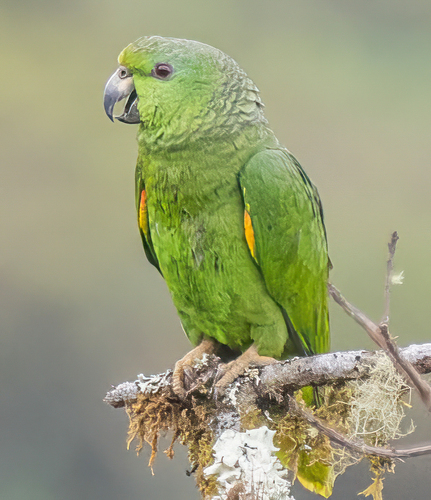
Nominate individuals are primarily bright green. From the crown to the nape, dark green feathers are tinged with dull blue or black and tipped with dull black.
Facial Features
They have red eyes surrounded by a pale gray eye-ring.
Wing Characteristics
The first through third secondary wing feathers have red bases, while all other wing feathers have green bases. The carpal edge is yellow, mixed with red and orange.
Tail Characteristics
The tail is green with a yellow-green band; side tail feathers are banded red and blue-purple, and the outermost tail feather is edged with blue-purple.
Bill and Juvenile Traits
The bill is a mix of gray and horn color. Juveniles look similar to adults, but have a pale horn-colored bill tinged with gray, and brown eyes.
Distribution and habitat
Geographical Range
This species occurs in Bolivia, Colombia, Ecuador, Peru, and Venezuela.
Elevation Range
It lives at elevations between 800–1,900 m (2,600–6,200 ft) above sea level.
Genus Uniqueness
Across most of its range, it is typically the only species from the genus Amazona present.
Habitat Types
It inhabits hill and mountain forests in upper tropical, subtropical, and temperate zones. It can also be found in open woodland with large trees, open forest on ridges, and wooded valleys and ravines in the paramo zone.
Behavior and ecology
Social Structure
This species is most often encountered in pairs or small flocks.
Nesting and Disposition
Nesting sites are usually located in inaccessible places. It is described as a shy bird.