About Ajuga chamaepitys (L.) Schreb.
Growth Form
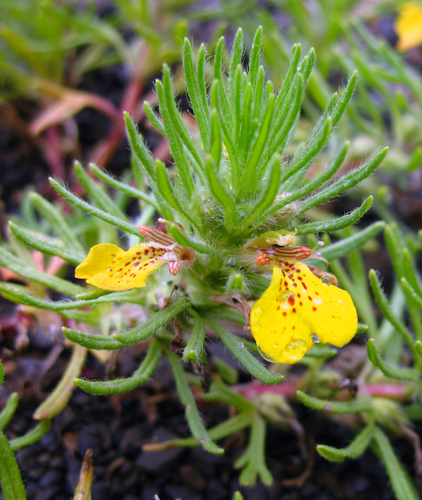
Ajuga chamaepitys, also commonly called ground pine, is a small herbaceous perennial plant, growing 10 to 40 centimeters tall.
Stem Characteristics
It has a four-cornered, hairy stem that is reddish purple, and at first glance, the plant resembles a tiny pine tree.
Leaf Morphology
Its leaves are arranged oppositely along the stem, can grow up to 4 centimeters long, and are divided into three linear lobes; when crushed, the leaves release an odor similar to pine needles, with a slightly turpentine-like smell and a rough taste.
Flowering Period
This species generally flowers in late spring.
Seed Traits
Ground pine produces shiny black seeds, which it sheds close to the parent plant; these seeds can remain viable in soil for up to 50 years.
Conservation Status
Changes to downland farming have severely reduced the population abundance of this plant.
Medicinal Properties
Ajuga chamaepitys is known for herbal uses: it has stimulant, diuretic, and emmenagogue effects, and herbalists consider it an effective remedy for gout, rheumatism, and female disorders.
Traditional Regional Use
In the Levant, local people have traditionally used this plant as an analgesic.
Tudor Era Use
Tudor herbalists were familiar with ground pine and harvested the resins found in its leaves.
Historical Gout Treatment
Historically, this herb was regarded as almost a specific treatment for gouty and rheumatic conditions.
Portland Powder Ingredient
Dried leaves of the plant were ground into powder, and it was an ingredient in Portland Powder, a once well-known gout remedy.
Portland Powder Properties
Portland Powder was made from the leaves of Ajuga chamaepitys, and its properties are described as similar to diluted alcohol.