About Westringia eremicola A.Cunn. ex Benth.
Growth Form
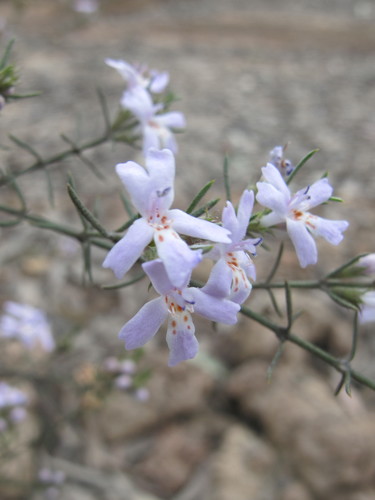
Westringia eremicola is a slender shrub that reaches a height of 1.5 m (4 ft 11 in). Its leaves attach to stems via petioles 0.5–0.7 mm (0.020–0.028 in) long, and are most often arranged in whorls of three.
Leaf Shape & Size
Leaves are narrow-elliptic to linear in shape, typically measuring 8–20 mm (0.31–0.79 in) long and 0.8–1.6 mm (0.031–0.063 in) wide. Leaf margins are smooth and curved under, and both leaf surfaces bear more or less flattened, simple, upright hairs.
Flower Arrangement
Flowers grow in leaf axils.
Sepal Characteristics
Densely hairy sepals form a tube 2.5–4 mm (0.098–0.157 in) long, with triangular lobes 1–3 mm (0.039–0.118 in) long.
Bracteole Size
Bracteoles measure 0.8–2 mm (0.031–0.079 in) long.
Petal Characteristics
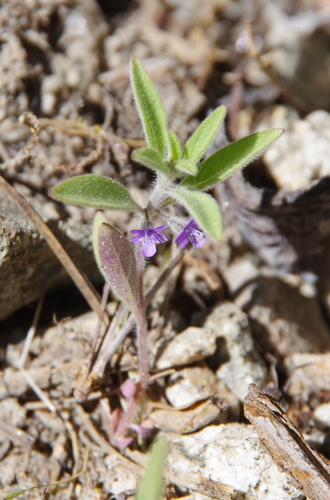
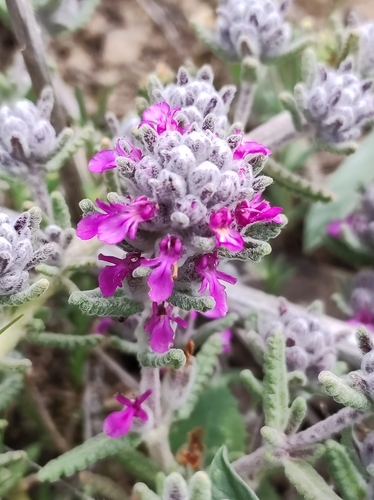
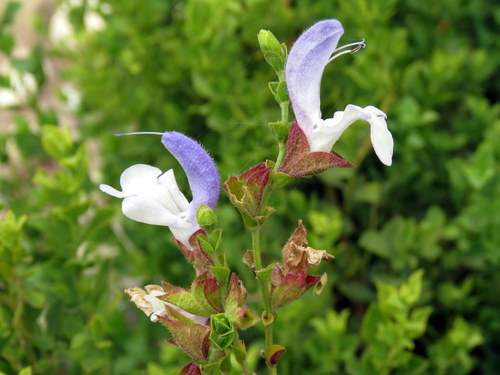
Petals are mauve, purple, or occasionally white, 6.5–8.5 mm (0.26–0.33 in) long, and have orange to brown spots in the flower throat.
Flowering Period
Flowering can occur at any time of year.
Fruit Characteristics
The fruit is a dark brown, woody capsule that grows up to 1.5 mm (0.059 in) long.
Distribution & Habitat
This species, commonly called slender westringia, grows in mallee habitats on sandy soils in Queensland, South Australia, Victoria, and New South Wales.
Associated Flora
Its associated plant species include Calytrix tetragona, plus species from the genera Acacia, Daviesia, Leptospermum, Leucopogon, and Triodia.