About Adenanthos cygnorum Diels
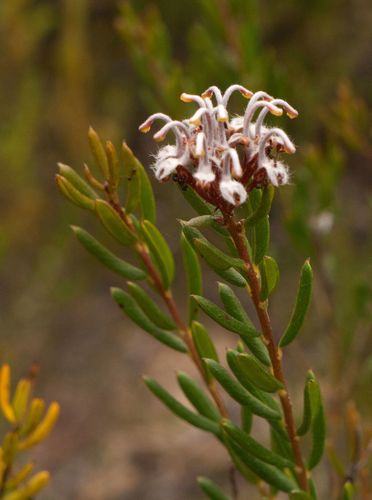
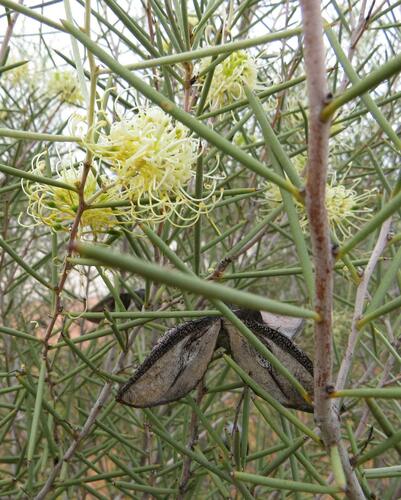
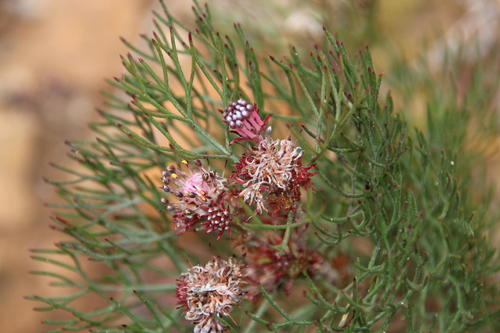
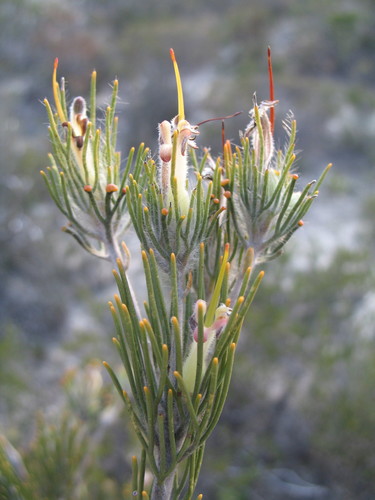
Common woollybush, Adenanthos cygnorum Diels, grows as a tall shrub reaching up to three metres in height. It has soft grey-green or grey-blue foliage made up of small, hairy leaves that are closely packed along pliable, hairy stems. Both the appearance and texture of the plant are woolly, which gives the species its common name. Nectaries located at the tips of the leaves attract ants, which help distribute the plant's seeds. Ants carry the nectar-filled cups holding the seeds back to their nests to consume the nectar, leaving the seeds out of reach of birds and other animals. Like most other Adenanthos species, but unusually for members of the Proteaceae family, the flowers of common woollybush are not large and showy. Instead, they are small, dull, and hidden within the plant's foliage. Moths bore into the plant's stems to lay their eggs; the resulting larvae are then used by female wasps as a place to lay their own eggs. In ecological observations, the brown honeyeater (Lichmera indistincta) has been seen feeding at the flowers of A. cygnorum. The species is highly susceptible to Phytophthora cinnamomi dieback.