About Actaea racemosa L.
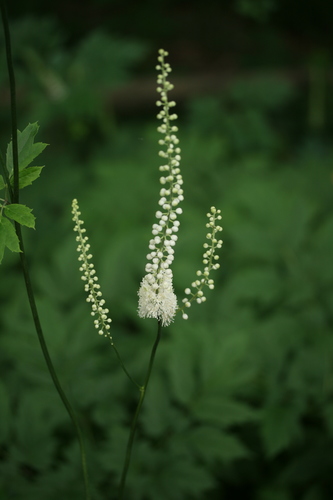
Actaea racemosa L., commonly called black cohosh, is a glabrous herbaceous perennial plant. It grows large compound leaves from an underground rhizome, and reaches a height of 25–60 cm (9.8–23.6 in). Its basal leaves can grow up to 1 m (3 ft 3 in) long and broad, and are tripinnately compound, meaning they form repeated sets of three leaflets. The leaflets have coarsely serrated, or toothed, margins. Flowers develop in late spring and early summer on a tall stem that grows 75–250 cm (30–98 in) tall. These flowers form racemes up to 50 cm (20 in) long. The flowers have no petals or sepals, and are made up of tight clusters of 55 to 110 white stamens that measure 5–10 mm (0.20–0.39 in) long, surrounding a white stigma. The flowers have a distinct scent that is both sweet and fetid, which attracts flies, gnats, and beetles. The fruit is a dry 5–10 mm (0.20–0.39 in) long follicle with one carpel that holds several seeds. There is no published long-term safety information for black cohosh. The Herbal Medicinal Product Committee (HMPC) of the European Medicines Agency (EMA) has summarized adverse drug reactions reported for herbal medicines made from cimicifuga: these include allergic skin reactions such as urticaria, itching, and exanthema; facial and peripheral edema; and gastrointestinal symptoms including dyspeptic disorders and diarrhea. Studies have found that black cohosh does not cause harmful effects on the endometrium or in breast cancer survivors. However, no such studies have been published for black cohosh dietary supplements. Most black cohosh plant material is harvested from wild populations. A lack of proper authentication and adulteration of commercial preparations with other plant species are documented risk factors for dietary supplements, and this is a critical quality control issue for authorized marketed herbal medicinal products. Taking very high doses of black cohosh may cause nausea, dizziness, visual disturbances, reduced heart rate, and increased perspiration. Around the world, 83 cases of liver damage including hepatitis, liver failure, and elevated liver enzymes have been linked to black cohosh use, though a clear cause-and-effect relationship has not been confirmed. The clinical presentation of these cases resembles autoimmune hepatitis with centrilobular liver cell necrosis, which can be treated with corticosteroids. Package leaflets for black cohosh phytomedicines advise that people with existing liver problems should not take the product. In 2007, the Australian Government issued a warning that black cohosh may cause rare liver damage, and should not be used without medical supervision. Other studies have concluded that liver damage from black cohosh use is unlikely. Millions of women have used black cohosh without reporting adverse health effects, and a meta-analysis of clinical trials found no evidence that black cohosh preparations cause adverse effects on liver function. Actaea racemosa grows best in consistently moist, fairly heavy soil. It produces tall tapering racemes of white midsummer flowers on wiry black-purple stems. At close range, these flowers have a mildly unpleasant medicinal scent, which gave the plant its common name "Bugbane". Drying seed heads remain visually attractive in gardens for many weeks. Its deeply cut leaves are superficially similar to maple leaves; the variety "atropurpurea" has burgundy colored leaves. These features add ornamental interest to gardens, and the plant will remain healthy as long as summer heat and drought do not cause it to die back, making it a popular garden perennial. It has been awarded the Royal Horticultural Society's Award of Garden Merit, and it was named the 2017 wildflower of the year by the Virginia Native Plant Society.