About Acrocephalus stentoreus (Hemprich & Ehrenberg, 1833)
Taxonomy and Size
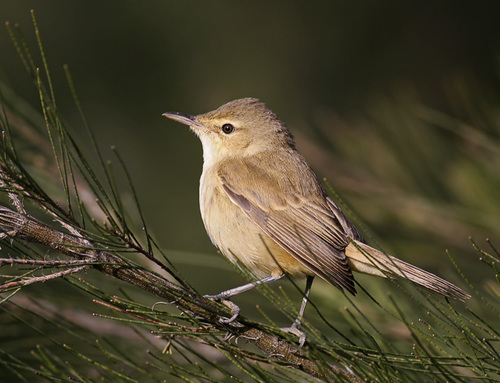
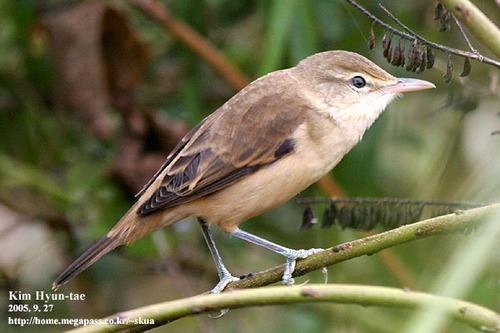
The clamorous reed warbler, scientific name Acrocephalus stentoreus (Hemprich & Ehrenberg, 1833), is a large warbler similar in size to a song thrush, measuring 18–20 cm long.
Adult Plumage Features
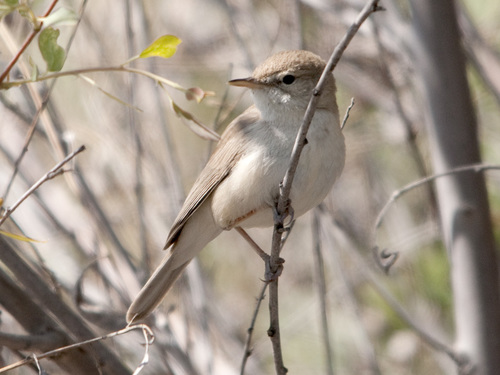
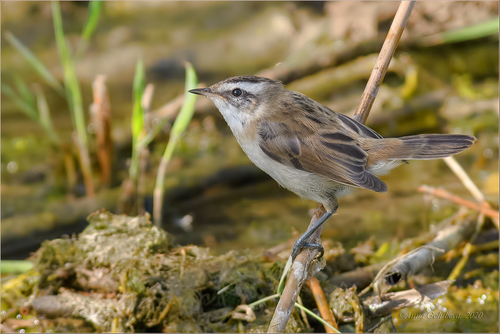
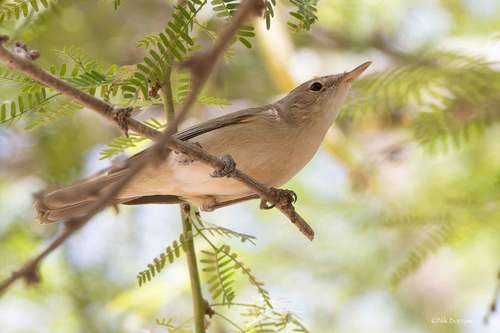
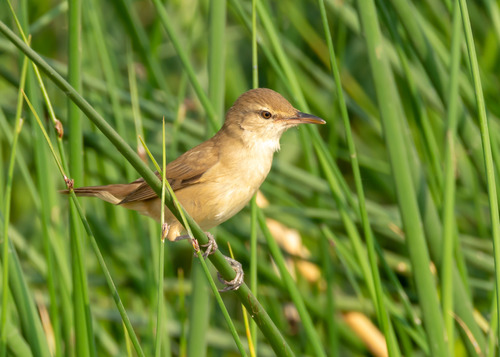
Adults have unstreaked brown backs, whitish underparts, a flattened forehead, and a strong, pointed bill. Like most warbler species, male and female clamorous reed warblers have identical plumage.
Similar Species Comparison
This species is very similar in appearance to the great reed warbler, but great reed warblers have richer colored underparts.
Subspecies Variation
Multiple subspecies of Acrocephalus stentoreus exist, which differ in the shade of their plumage. The migratory northern subspecies has the richest brown upperparts, and the subspecies endemic to Sri Lanka is the darkest form.
Diet
Like most warblers, the clamorous reed warbler is primarily insectivorous, though it will also eat other small prey items.
Song Characteristics
Its song is loud and carries over long distances, but is less raucous than the song of the great reed warbler. The song consists of a slow, chattering kereet-kereet-kereet, with the typical whistles of the Acrocephalus genus plus added mimicry.
Movement Patterns
Most populations of this species are sedentary. However, breeding populations in Pakistan, Afghanistan, and northern India are migratory, and winter in peninsular India and Sri Lanka.
Habitat
This passerine bird lives in large reed beds, often in areas that also have some bushes.
Reproduction
It builds a basket-shaped nest in reeds, where it lays 3 to 6 eggs per clutch.