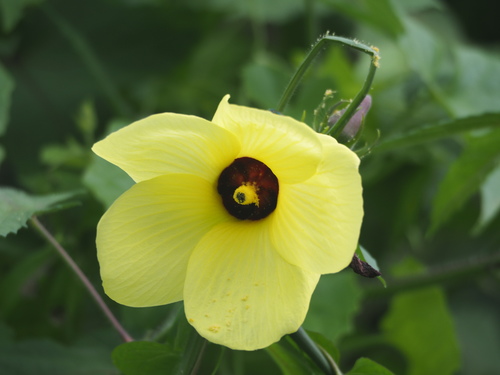
About Abelmoschus moschatus (L.) Medik.
Scientific name: Abelmoschus moschatus (L.) Medik.
Characteristics: The seeds of this plant carry a sweet, flowery, heavy fragrance similar to that of musk, which explains its specific epithet moschātus, the scientific Latin term meaning 'musk'. Despite having a tropical origin, the plant is frost-hardy.
Uses: Musk mallow seed oil was once commonly used as a substitute for animal musk in perfumes. This use has now mostly been replaced by various synthetic musks, due to the high cost of the plant-derived oil. In her 1705 work *Metamorphosis Insectorum Surinamensium*, Maria Sibylla Merian recorded that young Indigenous women would string the seeds onto threads and wear them as decorative adornment on their arms. She also noted that Indigenous people used the seeds to fatten chickens for consumption.
Culinary uses: This plant has many culinary applications. Its seeds are added to coffee, while its unripe pods (called 'musk okra'), leaves, and new shoots are eaten as vegetables.
Medicinal uses: Different parts of the plant, known as latākastūrikā (लताकस्तूरिका) in Sanskrit, are used in Ayurvedic herbal medicine. It is employed as an antispasmodic and to treat gonorrhea. However, use of this plant can cause phytophotodermatitis, and its safety for use during pregnancy and lactation has not been confirmed.
Other uses: In industrial applications, the mucilage from the plant's root is used as sizing for paper, and flowers are sometimes added to tobacco to flavor it.