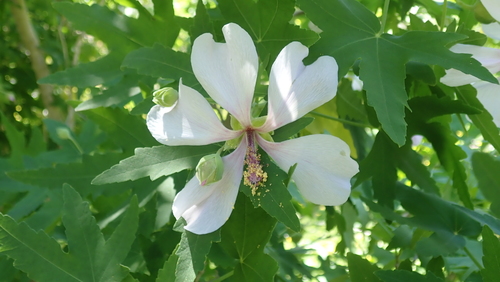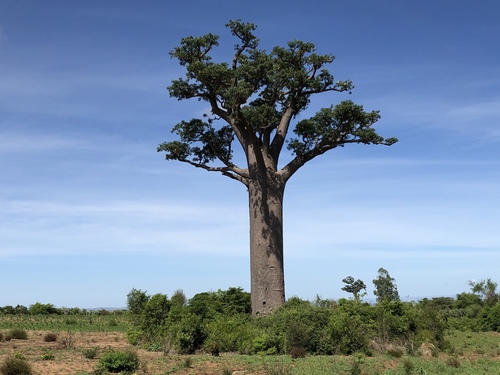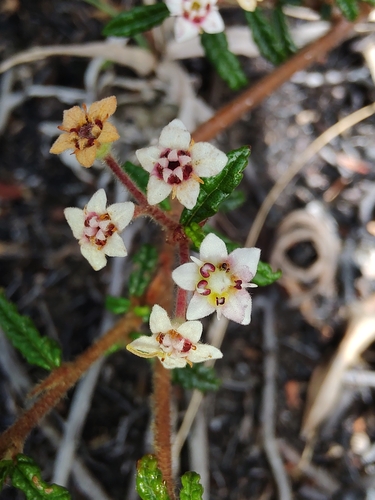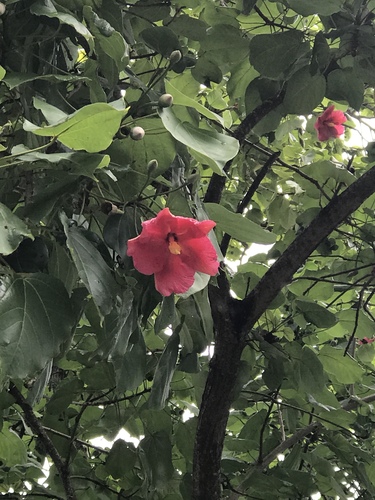
About Thespesia populnea (L.) Sol. ex Corrêa
Scientific Name and Size
The Portia tree, Thespesia populnea (L.) Sol. ex Corrêa, reaches a height of 6–10 m (20–33 ft), with a trunk diameter of up to 20–30 cm (7+3⁄4–11+3⁄4 in).
Pollen Characteristics
Its pollen grains are approximately 70 microns in diameter.
Native Habitat Adaptations
Thespesia populnea is native to tropical coastlines, adapted for oceanic dispersal and growth in island environments.
Global Distribution Range
It occurs on both coasts of Africa, in tropical Asia, northern Australia, the Pacific Islands including Hawaii, the tropical Pacific coast of the Americas from Mexico south to Colombia, the West Indies, and Florida in the United States.
Native Range Debate
Its exact native range is debated: most authorities consider it native only to the Old World tropics, some sources including Plants of the World Online include the Pacific Islands in its native range, and sources such as the IUCN Red List and the USDA also include tropical America in its native range.
Invasive Status
The IUCN only classifies T. populnea as introduced and invasive in Florida, and it may also be invasive in northern Brazil.
Traditional Austronesian Uses
Like the related Hibiscus tiliaceus, it was one of the main sources of bast fiber for cordage production and wood for Austronesian outrigger ships and carving.
Canoe Plant Hypothesis
Although the plant's seeds can survive for months on sea currents, no remains of T. populnea have been recovered from Polynesia prior to the Austronesian expansion around 5,000 BP, so some authors regard it as a canoe plant, deliberately carried and introduced by Austronesian voyagers to the islands they settled.
Pacific Indigenous Status Debate
However, many other authorities still consider it questionably indigenous to Pacific islands, including Hawaii.
Hawaiian Restoration Use
In Hawaii, it is classified as a native species, and is used in habitat restoration projects for degraded Hawaiian tropical dry forests, alongside the definitively native tree species Dodonaea viscosa and Cordia subcordata.
Elevation and Rainfall Requirements
It grows at elevations from sea level to 275 m (902 ft) in areas that receive 500–1,600 mm (20–63 in) of annual rainfall.
Soil Preferences
It can grow in a wide range of soil types found in coastal environments, including soils derived from quartz (sand), limestone, and basalt, and it favors neutral soils with a pH of 6–7.4.
Heartwood Characteristics
The heartwood of the Portia tree is dark reddish brown to chocolate brown, with a specific gravity of 0.55 to 0.89.
Polynesian Common Names
Portia tree is called milo or miro in Polynesian languages.
Hawaiian Woodworking Use
It is popular in Hawaii for woodworking, and is commonly turned into bowls, due to its range of colors from tan through yellow to red.
Polynesian Cultural Significance
The trees were regarded as sacred in Polynesian culture, and were commonly planted in marae sites alongside trees such as Ficus, Fagraea berteroana, Casuarina equisetifolia, and Calophyllum inophyllum.
Eastern Polynesia Religious Use
It was traditionally planted in sacred groves and used for religious sculpture throughout eastern Polynesia.
Tahitian Musical Instrument Use
In Tahiti, Milo wood is used to make the to'ere, a slotted wooden drum used in traditional Tahitian tribal drumming.
Easter Island Rongorongo Use
Makoʻi wood from this species was used for the rongorongo tablets of Easter Island.
Henderson Island Harvesting
Since aluminum-hulled boats were introduced in the 20th century, people from Pitcairn Island have made regular trips to Henderson Island to harvest miro wood.
Pitcairn Harvest Frequency
They usually travel to Henderson only once per year, but may make up to three trips if the weather is favorable.
Pitcairn Curio Production
Pitcairners carve miro wood into curios, which provides much of their income.
Hawaiian ʻUmeke Cultural History
In Hawaiʻi, ʻumeke (Hawaiian for "wooden bowl") has been a highly perfected art form, and ʻumeke have been considered prized possessions for well over a thousand years, especially those made of Milo and Kou, because these dense hardwoods do not add flavor to food.
Pre-1819 Hawaiian ʻUmeke Restrictions
Before 1819, ʻumeke were considered sacred and strictly reserved for ʻAliʻi (Hawaiian royalty), and commoners faced the death penalty for possessing one.
Modern Hawaiian ʻUmeke Significance
Today, ʻumeke are highly collectible and have become known as a universal symbol of generosity and welcome.
New Ireland Drum Use
In New Ireland, Portia wood is used to make hourglass drums.
Tongan Medicinal and Craft Uses
In Tonga, its bark is used to treat mouth infections in infants, and its wood is used to make canoes, house parts, and artwork.
Indonesian Culinary Use
In Indonesia, this species is known as baru laut, baru pantai or waru lot, and people from Ambonese cook its leaves into a vegetable dish.
South Indian Musical Instrument Use
In South Asia, its wood is used to make the thavil, a Carnatic musical instrument of South India.
Sri Lankan Independence Movement Role
The flower of the Portia tree played a role in Sri Lanka's independence movement: it was sold on Remembrance Day by the Suriya-Mal Movement instead of the poppy, to support Sri Lankan ex-servicemen.
Ancient Tamil Instrument Use
Early Tamil people used the tree's wood to make instruments in ancient Tamilakam.
Cellulose Production Use
It can be used for cellulose production from the plant (Singh et al. 2019).
Global Restoration Significance
In some parts of the world, such as Hawaii and southern India, T. populnea is considered an important species for coastal dry forest habitat restoration projects.