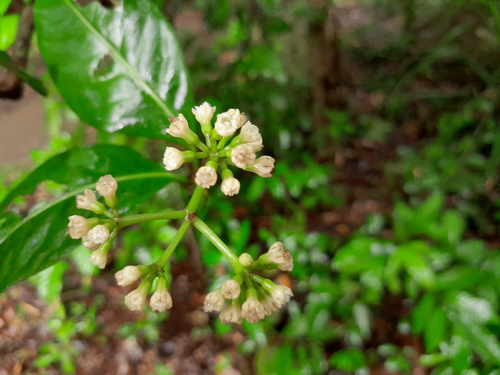
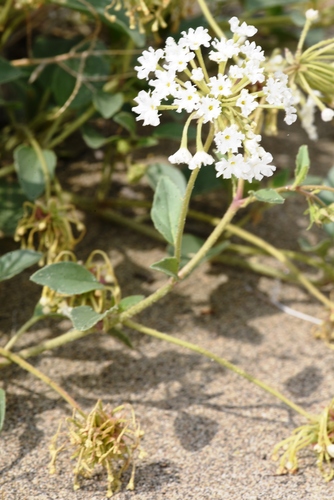
How to Identify Nyctaginaceae

Nyctaginaceae is a plant family in the Plantae kingdom, order Caryophyllales, class Magnoliopsida. The family contains 77 accepted species worldwide. Some species in this family are toxic — exercise caution when handling unknown specimens.

Key Identification Features

For instant identification in the field, use the iNature app — AI-powered, works offline.
Representative Nyctaginaceae Species

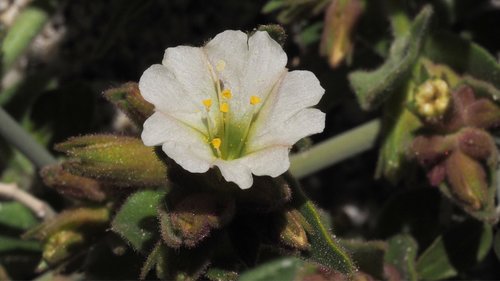
How to identify Boerhavia coccinea Mill.

Boerhavia coccinea Mill.

Boerhavia coccinea Mill.

Boerhavia coccinea Mill. is a sprawling perennial herb with uncertain native ran…

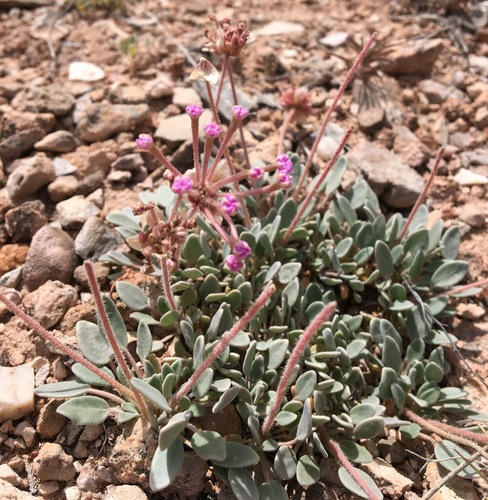
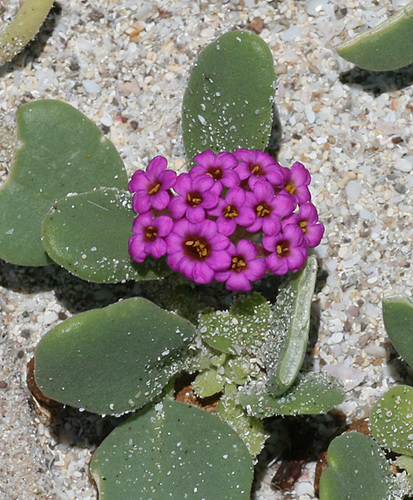
How to identify Abronia nana S.Watson

Abronia nana S.Watson

Abronia nana S.Watson

Abronia nana S.Watson is a low-growing sandy-environment adapted flowering plant…

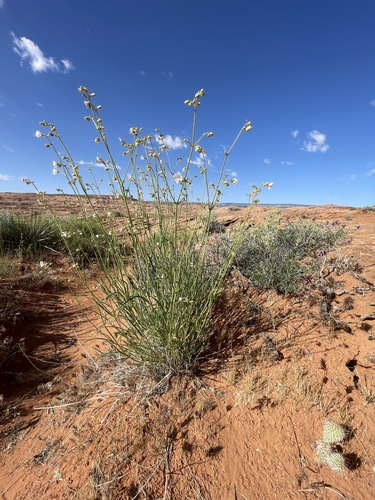
How to identify Mirabilis linearis (Pursh) Heimerl

Mirabilis linearis (Pursh) Heimerl

Mirabilis linearis (Pursh) Heimerl

Mirabilis linearis, or narrowleaf four o'clock, is a plant with documented tradi…

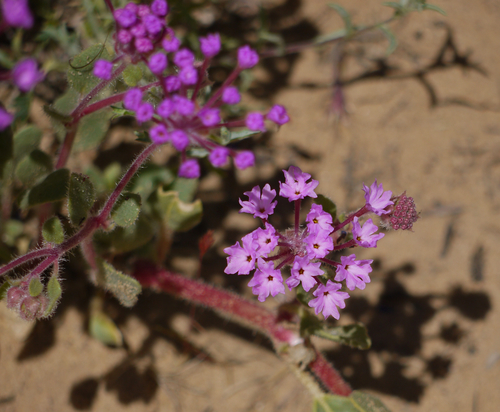
How to identify Abronia pogonantha Heimerl

Abronia pogonantha Heimerl

Abronia pogonantha Heimerl

Abronia pogonantha, Mojave sand-verbena, is an annual flowering Nyctaginaceae pl…

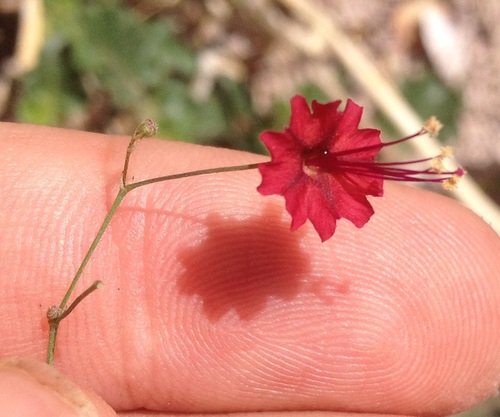
How to identify Mirabilis coccinea (Torr.) Benth. & Hook.fil.

Mirabilis coccinea (Torr.) Benth. & Hook.fil.

Mirabilis coccinea (Torr.) Benth. & Hook.fil.

Scarlet four o'clock (Mirabilis coccinea) is a night-blooming spring wildflower …

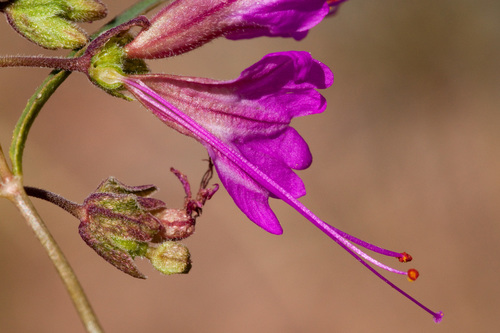
How to identify Mirabilis tenuiloba S.Watson

Mirabilis tenuiloba S.Watson

Mirabilis tenuiloba S.Watson

Mirabilis tenuiloba is a perennial herb native to southwestern US and northeaste…

How to identify Boerhavia gracillima Heimerl

Boerhavia gracillima Heimerl

Boerhavia gracillima Heimerl

Boerhavia gracillima, the slimstalk spiderling, is a perennial herb native to th…

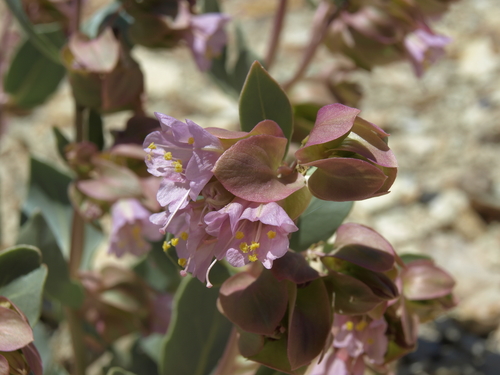
How to identify Mirabilis alipes (S.Watson) Pilz

Mirabilis alipes (S.Watson) Pilz

Mirabilis alipes (S.Watson) Pilz

Mirabilis alipes, or winged four o'clock, is a perennial herb native to the sout…

How to identify Boerhavia diffusa L.

Boerhavia diffusa L.

Boerhavia diffusa L.

Boerhavia diffusa L. is a widespread creeping perennial herb with an unconfirmed…

How to identify Abronia maritima Nutt. ex S.Watson

Abronia maritima Nutt. ex S.Watson

Abronia maritima Nutt. ex S.Watson

Abronia maritima, or red sand verbena, is a rare beach-adapted perennial halophy…

How to identify Ceodes umbellifera J.R.Forst. & G.Forst.

Ceodes umbellifera J.R.Forst. & G.Forst.

Ceodes umbellifera J.R.Forst. & G.Forst.

Ceodes umbellifera, commonly birdlime, is a sticky-fruited tropical tree with re…

How to identify Abronia mellifera Douglas

Abronia mellifera Douglas

Abronia mellifera Douglas

Abronia mellifera is a herbaceous perennial flowering plant endemic to the North…

Browse all 77 Nyctaginaceae species →

Frequently Asked Questions

How do you identify Nyctaginaceae?

Nyctaginaceae plants belong to the Caryophyllales order in the Plantae kingdom. They have a hairless, glossy, papery texture, with 8 to 10 light-colored lateral veins per leaf side, with no distinctly contrasting dark veins. For instant identification, use the iNature app — AI-powered and works offline.

What are the key characteristics of Nyctaginaceae?

Nyctaginaceae is classified in the order Caryophyllales, class Magnoliopsida, phylum Tracheophyta. The family contains 77 accepted species worldwide.

⚠️ Are any Nyctaginaceae species poisonous?

Yes, some Nyctaginaceae species are toxic or poisonous. Always exercise caution with unknown specimens. View poisonous Nyctaginaceae species or browse the full poisonous species guide.

Sources: GBIF, iNaturalist, Wikipedia · Disclaimer

Start Exploring Nature Today

Download iNature for free. 10 identifications on us. No account needed. No credit card required.

Download Free on App Store