How to Identify Bignoniaceae

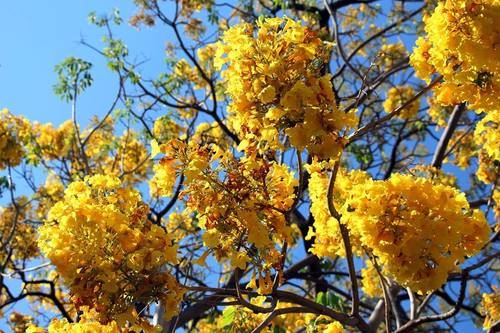
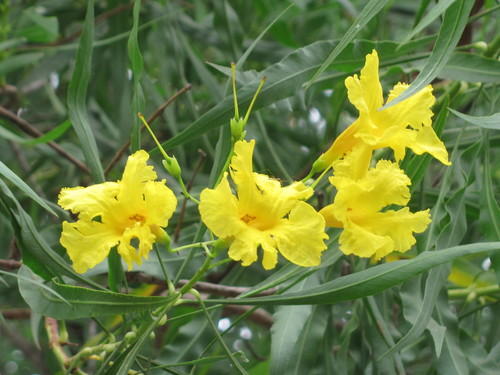
Bignoniaceae is a plant family in the Plantae kingdom, order Lamiales, class Magnoliopsida. The family contains 86 accepted species worldwide. Some species in this family are toxic — exercise caution when handling unknown specimens.

Key Identification Features

For instant identification in the field, use the iNature app — AI-powered, works offline.
Representative Bignoniaceae Species

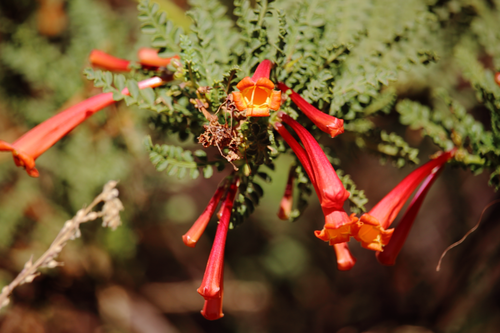
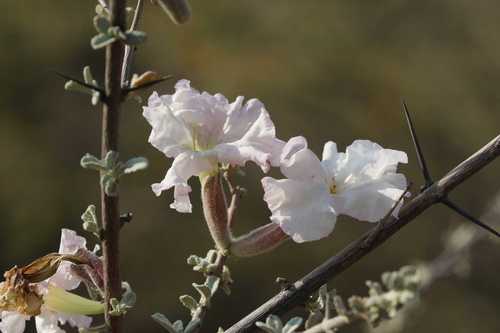
How to identify Catophractes alexandri D.Don

Catophractes alexandri D.Don

Catophractes alexandri D.Don

Catophractes alexandri is the only species in genus Catophractes, a spiny shrub …

How to identify Tecoma fulva (Cav.) G.Don

Tecoma fulva (Cav.) G.Don

Tecoma fulva (Cav.) G.Don

Tecoma fulva is a South American native flowering plant with six currently recog…

How to identify Bignonia capreolata L.

Bignonia capreolata L.

Bignonia capreolata L.

Bignonia capreolata, commonly called crossvine, is a native North American climb…

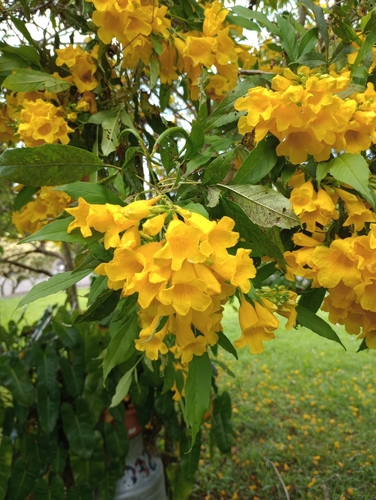
How to identify Tecoma stans (L.) Juss. ex Kunth

Tecoma stans (L.) Juss. ex Kunth

Tecoma stans (L.) Juss. ex Kunth

Tecoma stans is a golden-flowered woody plant native to the Americas, grown orna…

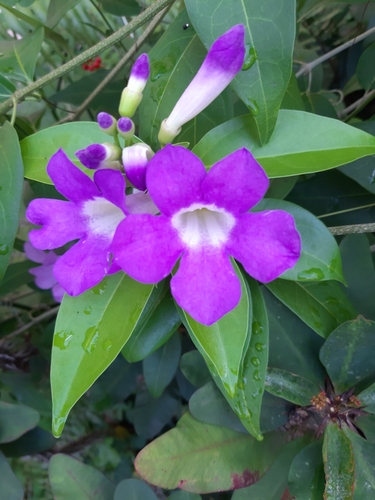
How to identify Mansoa alliacea (Desv. ex Beauverd) A.H.Gentry

Mansoa alliacea (Desv. ex Beauverd) A.H.Gentry

Mansoa alliacea (Desv. ex Beauverd) A.H.Gentry

Mansoa alliacea is a woody shrub or liana native to neotropical rainforests, cul…

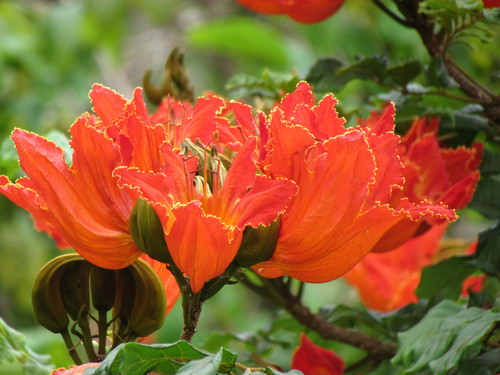
How to identify Spathodea campanulata Beauverd

Spathodea campanulata Beauverd

Spathodea campanulata Beauverd

Spathodea campanulata Beauverd is a tree that is native to Africa, invasive in m…

⚠️ Poisonous
How to identify Jacaranda ulei Bureau & K.Schum.

Jacaranda ulei Bureau & K.Schum.

Jacaranda ulei Bureau & K.Schum.

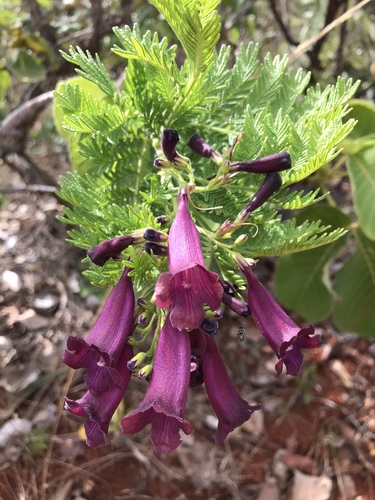
Jacaranda ulei is a small resprouter tree native to Brazil's Cerrado, whose root…

How to identify Chilopsis linearis (Cav.) Sweet

Chilopsis linearis (Cav.) Sweet

Chilopsis linearis (Cav.) Sweet

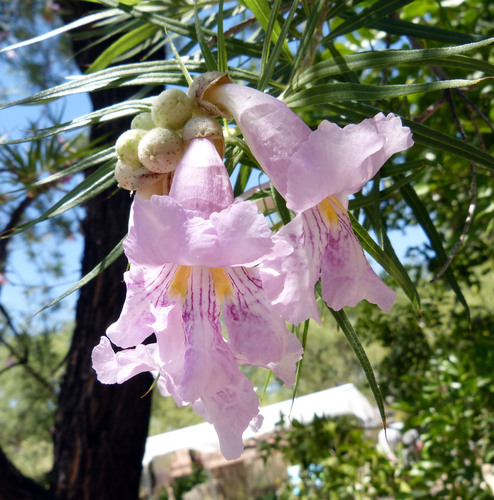
Chilopsis linearis is a desert-adapted flowering shrub or small tree cultivated …

How to identify Rhigozum obovatum Burch.

Rhigozum obovatum Burch.

Rhigozum obovatum Burch.

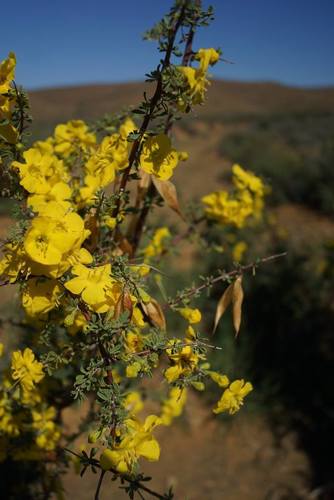
Karoo gold (Rhigozum obovatum) is a perennial Bignoniaceae shrub or tree native …

How to identify Delostoma integrifolium D.Don

Delostoma integrifolium D.Don

Delostoma integrifolium D.Don

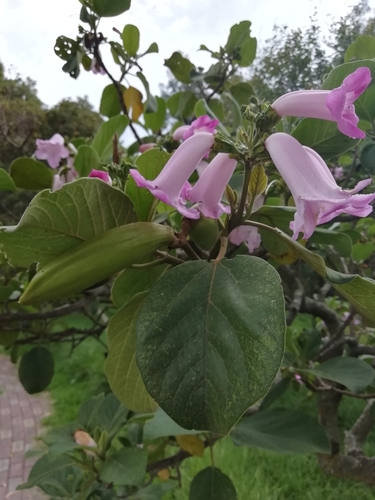
Delostoma integrifolium is a flowering Bignoniaceae species native to northweste…

How to identify Roseodendron donnell-smithii (Rose) Miranda

Roseodendron donnell-smithii (Rose) Miranda

Roseodendron donnell-smithii (Rose) Miranda

Roseodendron donnell-smithii is a Central American and Mexican deciduous tree of…

How to identify Astianthus viminalis (Kunth) Baill.

Astianthus viminalis (Kunth) Baill.

Astianthus viminalis (Kunth) Baill.

Astianthus viminalis is a tree/shrub that can produce usable lumber, with no con…

Browse all 86 Bignoniaceae species →

Frequently Asked Questions

How do you identify Bignoniaceae?

Bignoniaceae plants belong to the Lamiales order in the Plantae kingdom. Mature old fruits hang downward, and the two hollow halves tap against one another like castanets, producing a distinctive clicking sound in light wind. For instant identification, use the iNature app — AI-powered and works offline.

What are the key characteristics of Bignoniaceae?

Bignoniaceae is classified in the order Lamiales, class Magnoliopsida, phylum Tracheophyta. Over time, multiple previously recognized distinct species within this group have more recently been reclassified as subspecies of Tecoma fulva.

⚠️ Are any Bignoniaceae species poisonous?

Yes, some Bignoniaceae species are toxic or poisonous. Always exercise caution with unknown specimens. View poisonous Bignoniaceae species or browse the full poisonous species guide.

Sources: GBIF, iNaturalist, Wikipedia · Disclaimer

Start Exploring Nature Today

Download iNature for free. 10 identifications on us. No account needed. No credit card required.

Download Free on App Store