Knowing which plants are toxic can save lives. This guide covers the most common poisonous plants you might encounter in nature, gardens, and forests. Each entry includes photos and key identification features to help you stay safe.
🌿 Safety Guide
Poisonous Plants Identification Guide
1
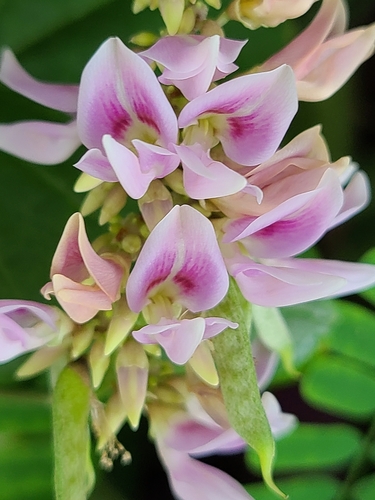
Abrus precatorius (jequirity bean/rosary pea) is a toxic, invasive pantropical climber with a history of traditional medicinal use.
Scientific name: Abrus precatorius L. Introduction Abrus precatorius, commonly known as jequirity bean or rosary pea, is a herbaceous flowering plant in the bean family Fabaceae. It is a slender, perennial climbing vine with long, pinnately leafleted leaves that twines around trees, shrubs, and hedges. The plant is most widely recognized for its seeds: these seeds are used to make beads and for c...
⚠️ Toxicity: Toxicity risk detected (mainly via ingestion); avoid direct contact and ingestion.
View full details →
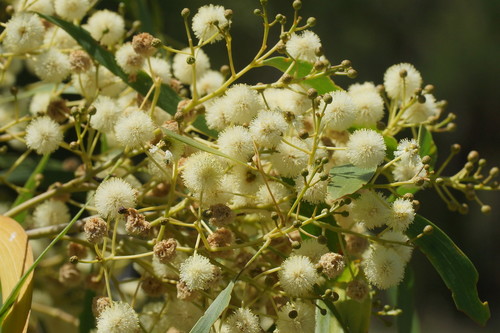
Acacia implexa is a hardy Australian acacia with documented Aboriginal uses and cultivation requirements.
Scientific name: Acacia implexa Benth. Description: Acacia implexa is a long-lived small to medium-sized tree with an upright growth habit and an open crown. It typically reaches 5–15 m (16–49 ft) in height and 4–10 m (13–33 ft) in width. The tree can grow with either a single stem or multiple stems, and has rough greyish bark. Branchlets are commonly lightly covered in a waxy bloom, and do not h...
⚠️ Toxicity: Toxicity risk detected (mainly via contact); avoid direct contact and ingestion.
View full details →
3
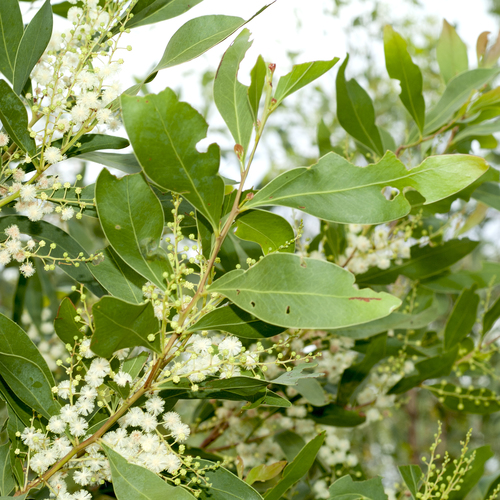
Acacia penninervis Sieber ex DC. is an Australian acacia grown for environmental management, formerly used by Aboriginal people for fishing.
Scientific name: Acacia penninervis Sieber ex DC. Description: Acacia penninervis is typically a shrub or tree that grows to a height of 2 to 8 m (6 ft 7 in to 26 ft 3 in), with an erect to spreading growth habit. It has finely to deeply fissured bark, which is usually dark grey in colour. Its glabrous branchlets are more or less terete, and are occasionally covered in a fine white powdery coatin...
⚠️ Toxicity: Toxicity risk detected (mainly via ingestion); avoid direct contact and ingestion.
View full details →
4
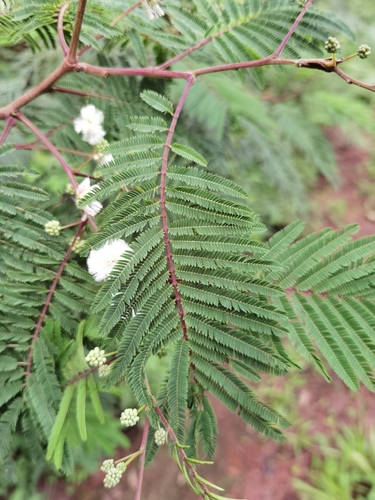
Acaciella angustissima is a thornless fabaceous shrub/small tree native to the Americas, with traditional medicinal uses and cultivation for erosion control.
### Scientific name: Acaciella angustissima (Mill.) Britton & Rose ## Description Acaciella angustissima is typically a shrub, but mature plants can also grow into the form of a small tree. Its height ranges from 2–7 m, varying based on growing conditions. Branches are covered in large clusters of small white flowers. Each flower has 5 petals, with numerous stamens extending well past the petals....
⚠️ Toxicity: Toxicity risk detected (mainly via ingestion); avoid direct contact and ingestion.
View full details →
5
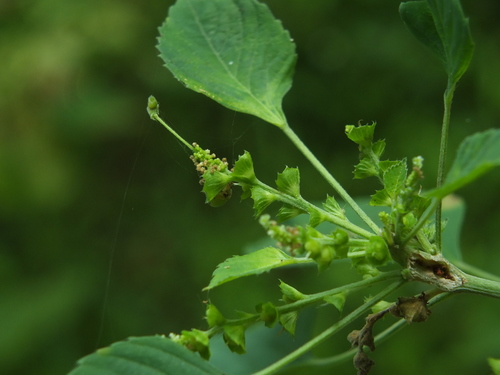
Acalypha indica L. is an annual herb with a wide native range in Old World tropics, used in multiple traditional medicine systems and as food.
Scientific name: Acalypha indica L. Description: It is an erect annual herb, easily identified by the cup-shaped involucre that surrounds its small flowers in a catkin-like inflorescence. Under favorable conditions, it can reach 1.2 m (3.9 ft) tall, though individuals are usually smaller. Its leaves are broadly ovate, with dimensions of 1.2 cm–6.5 cm × 1 cm–4 cm (0.47 in–2.56 in × 0.39 in–1.57 in...
⚠️ Toxicity: Toxicity risk detected (mainly via contact and ingestion); avoid direct contact and ingestion.
View full details →
6
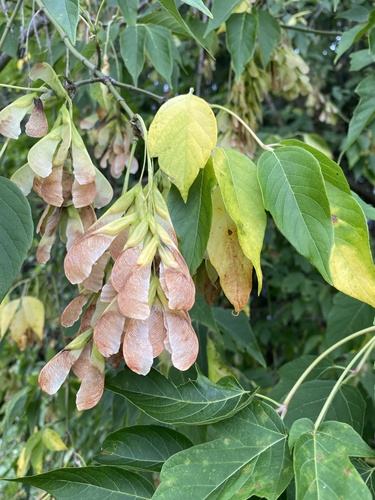
Acer negundo L. (box elder) is a dioecious maple native to North America, invasive in many regions with known uses and toxicity.
Acer negundo L., commonly called box elder, is a fast-growing, relatively short-lived tree. It typically reaches 10–25 metres (35–80 feet) in height, with a trunk diameter of 30–50 centimetres (12–20 inches), and rarely reaches up to 1 m (3 ft 3 in) in diameter. It often grows multiple trunks and can form dense, impenetrable thickets. Its usual lifespan ranges from 60 to 75 years, though it can li...
⚠️ Toxicity: Toxicity risk detected (mainly via ingestion); avoid direct contact and ingestion.
View full details →
7
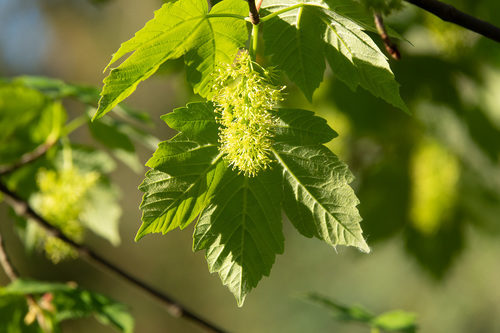
Acer pseudoplatanus (sycamore) is a large deciduous maple native to central/eastern Europe and western Asia, widely introduced and often invasive elsewhere.
Acer pseudoplatanus L., commonly known as sycamore, is a large broad-leaved deciduous tree. At maturity, it reaches 20–35 m (66–115 ft) tall, with branches forming a broad, domed crown. Young trees have smooth grey bark that becomes rougher with age, breaking into scales to expose pale-brown-to-pinkish inner bark. Buds grow in opposite pairs, are ovoid (oval-shaped) and pointed, with green bud sca...
⚠️ Toxicity: Toxicity risk detected (mainly via contact and ingestion); avoid direct contact and ingestion.
View full details →
8
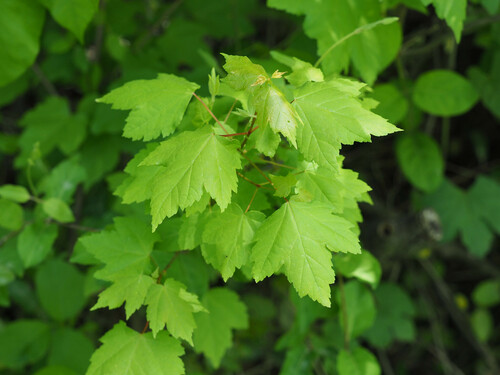
Acer rubrum L. (red maple) is a common, highly variable deciduous tree native to eastern North America, widely cultivated for its fall colour.
Acer rubrum L., commonly known as red maple, is highly variable in its morphological characteristics, even though it can sometimes be easy to identify. It is a medium to large tree that typically reaches 27 to 38 m (90 to 120 ft) in height; it can exceptionally grow over 41 m (135 ft) in the southern Appalachians, where growing conditions are favourable. On mature full-grown trees, leaves are usua...
⚠️ Toxicity: Toxicity risk detected (mainly via ingestion); avoid direct contact and ingestion.
View full details →
9
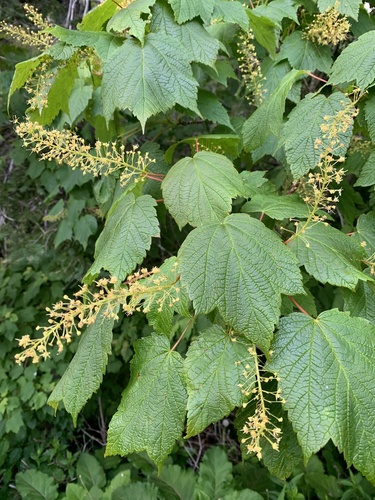
Acer spicatum Lam. is a deciduous understory maple grown for maple syrup and used in herbal medicine and craft wood.
Acer spicatum Lam. is a deciduous shrub or small tree that reaches 3–8 m (10–25 ft) in height. It grows a short trunk, slender branches, and forms a spreading crown. Its leaves are opposite and simple, measuring 6–10 cm (2+1⁄4–4 in) in both length and width, and have 3 or 5 shallow broad lobes. The leaf margins are coarsely and irregularly toothed; the upper surface is light green and hairless, wh...
⚠️ Toxicity: Toxicity risk detected (mainly via contact); avoid direct contact and ingestion.
View full details →
10
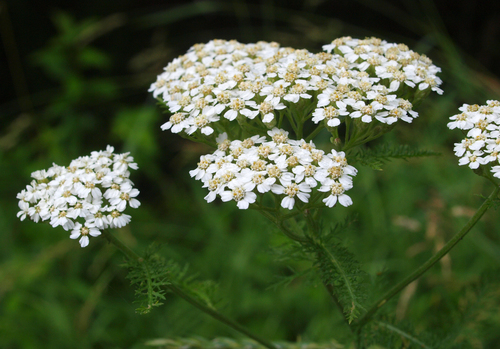
Achillea millefolium, common yarrow, is a widespread herbaceous perennial with cultivation, traditional, and ecological uses.
Achillea millefolium L. is an erect, herbaceous perennial plant that grows one to several stems between 0.2 and 1 metre (8 to 40 inches) tall, with a spreading, rhizomatous growth form. Its leaves are cauline and more or less clasping, arranged spirally and evenly along the stem, with the largest, most petiolate leaves located toward the base. Leaves are 5 to 20 centimetres (2 to 8 inches) long, f...
⚠️ Toxicity: Toxicity risk detected (mainly via contact and ingestion); avoid direct contact and ingestion.
View full details →
11
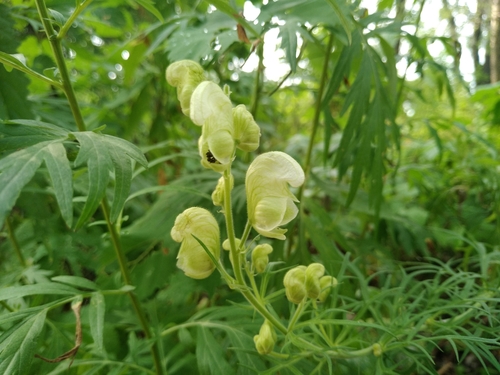
Aconitum anthora L. is a yellow-flowered Aconitum species native mainly to European mountains and northern Asia, with a history of medicinal use.
Aconitum anthora L., commonly called anthora, yellow monkshood, or healing wolfsbane, is a yellow-flowering plant species in the genus Aconitum of the family Ranunculaceae. Its native range is widespread, and is concentrated mostly in European mountain ranges including the Alps and the Carpathians, as well as in the northern parts of Asia. Like all species in the Aconitum genus, Aconitum anthora d...
⚠️ Toxicity: Toxicity risk detected (mainly via contact and ingestion); avoid direct contact and ingestion.
View full details →
12
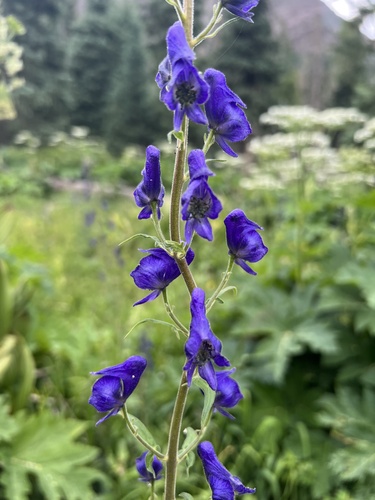
Aconitum columbianum Nutt. is a poisonous herbaceous perennial monkshood native to western North America, sometimes grown as a garden plant.
Aconitum columbianum Nutt. is a herbaceous perennial plant that grows from a large, spindle-shaped tuber-like root. Its stems reach 20 to 300 centimeters in height, and are either erect or trailing. Stem-attached leaves usually have 3–5 deep divisions extending almost to the leaf base, and can have as many as 7 divisions. Approximately 2 millimeters of leaf tissue remains between the point where t...
⚠️ Toxicity: Toxicity risk detected (mainly via ingestion); avoid direct contact and ingestion.
View full details →
13
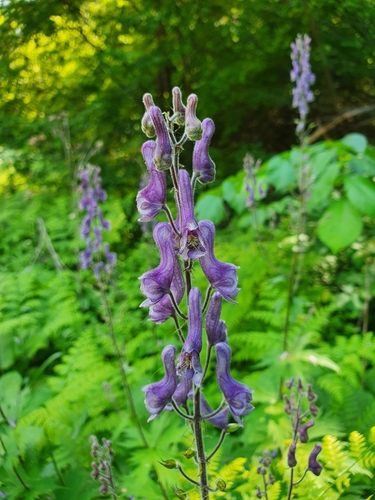
Aconitum lycoctonum (northern wolf's-bane) is a poisonous, ornamental herbaceous perennial flowering plant native to Europe and northern Asia.
Aconitum lycoctonum, commonly called wolf's-bane or northern wolf's-bane, is a species of flowering plant in the genus Aconitum of the family Ranunculaceae. It is native to most of Europe and northern Asia, growing from lowlands to the subalpine zone, primarily in forests and other shaded habitats. Alongside A. napellus, A. lycoctonum is one of the most common European species in the Aconitum genu...
⚠️ Toxicity: Toxicity risk detected (mainly via ingestion); avoid direct contact and ingestion.
View full details →
14
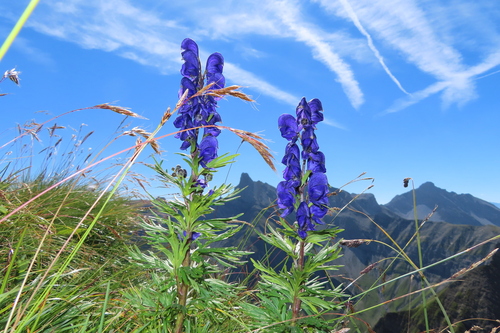
Aconitum napellus (monkshood/wolfsbane) is an extremely toxic European perennial flowering plant grown ornamentally.
Aconitum napellus L., commonly known as monkshood, aconite, Venus' chariot, or wolfsbane, is a highly toxic flowering plant species in the genus Aconitum of the family Ranunculaceae. It is native and endemic to western and central Europe. This herbaceous perennial grows to 1 m (3 ft 3 in) tall, with hairless stems and leaves. The leaves are rounded, with a diameter of 5–10 cm (2.0–3.9 in), and pal...
⚠️ Toxicity: Toxicity risk detected (mainly via contact and ingestion); avoid direct contact and ingestion.
View full details →
15
Aconitum septentrionale Koelle (Aconitum lycoctonum, wolf's-bane) is a poisonous herbaceous perennial flowering plant native to Europe and northern Asia, grown ornamentally.
Aconitum septentrionale Koelle, also widely known as Aconitum lycoctonum (common names wolf's-bane or northern wolf's-bane), is a species of flowering plant in the genus Aconitum, family Ranunculaceae. It is native to much of Europe and northern Asia, where it grows from lowlands to the subalpine zone, mainly in forests and other shaded habitats. Alongside A. napellus, A. lycoctonum is one of the ...
⚠️ Toxicity: Toxicity risk detected (mainly via ingestion); avoid direct contact and ingestion.
View full details →
16

Aconitum tauricum is a poisonous perennial European alpine wildflower that blooms from August to October.
Aconitum tauricum is a perennial forb that grows from non-globose rhizomes. It is a tall, spindly plant with a growth habit that ranges from erect to scandent (vine-like climbing). Its leaves are divided, and faintly visible net-like veins appear on the underside of stem leaves. Flowering occurs primarily from August to October. The inflorescence is paniculate, and it may be simple or branched wit...
⚠️ Toxicity: Toxicity risk detected (mainly via ingestion); avoid direct contact and ingestion.
View full details →
17
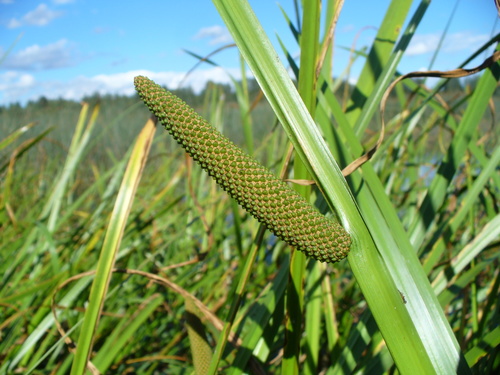
Acorus calamus L. (sweet flag) is a wetland perennial with noted toxicity, and a long history of traditional and commercial uses.
Acours calamus L., commonly called sweet flag, is a herbaceous perennial plant that reaches up to 2 meters (79 inches) in height. Its leaves are similar in appearance to leaves from the iris family. Sweet flag grows in tufts of basal leaves that emerge from a spreading rhizome. The leaves are erect, yellowish-brown, and radical, with pink sheathing at their bases. They are sword-shaped, flat and n...
⚠️ Toxicity: Toxicity risk detected (mainly via ingestion); avoid direct contact and ingestion.
View full details →
18
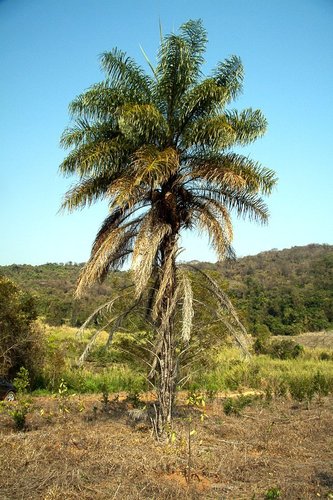
Acrocomia aculeata, the macauba palm, is a spiny Neotropical palm cultivated for biodiesel and food uses.
Acrocomia aculeata is a palm tree that generally reaches 10–15 m in height, and can grow as tall as 15–20 m (50–70 ft). Its trunk can reach up to 50 cm (20 in) in diameter, and is covered in numerous slender, black, sharply pointed 10 cm (4 in) long spines. Leaf petioles are also covered with spines. The leaves are pinnate, 3–4 m (10–13 ft) long, and hold many slender leaflets that measure 50–100 ...
⚠️ Toxicity: Toxicity risk detected (mainly via ingestion); avoid direct contact and ingestion.
View full details →
19
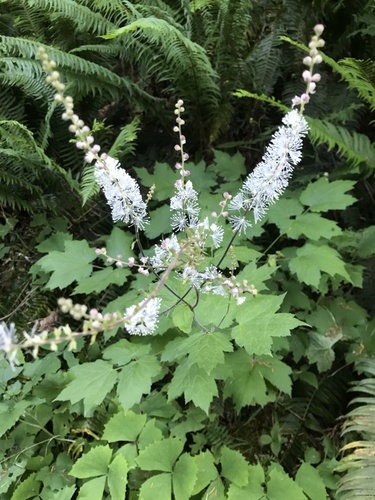
Actaea elata is a poisonous rhizomatous herbaceous perennial native to Pacific Northwest old-growth forests, listed as endangered in British Columbia.
Actaea elata (Nutt.) Prantl is a rhizomatous herbaceous perennial plant that grows to a maximum height of around 1.8 meters. Its entire structure is hairy, including some glandular hairs. Its leaves are composed of multiple lobed, toothed leaflets that are shaped like maple leaves. The plant’s inflorescence is a branching panicle that can reach up to 17 centimeters in length, holding many individu...
⚠️ Toxicity: Toxicity risk detected (mainly via ingestion); avoid direct contact and ingestion.
View full details →
20
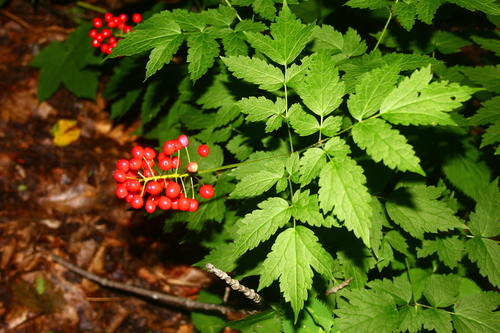
Actaea rubra (red baneberry) is a toxic North American perennial herb, sometimes grown in shade gardens.
Actaea rubra (Aiton) Willd. is a perennial herb that grows 40 to 80 cm (16 to 31 in) tall. Its leaves have coarsely toothed, deeply lobed margins, and the undersides of the foliage commonly have hairy veins. Each stem either bears three leaves that branch near the top, or holds three compound leaves and one upright flowering stalk that emerge from a single point on the main central stem. This plan...
⚠️ Toxicity: Toxicity risk detected (mainly via ingestion); avoid direct contact and ingestion.
View full details →
21
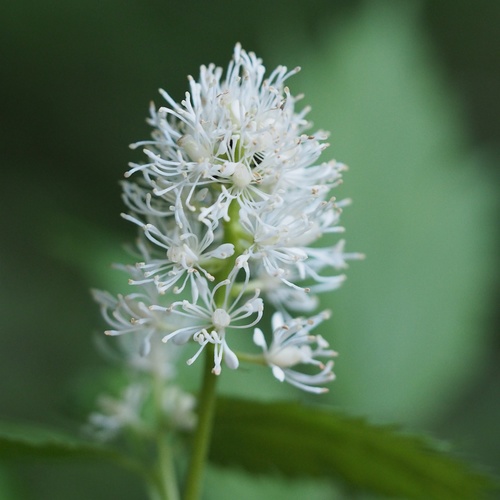
Actaea spicata L. is an herbaceous perennial ornamental plant that is toxic, irritant, and used in homeopathy for joint pain.
Actaea spicata L. is an herbaceous perennial plant that reaches up to 65 cm (2 ft 2 in) in height. Its basal leaves are large, and are either biternate or bipinnate. Its leaflets have more-or-less distinct toothed edges. This species produces white flowers with 3 to 6 petaloid sepals, arranged in an erect raceme. Its fruit is a berry that turns black when ripe, measuring 10–13 mm (0.4–0.5 in) acro...
⚠️ Toxicity: Toxicity risk detected (mainly via ingestion); avoid direct contact and ingestion.
View full details →
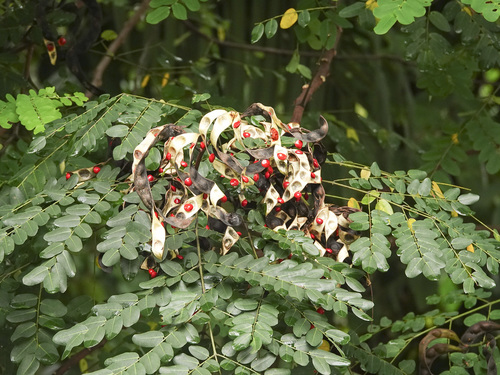
Adenanthera pavonina L., red sandalwood, is a medium tropical tree with bright red seeds, used for multiple purposes including ornament, medicine and timber.
Adenanthera pavonina L., commonly called red sandalwood, is a medium-sized tree that reaches 15–18 m in height, with a trunk up to 45 cm in diameter. Its leaves are bipinnate, growing up to 40 cm long, with (2–)3–5 pairs of pinnae; each pinna bears 8–21 alternate leaflets. The leaflets are ovate-oblong, measuring 2–4.3 cm long and 1 cm broad. Small creamy white flowers, each around 1 cm wide, are ...
⚠️ Toxicity: Toxicity risk detected (mainly via ingestion); avoid direct contact and ingestion.
View full details →
23
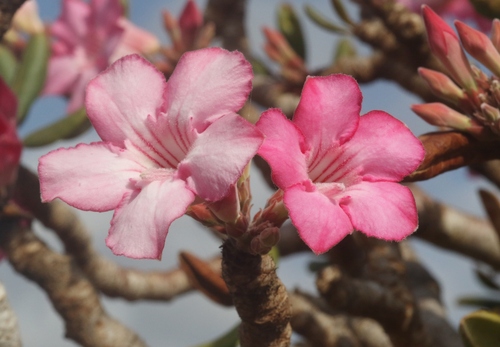
Adenium obesum, the desert rose, is a succulent shrub used as poison for hunting and popular as an ornamental houseplant and bonsai.
Adenium obesum (Forssk.) Roem. & Schult. is an evergreen or drought-deciduous succulent shrub. It may also drop its leaves during cold snaps, and leaf retention can vary depending on subspecies or cultivar. This plant grows to between 0.12–5 m (0.39–16.40 ft) in height, with disproportionately large pachycaul stems and a thick, swollen basal caudex (a protruding rootstock that sits above the soil ...
⚠️ Toxicity: Toxicity risk detected (mainly via contact); avoid direct contact and ingestion.
View full details →
24
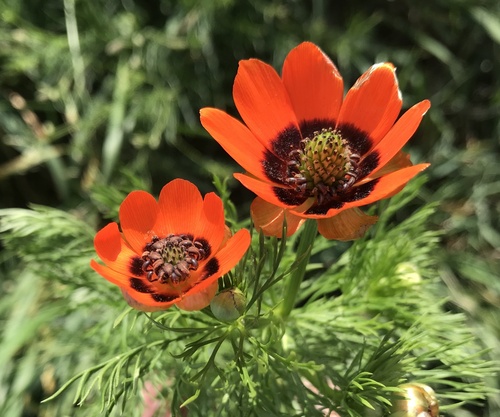
Adonis aestivalis L. is an annual herb that has been widely used for a variety of medicinal purposes, including cardiac treatments.
Adonis aestivalis L. is an annual herb that reaches heights of up to 0.1 meters, or roughly 3 feet. It has erect stems that bear simple, pinnately-dissected, alternate leaves, and a small flower grows at the end of each stem. Its flowers are radially symmetrical, ranging in color from orange to red, with a distinct black splotch at the base of each petal. The petals curl inward to create a cup-lik...
⚠️ Toxicity: Toxicity risk detected (mainly via ingestion); avoid direct contact and ingestion.
View full details →
25
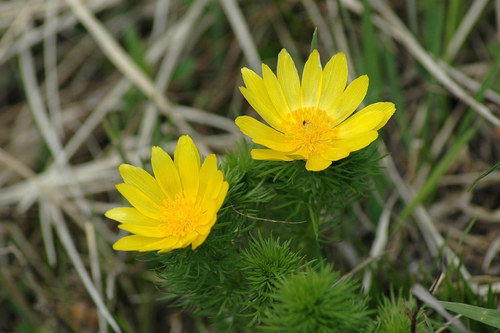
Adonis vernalis is a poisonous perennial flowering plant in the buttercup family with medicinal and ornamental uses native to Eurasia.
Adonis vernalis L., commonly called pheasant's eye, spring pheasant's eye, yellow pheasant's eye, and false hellebore, is a perennial flowering plant in the buttercup family Ranunculaceae. It grows in dry meadows and steppes across Eurasia, and more specifically can be found in open forests, forest clearings, dry meadows, and mesic steppe, mostly on calcareous soil. Isolated populations occur from...
⚠️ Toxicity: Toxicity risk detected (mainly via ingestion); avoid direct contact and ingestion.
View full details →
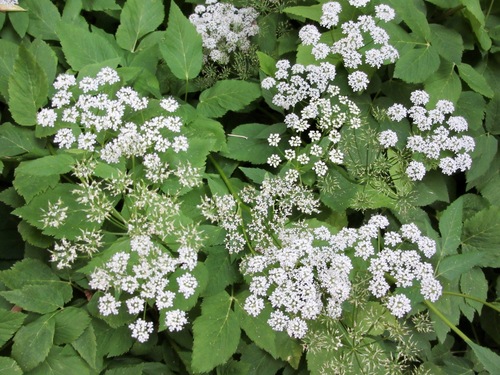
Aegopodium podagraria L. is an herbaceous perennial with edible young leaves, medicinal uses, and invasive ornamental potential.
Aegopodium podagraria L. is a herbaceous perennial that grows up to 1 metre (3+1⁄2 ft) tall from underground rhizomes. Its stems are erect, hollow, and grooved, while upper leaves are ternate, broad, and toothed. It flowers in spring and early summer, producing numerous flowers arranged in an umbrella-shaped compound umbel, which is split into smaller individual umbels called umbellets. Each umbel...
⚠️ Toxicity: Toxicity risk detected (mainly via ingestion); avoid direct contact and ingestion.
View full details →
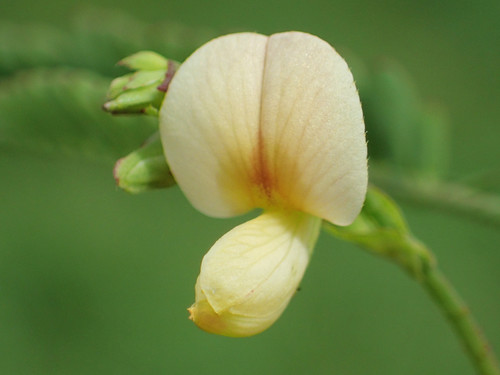
Aeschynomene indica L. is a variable weedy legume with multiple uses, though its seeds are toxic to pigs.
Aeschynomene indica L. is a variable species that can grow as an annual or perennial herb, or as a subshrub. It reaches heights between 30 centimeters and 2.5 meters tall. Its stem is usually thin, around 0.5 centimeters wide, but may grow as thick as 2.5 centimeters wide at the base. The stem can be spongy, corky, or sometimes hollow, and it is always cylindrical. Most of the plant is hairless, b...
⚠️ Toxicity: Toxicity risk detected (mainly via ingestion); avoid direct contact and ingestion.
View full details →
28
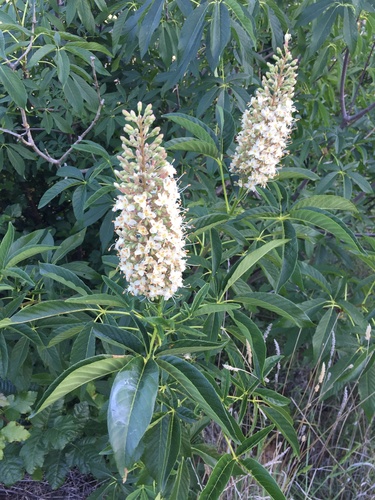
Aesculus californica, the California buckeye, is a western North American native tree or shrub with toxic seeds, grown ornamentally and used historically by Native groups.
Aesculus californica (Spach) Nutt. is a large deciduous shrub or small tree that grows to 4–12 m (13–39 ft) tall. It typically has multiple trunks, a crown that is as broad as the plant is tall, and gray bark that is often covered in lichens and mosses. This species is long-lived, with an estimated lifespan of 250–280 years, and a maximum recorded lifespan of 300 years. Its leaves are dark green a...
⚠️ Toxicity: Toxicity risk detected (mainly via ingestion); avoid direct contact and ingestion.
View full details →
29
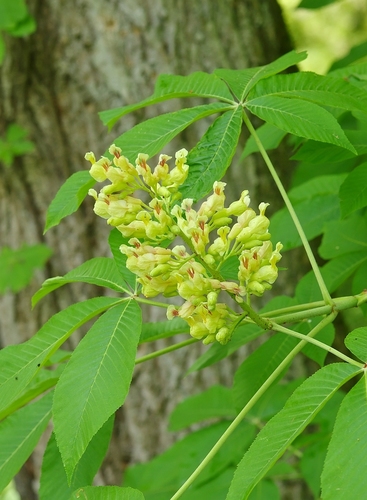
Aesculus flava, yellow or sweet buckeye, is a large deciduous North American tree grown ornamentally for its showy flowers and fall color.
Aesculus flava Sol., commonly known as yellow buckeye or sweet buckeye, is a canopy tree with an irregular to upright-oval growth form. It typically reaches 50 to 75 feet in height, with stout picturesque branches that often sweep the ground. In mountain habitats it can grow up to 90 feet tall and over 40 feet wide, with a 3-foot diameter trunk, while it more often takes the form of a small tree o...
⚠️ Toxicity: Toxicity risk detected (mainly via ingestion); avoid direct contact and ingestion.
View full details →
30
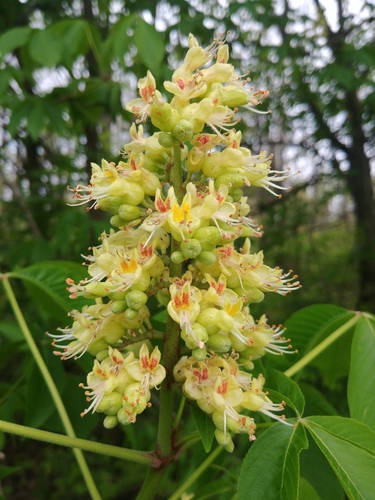
Aesculus glabra Willd., or Ohio buckeye, is a poisonous North American tree with potential anti-cancer extract properties.
Aesculus glabra Willd. has palmately compound leaves, each bearing five leaflets that are 8 to 16 cm (3 to 6 1⁄2 inches) long and wide. In spring, it produces flowers in panicles; the flowers are red, yellow, or yellow-green, and measure 2–3 cm (3⁄4–1 1⁄4 inches) long. Unlike the related yellow buckeye, its stamens are longer than its petals. The fruit is a round capsule 4 to 5 cm (1 1⁄2 to 2 inch...
⚠️ Toxicity: Toxicity risk detected (mainly via ingestion); avoid direct contact and ingestion.
View full details →
Frequently Asked Questions
How many poisonous plantae species are there?
This guide covers 30 known poisonous or toxic plantae species with photos and identification tips. Always consult an expert before handling unknown species.
How to identify poisonous plantae species?
Use visual identification features like color, shape, and habitat. The iNature app can identify species instantly using AI, even without internet. Never consume any wild species without expert confirmation.
Sources: GBIF, iNaturalist, Wikipedia · Disclaimer
Identify any species instantly — even offline
iNature uses on-device AI to identify plants, animals, fungi and more. No internet needed.
Download iNature — FreeStart Exploring Nature Today
Download iNature for free. 10 identifications on us. No account needed. No credit card required.
Download Free on App Store
