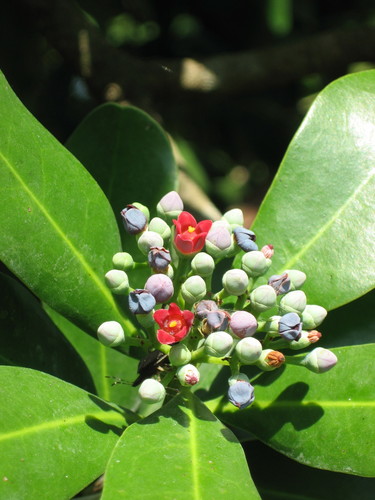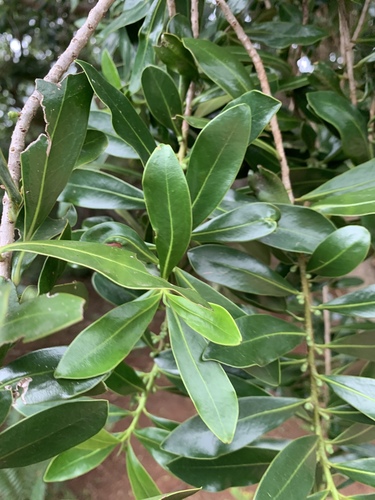
About Warburgia salutaris (Bertol.fil.) Chiov.
Taxonomic Classification
Warburgia salutaris, commonly called the pepper-bark tree, is a tree species belonging to the Canellaceae family.
Common Names
It has multiple common names across regional southern African languages: Peperbasboom in Afrikaans, Molaka in Sotho, Mulanga in Venda, and Isibaha in Zulu.
Geographical Distribution
This species occurs in eastern and southern Africa, with confirmed populations in Botswana, Namibia, Kenya, Tanzania, Zambia, Mozambique, South Africa, Eswatini, Malawi, and Zimbabwe.
Threat Status
It is currently threatened by habitat loss.
Overharvesting Risk
The tree is a popular medicinal plant, and overharvesting from wild populations is an additional factor contributing to its endangered status.
Conservation Measures
It is designated as a protected tree in South Africa, and various research projects are exploring controlled propagation methods to support future outplanting into wild habitats.
Size and Growth Form
This is an erect evergreen tree that typically reaches a maximum height of around ten meters, though individuals may occasionally grow to 20 meters tall.
Canopy Characteristics
It produces a thick canopy of aromatic, shiny green leaves.
Leaf Morphology
The leaf blades are lance-shaped, growing up to 11 centimeters long and 3 centimeters wide.
Flower Structure
Its flowers have ten yellow-green petals, each measuring just under one centimeter long.
Flower Arrangement
Flowers grow either singly or in small clusters of up to three blooms.
Fruit Characteristics
The fruit is a leathery berry that turns purple or black when ripe, and can reach up to 4 centimeters wide.
Culinary Uses
The leaves of this tree are used to add a peppery flavor to food and tea.
Bitter Taste Source
The bitter taste of the tree's bark and leaves comes from naturally occurring iridoids.
Wood Uses
Its aromatic, oily, yellowish wood is used for firewood.
Ornamental Use
The species is also attractive and makes a good shade tree.
Traditional Malaria Treatment
In traditional medicine practices, the Maasai people use this plant to treat malaria.
Respiratory Remedy Preparation
It is prepared as snuff or smoked to address respiratory complaints including the common cold and cough.
Bark Market Presence
Dried bark of the tree is sold in markets in Tanzania and other regions.
Other Traditional Medicinal Uses
Dried bark is also chewed, and the juice is swallowed, as a traditional remedy for stomach-ache, constipation, coughs, fever, toothache, muscle pains, weak joints, and general body pains.