About Vicia villosa Roth
Nomenclature and Native Range
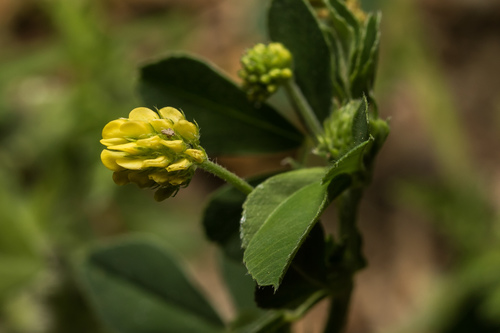
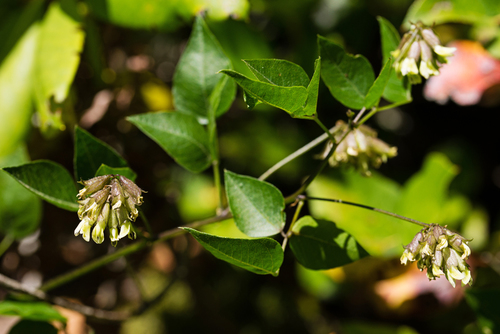
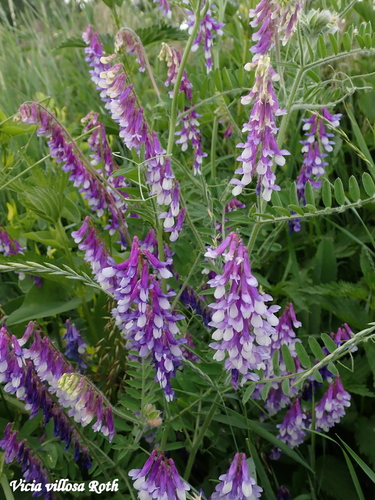
Vicia villosa Roth, commonly called hairy vetch, fodder vetch, or winter vetch, is a legume native to parts of Europe and western Asia.
Cultivation Uses
It is cultivated for use as a forage crop, fodder crop, cover crop, and green manure.
Non-Native Distribution in North America
Though not native to North America, it grows in every U.S. state and most Canadian provinces.
Invasive Status in the U.S.
Multiple U.S. states including Alaska, Florida, Georgia, Kansas, Michigan, Minnesota, Nebraska, Oregon, and Washington classify it as invasive.
Global Invasive Status
It is also considered invasive in Japan and in non-native regions of Europe.
Similar Species Distinction
Hairy vetch is very closely related to tufted vetch (Vicia cracca); the most distinct visible difference between the two species is that tufted vetch has a smooth stem.
Common Name Overlap
The species Vicia hirsuta is also sometimes referred to as hairy vetch.
Recognized Subspecies
Five subspecies of Vicia villosa are currently recognized: Vicia villosa ssp. ambigua (Guss.) Kerguelen, which is also known as ssp. elegantissima and ssp. pseudocracca; Vicia villosa ssp. eriocarpa (Hausskn.) P.W.Ball; Vicia villosa ssp. microphylla (d'Urv.) P.W.Ball; Vicia villosa ssp. varia (Host) Corb., which is also known as ssp. dasycarpa; and Vicia villosa ssp. villosa.
Agricultural Use in the U.S.
In the United States, hairy vetch is widely used by organic farmers as a winter cover crop and in no-till farming.
Beneficial Agricultural Traits
It is valued for this use because it is winter hardy and can fix up to 200 pounds per acre of atmospheric nitrogen.
Cultivation Disadvantages
There are two key disadvantages of hairy vetch for commercial production agriculture: a portion of its seeds are hard seeds, and it tends to shatter seeds early in the growing season.
Volunteer Weed Risk
This causes the plant to persist as a volunteer weed in fields later in the season, an issue that is particularly problematic for wheat production.