About Vicia sepium L.
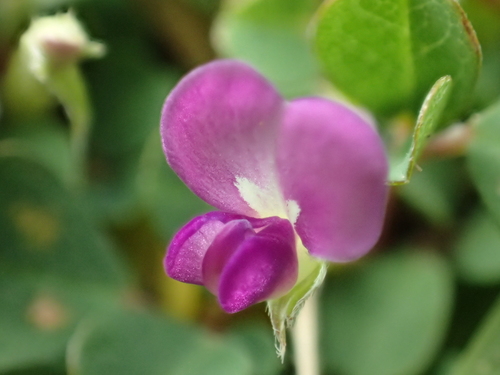
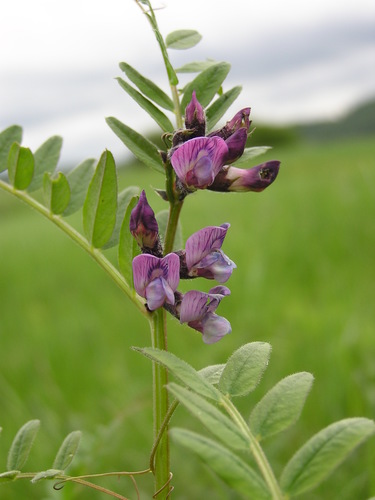
Vicia sepium L., commonly called bush vetch, is a rhizomatous climbing plant. It climbs using branched tendrils located at the end of each leaf stem, which curl around surrounding plants to support growth. Its unbranched stems grow singly; they are almost glabrous (hairless), occasionally bearing a small number of soft hairs. Stems are most often 30 to 40 cm long, but may reach up to 100 cm in length. Leaves are compound and pinnate, with 4 to 8 pairs of opposite leaflets, and terminate in branched tendrils. Leaflets measure 20 to 30 mm long and 8 to 10 mm wide, shaped like elongated ellipses with broad bases, and are glabrous on both sides. Each very short flower stalk holds 2 to 6 nearly sessile flowers. Individual flowers are 12 to 15 mm long, and range in color from reddish-lilac to lilac-blue. Bush vetch resembles common vetch (Vicia sativa) in appearance, but differs in two key traits: Vicia sativa stems produce more flowers per stem than bush vetch, and bush vetch is usually hairless while V. sativa is slightly hairy. It flowers between May and August, and occasionally continues flowering into November. It is mainly cross-pollinated by insects. Its fruit are elongated, rhomboid black pods (legumes) that measure 30 to 40 mm long and 6 to 8 mm wide; these pods ripen primarily between July and August. The seeds inside the pods are black or brown. This species has good potential as a forage crop with high nutritional value, and it produces high seed yields even in less favorable growing conditions. It can be used to make hay or silage, especially arable silage produced from perennial grass-vetch mixtures. Bush vetch provides habitat and food for a variety of generalist legume-feeding insects, including beetles, weevils, and caterpillars. Bumblebees and honeybees visit its flowers to collect nectar. It grows naturally in hedges and grass thickets.