About Vanellus spinosus (Linnaeus, 1758)
Scientific Classification & Size
The spur-winged lapwing, scientifically named Vanellus spinosus (Linnaeus, 1758), is a medium-large wader.
Plumage Coloration
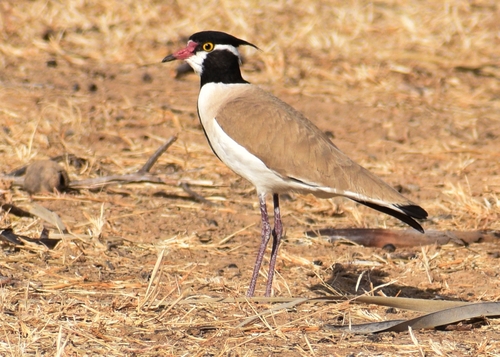
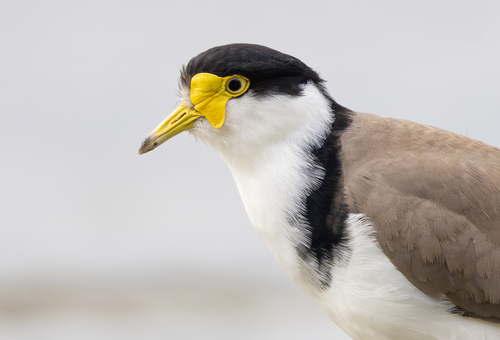
It has a black crown, chest, foreneck stripe, and tail; its face, the remainder of its neck, and its belly are white, while its wings and back are light brown.
Appendages & Vocalization
Both its bill and legs are black, and it produces a distinctive loud did-he-do-it call.
Common Name Origin
The species' common name comes from a small claw, or spur, that is hidden in each of its wings.
Breeding Range
This lapwing breeds around the eastern Mediterranean, and across a broad band that stretches from sub-Saharan west Africa to Arabia.
Migratory Patterns
Breeding populations from Greece and Turkey are migratory, while all other populations stay in their range year-round.
Population Trend & African Habitat
The species is declining across its northern range, but it remains abundant across most of tropical Africa, where it can be found in almost any wetland habitat within its range.
Conservation Agreement
Spur-winged lapwing is one of the species covered by the Agreement on the Conservation of African-Eurasian Migratory Waterbirds.
Range Expansion
In eastern and southern Africa, the species' range has expanded: it was first recorded in Zambia in 1999, and has since spread further south and west.
Preferred Habitat
This species prefers marshes and other similar freshwater wetland habitats.
Diet
It feeds on insects and other invertebrates, which it picks from the ground.
Reproduction
It lays four blotchy yellowish eggs in a scrape it makes on the ground.
Defensive Behavior
The spur-winged lapwing has been recorded sometimes using its wing-claws to attack animals, and rarely people, that come too close to its exposed young.