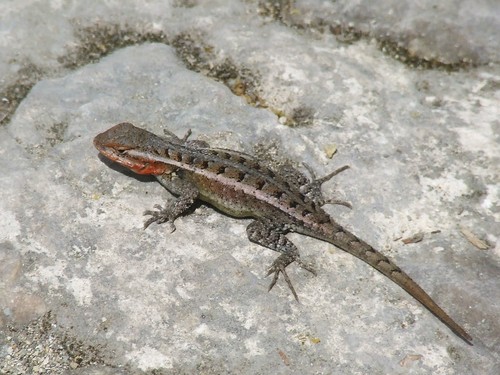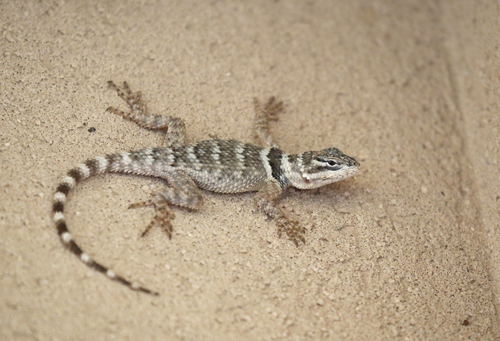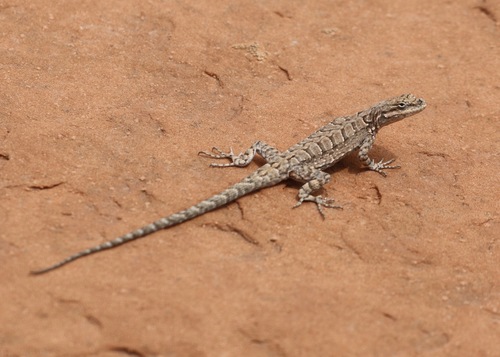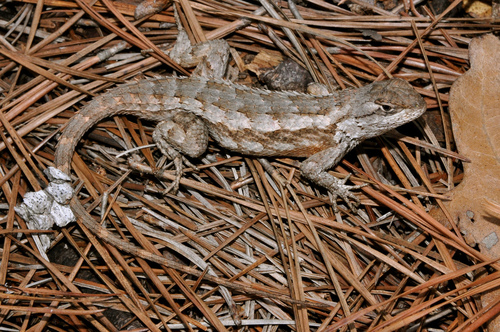
About Urosaurus graciosus Hallowell, 1854
Distinction from Urosaurus ornatus
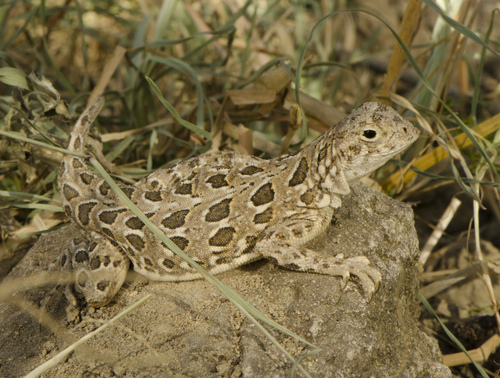
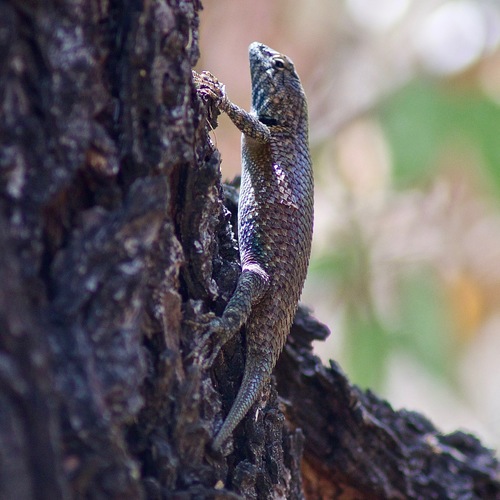
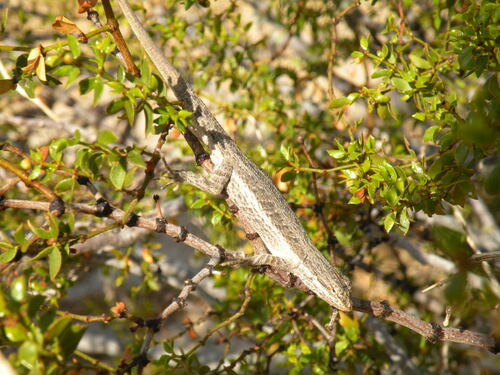
To identify Urosaurus graciosus, it can be distinguished from its close relative the ornate tree lizard, Urosaurus ornatus, by two key traits: its tail is more than twice the length of its snout-vent length, and it lacks a row of smaller scales running down the center of the band of enlarged dorsal scales.
Distinction from Urosaurus nigricauda
Compared to the black-tailed brush lizard, Urosaurus nigricauda, U. graciosus again has a tail over two times its snout-vent length, and it has relatively large dorsal scales that transition abruptly to granular lateral scales.
By contrast, U. nigricauda has only slightly enlarged dorsal scales that transition gradually to granular lateral scales.
Genus-level identification trait
Urosaurus graciosus can be told apart from all other members of the Urosaurus (brush lizard) genus by its geographic distribution.
Desert habitat range
Urosaurus graciosus inhabits the Mojave Desert and the northwestern Sonoran Desert.
Geographic distribution by state
Its geographic range covers the U.S. states of California, Arizona, and Nevada, as well as the Mexican states of Baja California and Sonora.
Reproduction mode
Urosaurus graciosus reproduces via oviparity, meaning it lays eggs.