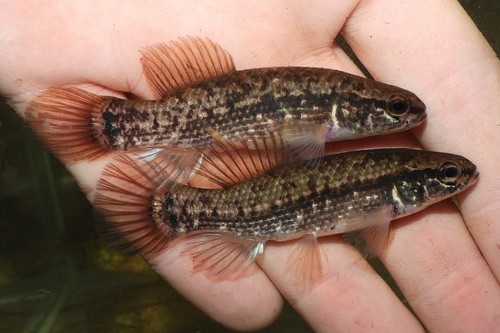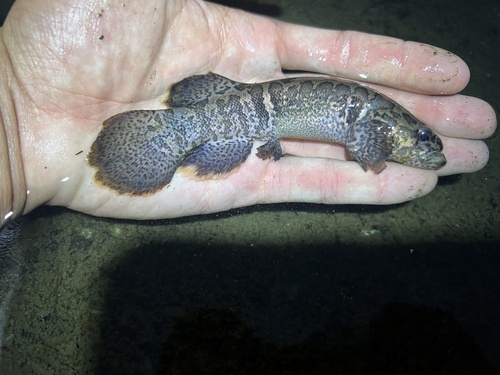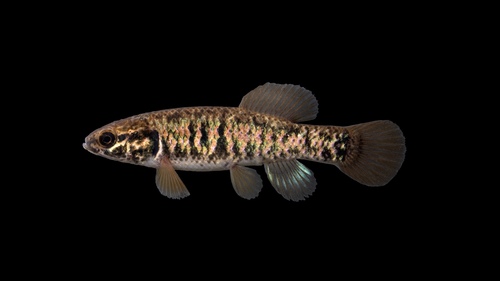
About Umbra limi (Kirtland, 1840)
Scientific Name
The scientific name of the central mudminnow is Umbra limi (Kirtland, 1840).
Size and General Habitat
This fish is typically 51 to 102 mm long, and lives in slow-moving water in ponds, lakes, and streams across central North America.
Burrowing and Low Oxygen Tolerance
It burrows tail-first into mud, and can tolerate low oxygen levels, which lets it survive in waterways that cannot support other fish.
Coloration
Its brownish upper body, mottled sides, and pale belly provide camouflage that matches its muddy habitat.
Predators
When caught out of water, it is preyed on by birds, foxes, and snakes; many fish species including grass pickerel, sunfishes, northern pike, and catfishes also eat it.
Interspecific Interaction Performance
According to Paszkowski and Tonn, central mudminnows perform better in environments shared with other fish species than in environments with only mudminnows.
This occurs because interspecific interactions provide a greater contribution for the mudminnow, which is classified as a fugitive species.
Diet Range
The central mudminnow is a carnivorous species that feeds across a wide range of prey: it eats large numbers of zooplankton, plus benthic and epiphytic macroinvertebrates.
Winter Feeding Habit
Adult central mudminnows feed actively in winter, targeting littoral fish.
Colgan and Silburt Benthic Feeding Study
In an experiment by Colgan and Silburt, central mudminnows generally fed more on benthic resources than planktonic resources.
Out of 511 food items found in the fish's stomachs, zooplankton made up only 0.7%.
Follow-Up Zooplankton Stomach Content Study
A follow-up study by Colgan and Silburt found an average of only 0.9% of the contents of dissected U. limi stomachs was zooplankton.
The pair also reported that the central mudminnow prefers amphipods, coleopterans, and anisopterans, and avoids zooplankton and other planktonic species.
Primary Prey Composition
Combined, chironoids and gastropods made up around 60% of the total volume of dissected stomach contents, confirming that the mudminnow feeds primarily in benthic areas.
Winter Air Breathing Adaptation
The central mudminnow uses a modified gas bladder to breathe air pockets trapped between ice and water during the winter, which lets it remain active and feed through the season.
It has been recorded feeding in winter at temperatures as low as 1.1 °C.
Preferred Habitat Conditions
This species generally prefers low-flow, warm water with low dissolved oxygen levels, and can survive hypoxic conditions thanks to its ability to breathe air.
Distribution Range Overview
Umbra limi is widely distributed across central North America west of the Appalachian Mountains.
It lives in many freshwater systems including lakes, streams, and wetlands, most often in the near-shore littoral zone around dense vegetation cover.
Native Range Details
Its native range covers the St. Lawrence River, Great Lakes, Hudson Bay, Red River, and Mississippi River basins, stretching from Quebec to Manitoba in the north, and south to central Ohio, western Tennessee, and northeastern Arkansas.
Introduced Populations
It has also been introduced to many tributaries in Connecticut and Massachusetts.
Threats from Human Development
The marshy lands and river habitats that the central mudminnow relies on are constantly impacted by human development, which is likely causing population declines for the species.
Anti-Predator Burrowing Behavior
To avoid being captured, the central mudminnow will bury itself in mud or sand.
Shoaling Behavior
According to Jenkins and Miller, the central mudminnow is a shoaling fish that prefers to live with other mudminnows rather than alone, and this shoaling behavior reduces its risk of predation.
Jenkins and Miller also confirmed the same set of predators previously recorded for the species.