About Triprion spatulatus Günther, 1882
Species Classification
Triprion spatulatus is a species of large frog.
Size
Males reach 87 mm (3.4 in) and females reach 101 mm (4.0 in) in snout–vent length.
Head Shape
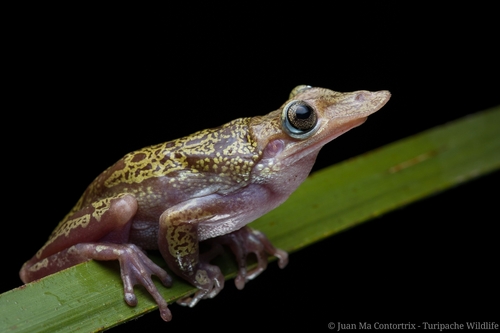
The head has broad labial flanges, which gives it a spoon-like shape.
Etymology
This shape is referenced in both the species-specific epithet spatulatus, from the Latin word spatulus meaning spoon, and the species' common name.
Eye Features
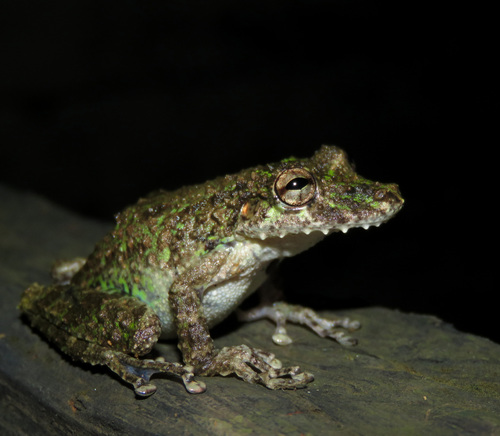
The eyes are moderately large, protuberant, and oriented anterolaterally.
Tympanum Features
The tympanum is visible, but is partially obscured by labial, postorbital ridges, or both.
Limb Structure
The fingers have large discs and some rudimentary webbing, while the toes are around two-thirds webbed.
Nominotypical Subspecies Coloration
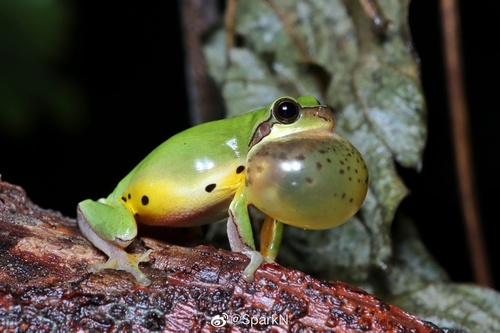
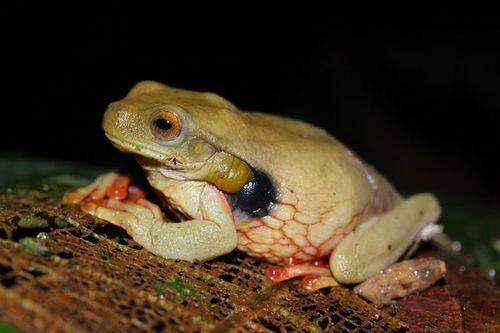
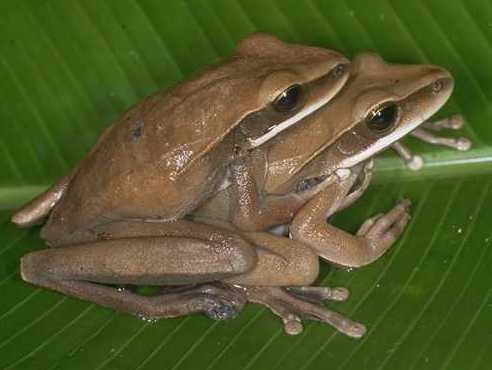
For the nominotypical subspecies, the general body coloration is pale green or yellowish tan with flecks ranging from green to yellow.
Nominotypical Subspecies Body Part Coloring
The head is somewhat darker than the back, the flanks have a yellowish tint, and the venter is white, apart from grayish brown flecks in the vocal sac of breeding males.
T. s. reticulatus Coloration
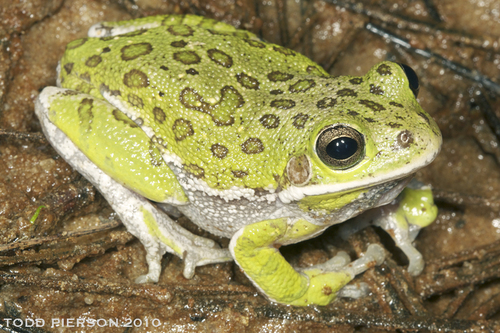
The subspecies T. s. reticulatus has a pale yellowish tan or olive-green base color, patterned with dark brown or black reticulations and spots.
Habitat and Elevation Range
Triprion spatulatus inhabits lowland xeric and thorn-scrub forest, as well as tropical deciduous forest, at elevations up to 350 m (1,150 ft) above sea level.
Breeding
Breeding occurs in temporary streams and ponds created by rainfall, so it is limited to the rainy season.
Conservation Status and Threats
This is a common species that is not currently facing significant threats, although fire and changes in rainfall patterns are potential threats.
Protected Range Presence
Its known range includes the Chamela-Cuixmala Biosphere Reserve.