About Scinax boulengeri (Cope, 1887)
Taxonomy and Common Name
Scinax boulengeri, commonly known as Boulenger's snouted tree frog, is a species of frog in the family Hylidae.
Geographic Range
It has been confirmed to occur in Colombia, Costa Rica, Nicaragua, and Panama, and may also be present in Honduras.
Habitat Types
Its natural habitats include subtropical or tropical moist lowland forests, intermittent freshwater marshes, pastureland, plantations, rural gardens, and urban areas.
Elevation Range
It can be found at elevations up to 600 meters above sea level.
Adult Size
Adult males measure 36 to 49 mm in snout-vent length, while adult females measure 42 to 53 mm.
Dorsal Appearance
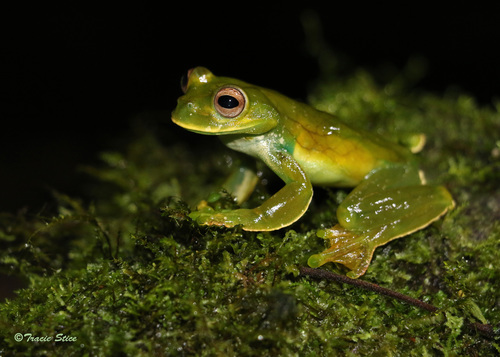
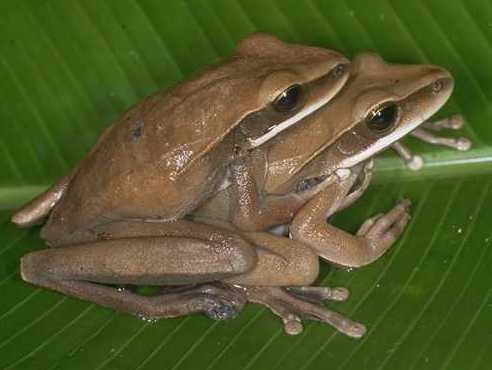
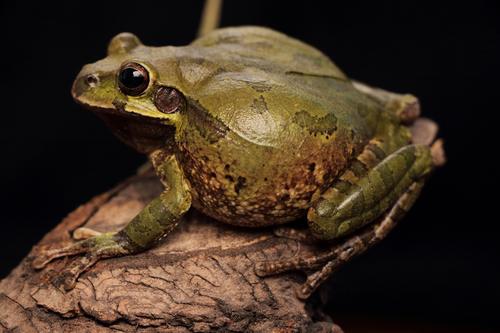
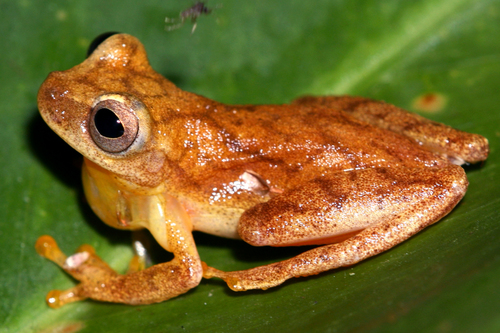
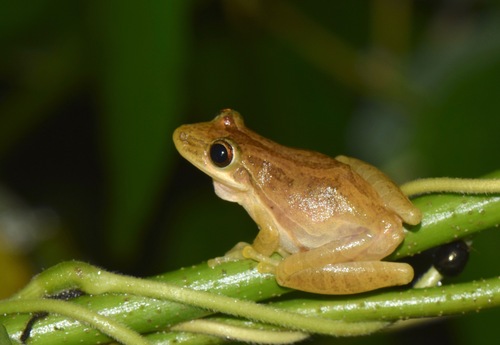
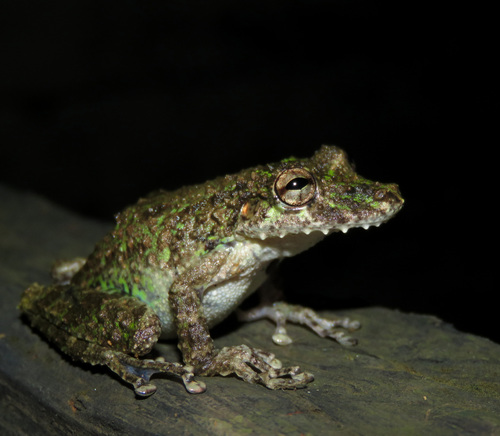
This frog is gray, dull green, or light brown in overall color, with darker brown markings and tuberculate skin on its dorsum.
Head and Limb Markings
It often has a triangular dark marking between its eyes, and dark bars on both its front and back legs.
Ventral and Lateral Coloration
It has a white throat and white ventrum, a green midsection, and yellow-green sides.
Behavior and Perch Sites
This species is arboreal and nocturnal; when encountered by humans, it is typically perched on a shrub or other mid-sized plant.
Breeding Season Timing
Unlike many other tree frog species, its breeding season is not closely tied to rainfall.
Male Breeding Behavior
Males hide in vegetation near the edges of ponds and call to attract females for approximately four hours.
Egg Laying
Females lay clutches of 600 to 700 eggs in shallow water.
Development Cycle
The eggs hatch between 1 and 1.5 days after being laid, and the silver-yellow tadpoles complete development into adult frogs in 40 to 88 days.