About Trapa natans L.
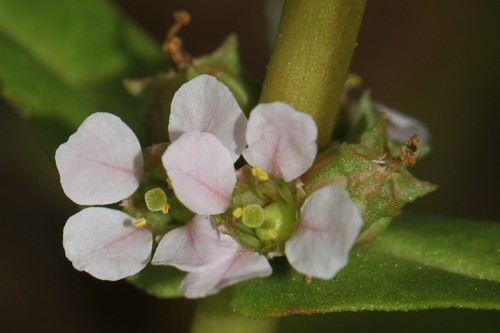
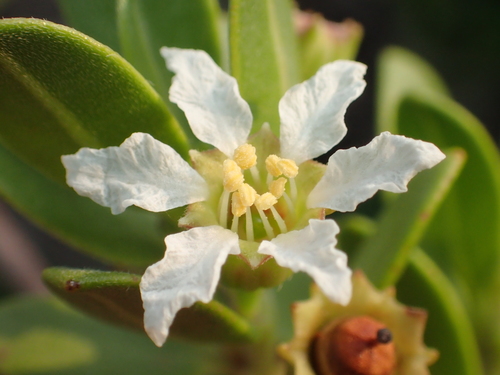
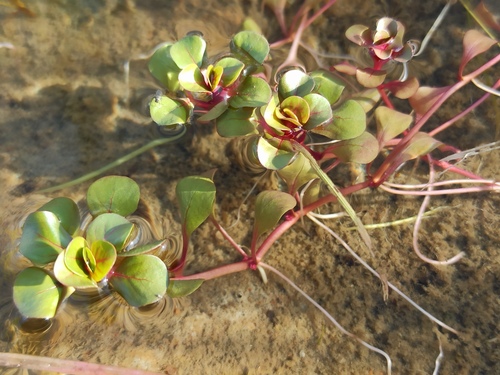
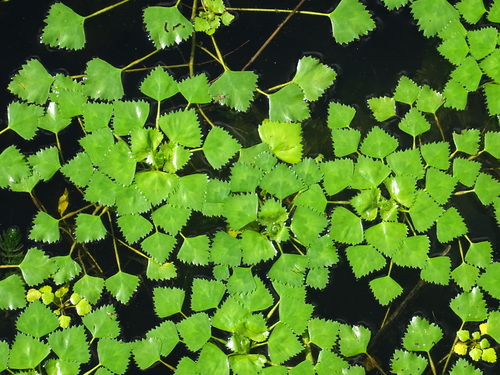
Trapa natans L. is an annual aquatic plant that grows in shallow, slow-flowing fresh water, rooted in bottom mud. It produces a submerged stem up to approximately 2 meters (7 feet) long and 6 mm (0.24 inches) thick that bears thin submerged leaves. The plant forms floating leaf rosettes that reach around 50 cm (20 inches) across. These floating surface leaves are diamond-shaped with toothed edges, growing up to 5 cm (2 inches) long and 6 cm (2.5 inches) wide, and attach to petioles (leaf stalks) that can be up to 21 cm (8.3 inches) long. Its flowers have 4 white to pink petals up to 10 mm (0.4 inches) long, 4 sepals, 4 stamens, and one pistil. The ovary starts with 2 ovules, but only one matures. Flowers are mostly self-fertilizing, and are occasionally pollinated by insects. The fruit is a single-seeded drupe classified as a nut, which develops 2 to 4 barbed spines 12 mm (0.5 inches) long from the original sepals. This plant contains an ellagitannin polyphenol called bicornin. This species prefers warm, sunny, nutrient-rich areas with soft, organic-rich bottom mud. It requires water temperatures above 22 °C (72 °F) for at least 2 months each year, and is currently expanding its range northward due to climate change. The fruits and seeds of Trapa natans are edible raw or cooked. Archaeological discoveries from southern Germany suggest prehistoric populations in the area may have relied heavily on wild water caltrops to supplement their regular diet, and may have used these plants as their main food source when cultivated cereal crops failed. It has been used as an important food for prayer offerings in China since the Zhou dynasty; the second century BC text *The Rites of Zhou* instructed worshippers to carry bamboo baskets filled with dried water caltrops for offerings. In India and Pakistan, it is called singhara (or paniphal in eastern India), and is widely cultivated in freshwater lakes. Its fruits are eaten raw or boiled; dried fruits can be ground into a flour called singhare ka atta, which is used in many religious rituals, and can be eaten as part of the phalahar (fruit diet) observed during the Hindu fasting period of navratas. Water caltrops were sold in markets across Europe until 1880. In northern Italy, the nuts were sold roasted similarly to how sweet chestnuts (Castanea sativa) are sold today. Water caltrops were widely used as human food across many parts of Europe until the early 20th century, but the species has since become rare and nearly extirpated in Europe. This decline has been linked to several factors: climate fluctuations, changes to the nutrient content of water bodies, and the drainage of many wetlands, ponds, and oxbow lakes.