About Adansonia za Baill.
Species Identity
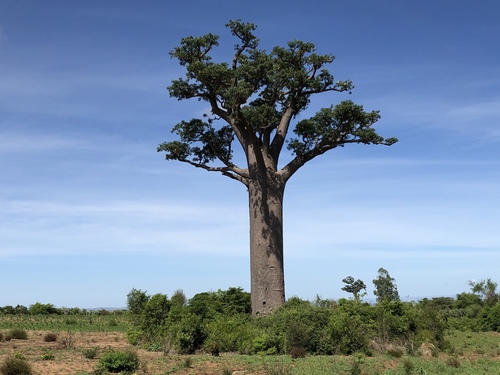
Adansonia za Baill. is a large deciduous pachycaul (thick-stemmed) tree.
Size
It reaches 10–40 metres (33–131 ft) in height, and can grow up to around 6 metres (20 ft) in diameter.
Trunk and Branch Color
The trunk and branches have a brownish-rose color.
Trunk Shape
The trunk is widest at the base, and narrows noticeably toward the top of the tree.
Endemic Range
This species is endemic to southern and north-western Madagascar.
Population Status
Its existing populations are severely fragmented, and population numbers are declining due to habitat loss and logging.
Habitat Types
Adansonia za grows in arid scrublands, deciduous forests, savannah, and Madagascar spiny forests.
Growth Requirements
It prefers sunny locations and well-drained soils, and grows at elevations up to 800 metres (2,600 ft) above sea level.
Abundance Gradient
It acts as the dominant tree in some of southern Madagascar’s deciduous forests, and becomes less common further north.
Edible Parts and Seed Content
The fruit pulp, seedling roots, and seeds of Adansonia za are edible; seeds contain 11% oil.
Drought Use Cases
During droughts, its wood can be fed to cattle, and its trunk can be hollowed out to store water.
Other Traditional Uses
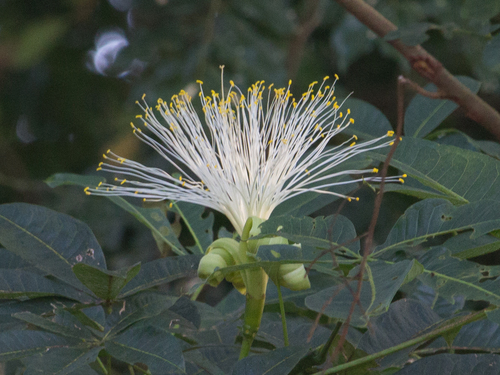
Bark fibre from the tree can be used to make cloth or rope, and the flowers can be used to soothe sore throats.