About Terminalia elliptica Willd.
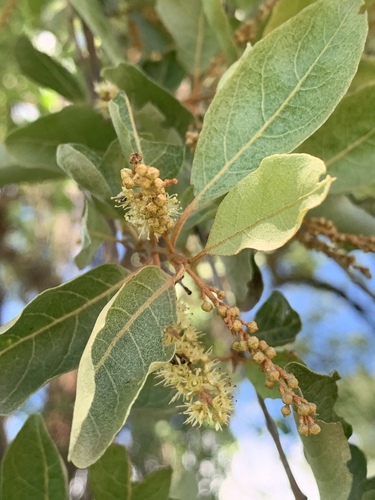
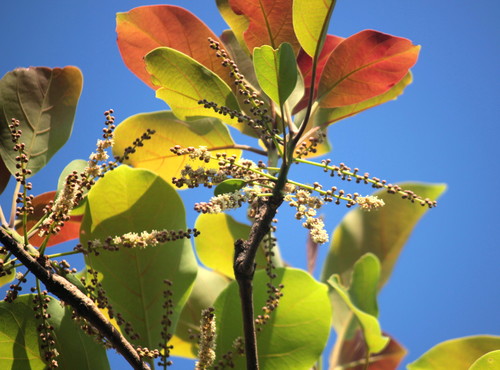
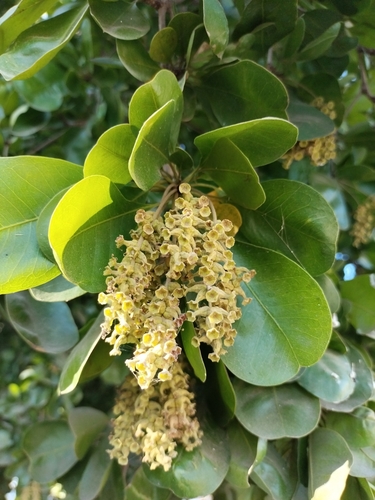
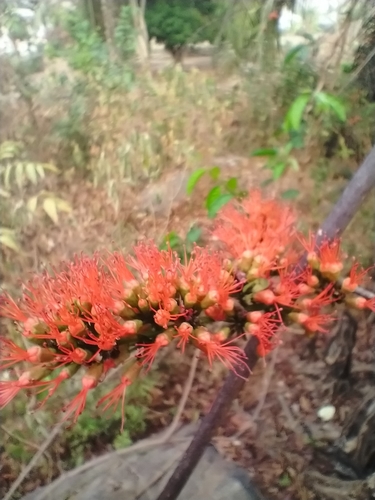
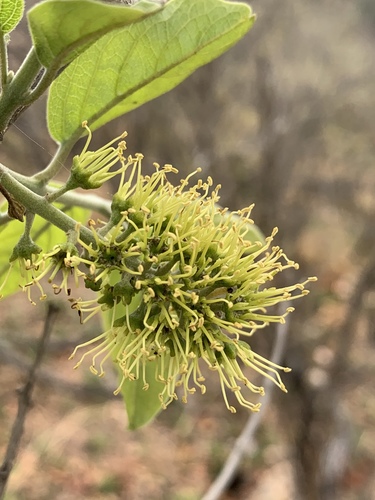
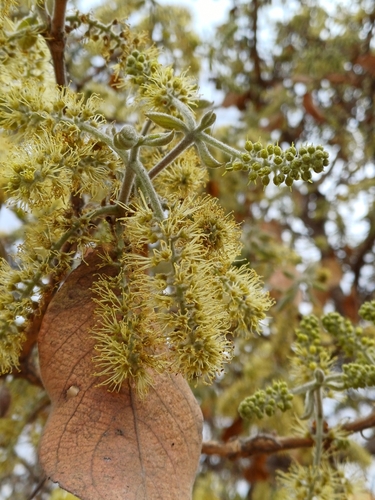
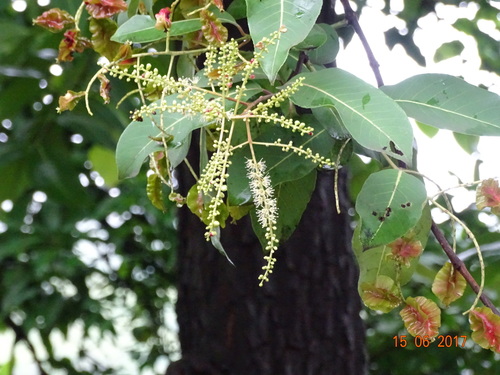
Terminalia elliptica Willd., also known by the synonym Terminalia tormentosa, is a species in the Terminalia genus. It is native to southern and southeast Asia, growing naturally in India, Nepal, Bangladesh, Myanmar, Thailand, Laos, Cambodia, and Vietnam. It is a prominent tree in both dry and moist deciduous forests in southern India, found at elevations up to 1,000 metres (3,300 feet). It has many common names across different regions: asna; saj or saaj; Indian laurel; marutham in Tamil; matti in Kannada; ain in Marathi; taukkyan in Burma; sadar, matti or marda in India; asana in Sri Lanka. It is also informally called crocodile bark because of its distinctive bark pattern. This species grows as a tree reaching up to 30 m (98 ft) tall, with a trunk diameter of up to 1 m. It produces ovoid fruit that is 3 cm (1.2 in) long, with five wings that do not extend past the fruit apex. Its bark is fire-resistant. The wood of this tree is coarse, with fairly straight grain, and ranges from dull to somewhat lustrous. It has no distinct smell or taste. The hardwood color varies from light brown with few markings to dark brown or brownish black, with darker streaks creating a figured pattern. The sapwood is reddish white, and is sharply differentiated from the heartwood. The heartwood is moderately durable, while the sapwood is prone to attack by powder-post beetles. Some individual trees of this species have the unusual trait of storing water during the dry season. A survey carried out at Bandipur National Park, India found that a portion of the trees store water, and both the frequency and amount of water storage increase with the tree's girth. The mechanism and ecophysiological significance of this water storage are not yet understood. The wood of Terminalia elliptica is used for furniture, cabinetwork, joinery, paneling, specialty items, boat-building, treated railroad cross-ties, decorative veneers, and musical instruments such as guitar fretboards. Its leaves are eaten by Antheraea paphia silkworms, which produce tassar silk (also called Tussah), a commercially important type of wild silk. The bark is used as a medicine to treat diarrhoea, and oxalic acid can be extracted from it. Pyrogallol and catechol can be obtained from the bark, and especially the fruit, to dye and tan leather. In the summer, forest-dwelling people often tap the water stored in the tree's stem to use as a source of potable water, and this stored water is also believed to help treat stomach pain. Outside of its native range, this species is cultivated in southern China.