About Tephrosia virginiana (L.) Pers.
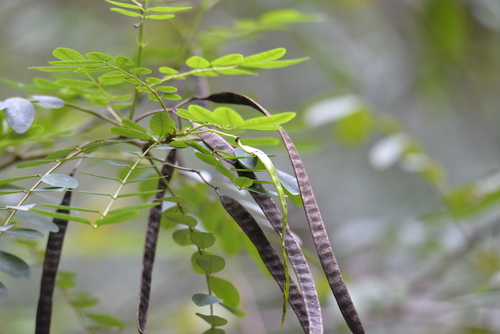
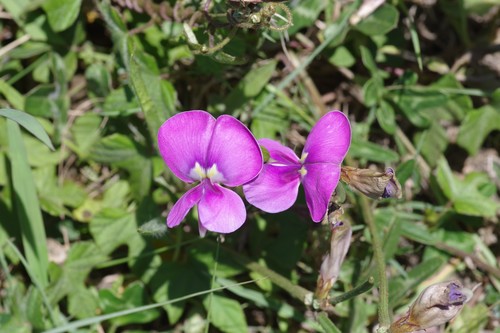
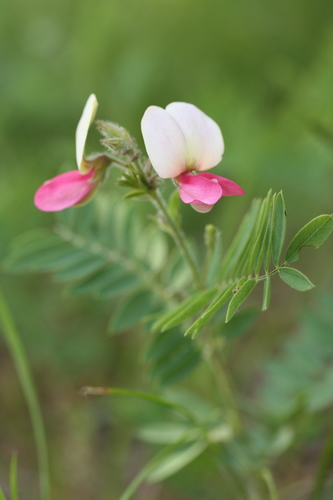
Tephrosia virginiana (L.) Pers. is a low, bushy subshrub that can grow up to 60 centimetres (2 feet) tall, though it is more often shorter. It produces alternate, compound leaves that typically have 8 to 15 pairs of narrow, oblong leaflets. Soft white hairs covering the leaves and stem give these structures a silvery, hoary appearance. The flowers resemble other pea family flowers and are bi-colored: the upper standard petal is pale yellow or cream, while the lower keel and wing petals are pink. Flowers are arranged in clusters at the tips of stems and bloom between May and August. After flowering, small seed pods form that are roughly 5 centimetres (2 inches) long. This species has long, stringy roots, which is likely the origin of its common names catgut and devil's shoestrings. For habitat and distribution, Tephrosia virginiana prefers acidic soils and grows in areas with part to full sun. It is found across the Midwest, New England, and the southeastern United States, growing in sand savannas, open woods, glades, prairies, and on rocky soils. It is not easy to propagate due to its specific requirement for acidic soil. All parts of this plant are toxic because they contain rotenone, and should not be eaten by humans or livestock. Historically, crushed stems of the plant were used as a fish poison. According to James Mooney, Cherokee Indian women used a decoction made from the plant's roots as a hair wash to prevent hair breakage and hair loss.