About Vigna unguiculata (L.) Walp.
Common Name and Varietal Diversity
Vigna unguiculata (L.) Walp., commonly known as cowpea, has a high level of morphological diversity across the crop, with growth conditions and grower preferences for each variety differing by region.
Because the plant is primarily self-pollinating, genetic diversity within individual varieties is relatively low.
Growth Habits
Cowpea growth habits vary: plants can be short and bushy, reaching as little as 20 cm (8 in) in height, or grow as vines that climb supports or trail along the ground, reaching up to 2 m (6 ft 7 in) in height.
Root System
After eight weeks of growth, the cowpea taproot can penetrate as deep as 2.4 m (7 ft 10 in).
Leaf Characteristics
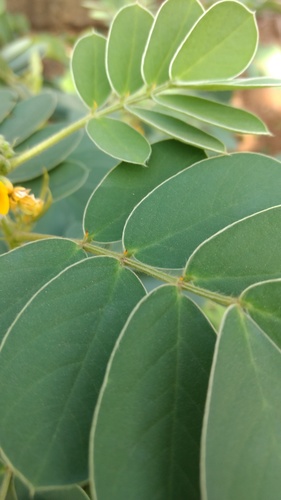
Leaf size and shape vary widely between varieties, and this variation is a key feature for classifying and distinguishing different cowpea types.
Peduncle Traits
Another distinct characteristic of cowpeas is their long peduncles, which measure 20–50 cm (8–20 in) and bear the plant’s flowers and seed pods; a single peduncle can support four or more seed pods.
Flower Color
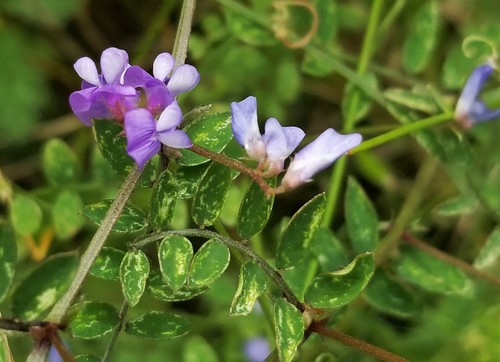
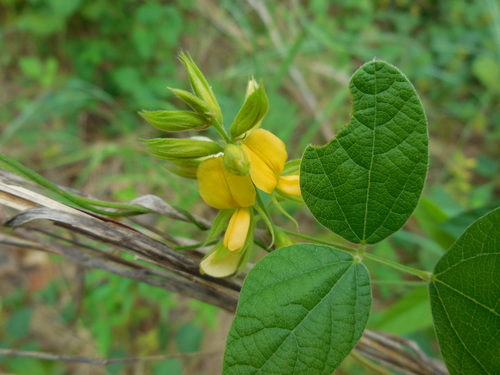
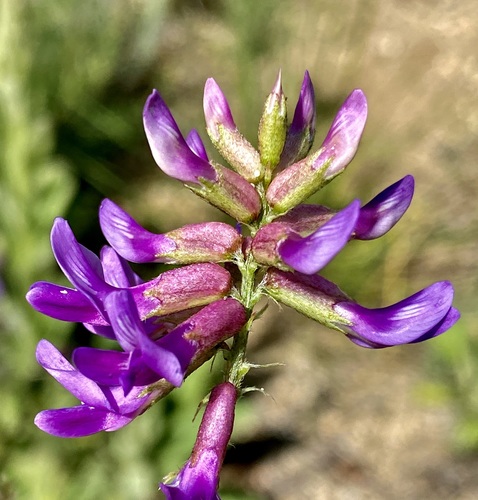
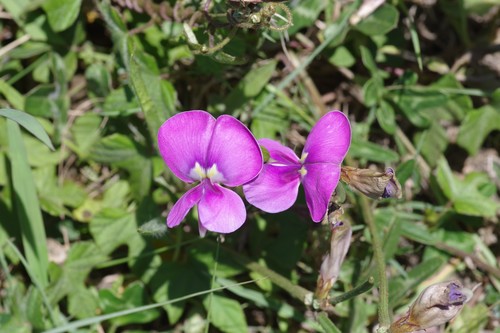
Flower color ranges across different shades of purple, pink, yellow, white, and blue.
Seed Pod Size
Wild cowpea seeds and seed pods are very small, while cultivated varieties produce pods between 10 and 110 cm (4 and 43 in) long.
Seed Shape and Count
Each pod holds six to 13 seeds, which are typically kidney-shaped; seeds that are more tightly packed within the pod tend to be more spherical.
Seed Coat Texture and Pattern
Cowpea seeds have highly diverse texture and color: seed coats can be smooth or rough, and patterns can be speckled, mottled, or blotchy.
Seed Color Variation
Seed colors include white, cream, green, red, brown, and black, or any combination of these colors.
Soil Adaptability
Cowpeas grow well in poor, dry conditions, and thrive even in soils made up of up to 85% sand.
This makes the crop particularly important for arid, semi-desert regions where few other crops can survive.
Crop Uses
In addition to being an important food source for people in poor, arid regions, cowpeas can also be used as livestock feed.
Cultivation Compatibility
Thanks to their nitrogen-fixing ability, cowpeas can be grown as a standalone crop, or effectively intercropped with sorghum, millet, maize, cassava, or cotton.
Optimal Growth Temperature
The optimal temperature for cowpea growth is 30 °C (86 °F), so it is grown as a summer crop in most regions of the world.
Rainfall and Soil Preference
It grows best in areas with annual rainfall between 400 and 700 mm (16 and 28 in), and prefers sandy soils, with better tolerance for infertile and acidic soils than most other crops.
Planting Density Guidelines
Planting densities differ by growth habit: generally, 133,000 seeds are planted per hectare (54,000 seeds per acre) for erect bushy varieties, and 60,000 seeds per hectare (24,000 seeds per acre) for climbing and trailing varieties.
Harvest Timing
Seeds can be harvested around 100 days after planting, while the whole plant can be used for forage after around 120 days.
Leaves can be harvested starting 4 weeks after planting.
Suitability for Resource-Poor Farmers
These traits, combined with low fertilization requirements, make cowpeas an ideal crop for resource-poor farmers in the Sahel region of West Africa.
Sahel Region Cultivation
Early-maturing cowpea varieties can grow well in the region’s semi-arid climate, where annual rainfall is often less than 500 mm (20 in).
Planting timing is critical, as the plant must mature during seasonal rains.
In the Sahel, cowpeas are most often intercropped with pearl millet, and farmers select varieties that provide both food and fodder rather than more specialized types.
Postharvest Storage Challenges
Storing cowpea seeds can be challenging in Africa, due to the risk of infestation by postharvest pests.
Traditional Storage Methods
Traditional methods to protect stored grain use the insecticidal properties of neem extracts, mix grain with ash or sand, coat grain with vegetable oils, combine ash and oil into a soap solution, or treat cowpea pods with smoke or heat.
Modern Storage Methods
More modern methods include storage in airtight containers, gamma irradiation, or heating or freezing seeds.
Heat Treatment for Pest Control
Heating seeds to 60 °C (140 °F) kills weevil larvae, which has led to recent efforts to develop low-cost solar heating methods for treating stored grain.
PIC Bag Storage Innovation
A more recent innovation is the use of low-cost, reusable double-bagging systems called PICs, which asphyxiate cowpea weevils to eliminate infestations.
Edible Plant Parts
Cowpeas are primarily grown for their edible beans, though their leaves, green seeds, and immature pods are also edible, allowing the plant to be used as food before dried peas are harvested.
Preparation Basics
Like other legumes, cowpeas must be cooked to be eaten, most commonly by boiling.
Common Culinary Uses
They can be used in stews, soups, purees, casseroles, and curries, and can also be processed into paste or flour.
Chinese Long Bean Preparation
A type of cowpea known as Chinese long beans can be eaten raw or cooked, but they easily become waterlogged, so are most often sautéed, stir-fried, or deep-fried.
African Cowpea Dishes
Common cowpea dishes include the African snack koki (also called moin-moin), made by mashing cowpeas into a paste, mixing with spices, and steaming the mixture in banana leaves.
Cowpea dumplings called dan wake are common in northern Nigeria and surrounding areas.
Cowpea paste is also used as a supplement in infant formula during weaning.
Cowpeas in the Americas
Enslaved people brought to America and the West Indies prepared cowpeas in the same ways they had in Africa, but many people in the American South historically viewed cowpeas as unsuitable for human consumption.
Hoppin' John Dish
A popular traditional cowpea dish from this region is Hoppin' John, made with black-eyed peas cooked with rice and seasoned with pork.
Over time, cowpeas gained wider acceptance, and Hoppin' John is now considered a traditional Southern dish customarily served on New Year's Day.