About Tarentola angustimentalis Steindachner, 1891
Taxonomy and Common Names
Tarentola angustimentalis Steindachner, 1891, commonly known as the East Canary gecko or Canary wall gecko, is a species of lizard endemic to the eastern Canary Islands.
Size
It can reach around 8 cm (3 in) in length from the tip of the snout to the vent, with a tail of roughly the same length.
Body Shape
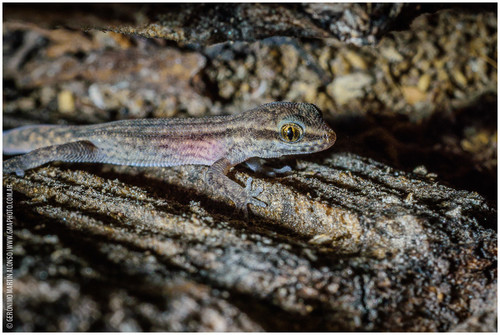
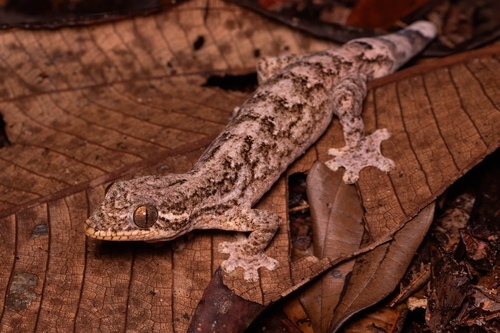
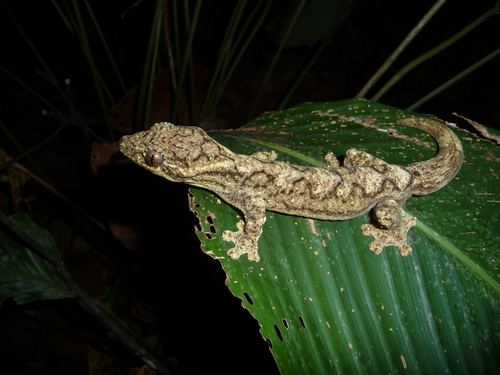
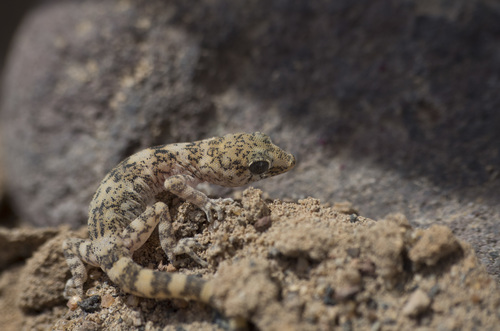
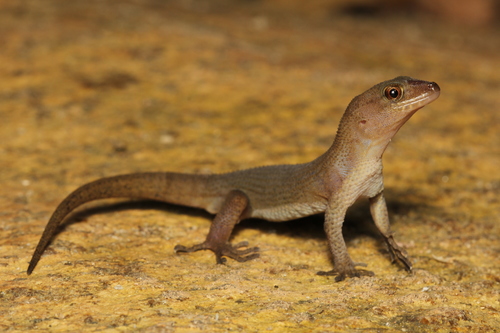
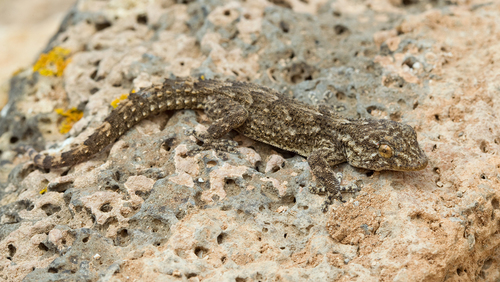
This is a sturdy, plump gecko with a dorsally flattened head and body, short legs that project sideways, and has a general shape similar to the Moorish gecko.
Toe Structure
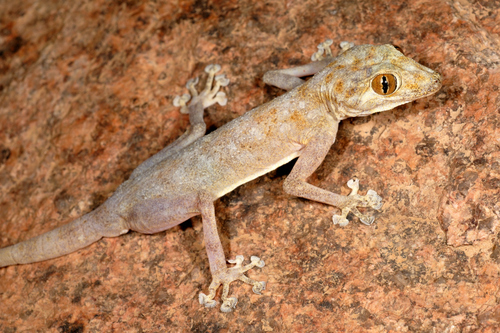
Adhesive pads run along all of its toes, and these pads are widest at the toe tips. Each foot has strong claws on the third and fourth digits.
Skin Characteristics
Its skin is fairly smooth, covered in small tubercles that are often multi-keeled.
Eye Features
Its eyes have vertical pupils in bright light, and are brown or golden in color.
Body Coloration
Body coloration is quite variable; it is generally greyish-brown, with a paler, sometimes intermittent stripe running along the spine and darker transverse bars. The underside is paler, and sometimes has a yellow tinge, particularly near the vent.
Observational Sightings
This species is often seen at night on outdoor walls and ceilings in Fuerteventura.
Geographic Distribution
The East Canary gecko is distributed across the Canary Islands of Fuerteventura, Lanzarote, Lobos, and several small islands located north of Lanzarote.
Habitat and Altitude Range
It is very common across a range of habitats up to an altitude of approximately 800 metres (2,600 ft), including cliffs, screes, gullies, salt flats with scrubby vegetation, dunes, cultivated land, and even inside human houses.
Male Traits and Territoriality
Males of the species are larger than females, and are territorial during the breeding season. They are quite vocal and produce a range of different calls.
Egg Laying
Females lay one or more clutches of two oval eggs, each measuring around 1.2 centimetres (0.47 in) long. Eggs are laid in cracks, under stones, or buried in sand.
Hatching and Juvenile Traits
They likely hatch after 2 to 3 months, and newly emerged juvenile geckos measure 2 to 3 centimetres (0.79 to 1.18 in) from snout to vent, with more vivid colouring than adult geckos.
Maturity and Lifespan
Females reach sexual maturity when they reach about 6 centimetres (2.4 in) in snout-to-vent length, and the species has been recorded living up to 17 years in captivity.
Sex Determination
Research shows that the sex of East Canary gecko embryos is determined by the incubation temperature of the egg. When incubation temperature is 27 °C (81 °F) or higher, all offspring will be female; lower incubation temperatures produce male offspring.