About Tanygnathus lucionensis (Linnaeus, 1766)
Scientific Classification & Size
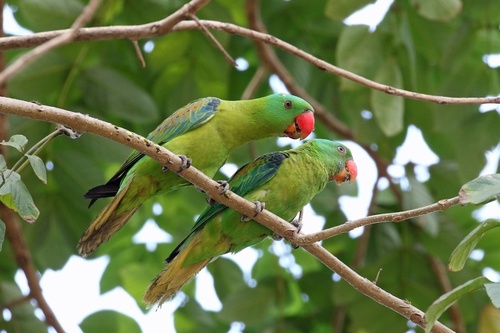
Tanygnathus lucionensis (Linnaeus, 1766) is a medium-sized parrot, measuring around 31 cm (12 in) in total length.
Plumage & Coloration
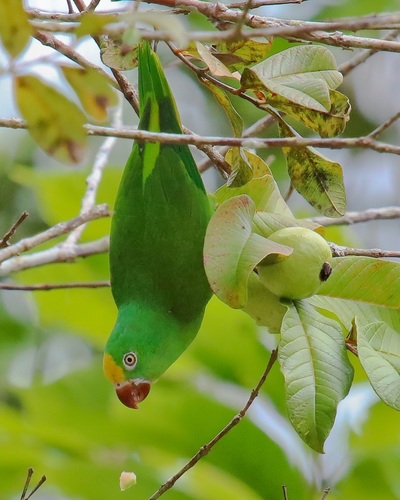
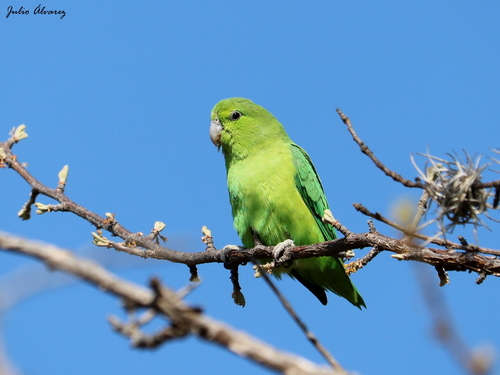
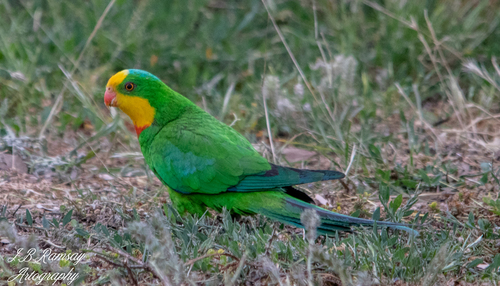
Its plumage is primarily green, with distinct color markings: a light blue rear crown and nape, pale blue lower back and rump, scalloped shoulder patterns with orange-brown coloring on black coverts, and blackish underwings with green underwing coverts.
Overall Native Range
The species is widespread across the Philippines.
Philippine Endemic Subspecies
Three of its four recognized subspecies are endemic to the country: T. l. lucionensis occurs on Luzon and Mindoro; T. l. hybridus occurs on the Polillo Islands; T. l. salvadorii occurs in the southern Philippines, including the Sulu Archipelago.
Non-endemic Native Subspecies Range
The fourth subspecies, T. l. talautensis, is native to the Visayas and Mindanao island groups of the Philippines, and its range extends to the Talaud Islands of Indonesia.
Introduced Subspecies Range
Both T. l. salvadorii and T. l. talautensis have been introduced to the Sangihe Islands, the islands off northern Sabah in Malaysia, and the mainland of Borneo, including areas such as Kota Kinabalu.
Habitat & Elevation
This parrot inhabits secondary forest, forest edges, and plantations, at elevations up to 1000 m.
Flock Size
Flock sizes for this species are usually fewer than 12 individuals.
Diet & Nesting
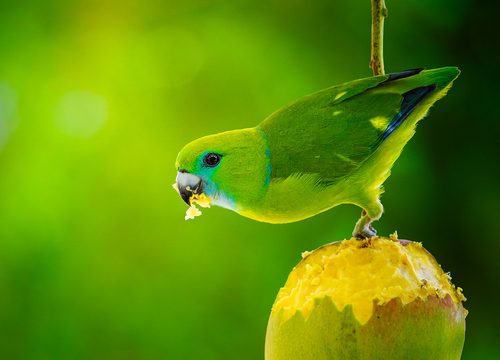
It feeds on mangoes, berries, seeds, nuts, and grains, and nests in tree holes.