About Syngonium podophyllum Schott
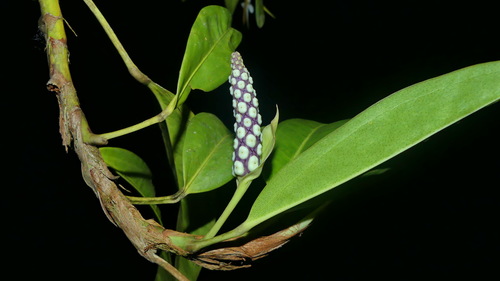
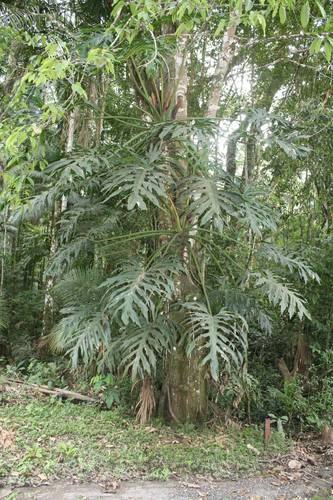
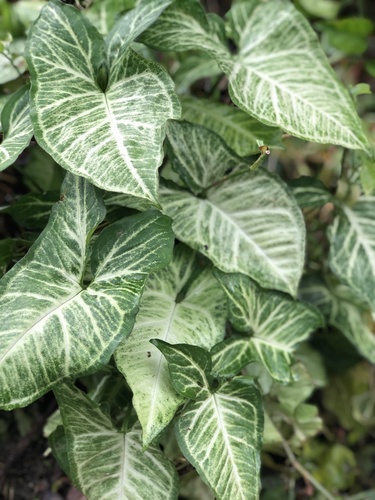
This species is a climbing aroid that grows several meters up the trunks of tropical jungle trees, clinging to surfaces with its roots. Indoor cultivated cultivars reach a maximum height of 1.5 m (4.9 ft). In one year, the plant grows approximately 30 cm (12 in) and produces 6 to 7 new leaves. Its individual leaves are usually arrow-shaped, growing up to 30 cm (12 in) long. In the wild, leaves are solid dark green with no variegation. Cultivated varieties have leaves in a range of green shades, often light green, and typically show different patterns of lighter variegation. There are multiple variegated cultivars, with key differences in the position and size of cream or white leaf markings. Some leaves are almost entirely white, pink, or yellow. The small flowers are greenish or whitish, borne on spadices enclosed in spathes that range from light yellow to green. Indoor-grown plants almost never bloom, with the exception of older, well-cared-for specimens. All parts of Syngonium podophyllum are poisonous, and cause severe mouth pain if ingested. This plant is commonly grown in subtropical Florida landscapes. Homeowners and gardeners there should be aware that the plant's sap contains oxalic acid that causes severe burning skin sensations, and its raphides carry a risk of eye damage. As a vine, this plant needs some type of support for growth, but it can also be cultivated as a groundcover. It requires humus-rich soil that receives regular, consistent watering. Varieties with pink, reddish, or white leaf markings need a well-lit growing location, while dark green-leaved varieties can grow in lower light. Summer growing temperatures should not exceed 38 °C (100 °F), and winter temperatures should not drop below 0 °C (32 °F). The plant prefers moist air; it should be watered 2 to 3 times per week in summer, and much less frequently in winter. To maintain adequate humidity, place the plant pot inside a larger container holding constantly moist peat, and mist the plant with water daily. Dusty leaves should be wiped clean with a damp cloth. Fertilize plants in summer with a small dose of water-soluble fertilizer. After several years of cultivation, the plant loses its attractive appearance, so it is recommended to cut the plant back to encourage new growth. It should only be transplanted when necessary. This species has been awarded the Royal Horticultural Society's Award of Garden Merit. Syngonium podophyllum can also be grown permanently with its roots fully submerged in water, and it is an excellent candidate for this growing method. It can also be grown in hydroculture, where roots are washed free of soil and potted in clay pellets. This growing method eliminates common watering issues. For water-grown specimens, water must be kept properly oxygenated by changing it often, ideally at least once a week.