About Symplocos paniculata (Thunb.) Miq.
Species Naming and Fruit Introduction
Symplocos paniculata (Thunb.) Miq. is a tree that produces intensely blue, fleshy fruits that are short-lived, because they are quickly eaten by birds. This tree has neat foliage, and its flowers are often fragrant.
Leaf Dimensions and Shape
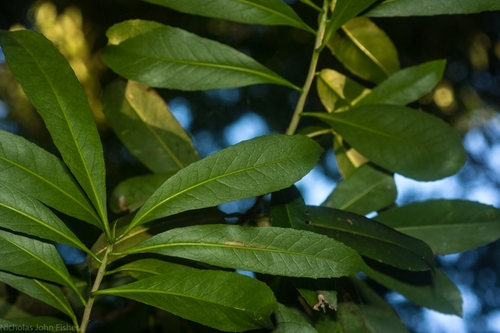
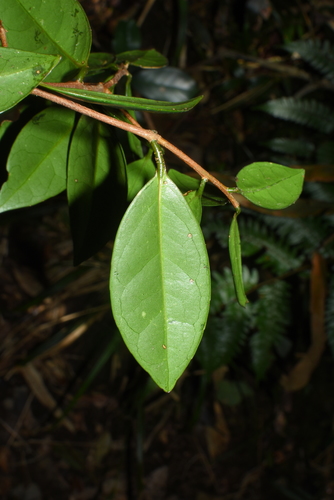
Its leaves have short petioles, vary in ovoid shape, and grow up to 3.5 inches (9 cm) long, reaching half that measurement in width.
Leaf Trichome Characteristics
The upper surface of the leaves has some trichomes, and the veins on the lower leaf surface are much more pubescent.
Blooming Period
This species blooms in early summer, after its leaves have fully developed.
Flower Clusters
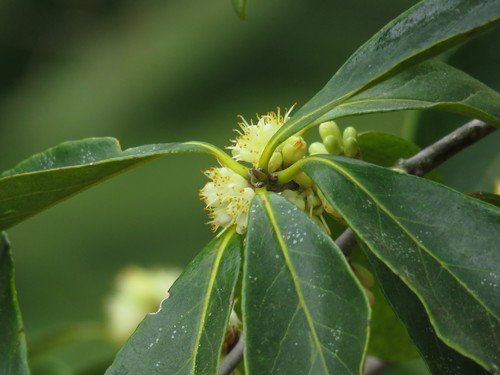
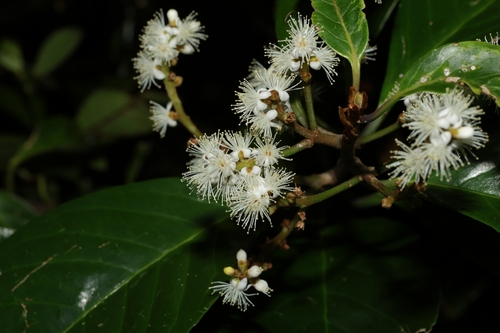
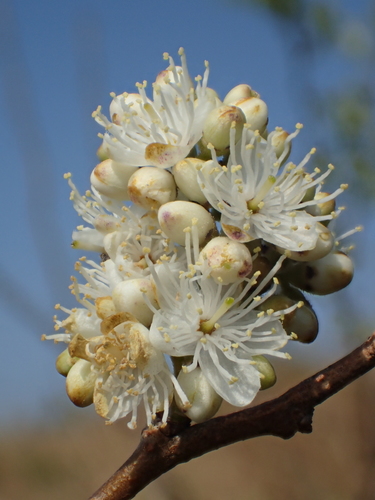
Its whitish flowers grow in lateral clusters up to 2 inches (5 cm) long.
Flower Structure
Each hermaphroditic flower has five petals and thirty stamens; the stamens give the flower clusters a fluffy appearance.
Fruit Seed Content
The tree's ovoid fruits most often contain a single seed.
Related Species Comparison
Symplocos coreana is a very closely related species that may be conspecific with Symplocos paniculata, and only differs by having broader, coarsely serrated leaves that bear many hairs on both sides.
Fruit Edible Use and Pollination Note
The fruit of Symplocos paniculata can be made into jam, though it may be difficult to collect enough berries because the plants cannot self-pollinate.
Traditional Medicinal Use of Bark
Traditional Bangladeshi healers use the bark as an antidiarrhoeal, since it contains an antispasmodic compound similar to cromakalim.
Bark Toxicity Threshold
The bark is nontoxic at doses below 8 milligrams per kilogram of body weight.