About Sylvilagus brasiliensis (Linnaeus, 1758)
Common Name and Taxonomic Classification
Sylvilagus brasiliensis, commonly known as the common tapeti, is a small to medium-sized rabbit species.
Body Dimensions
It has a head-body length of 320 mm (13 in), a 21 mm (0.83 in) tail, 71 mm (2.8 in) hind feet, and 54 mm (2.1 in) ears, measured from notch to tip.
Average Weight
Its average body weight is 934 g (32.9 oz).
Dorsal Coloration
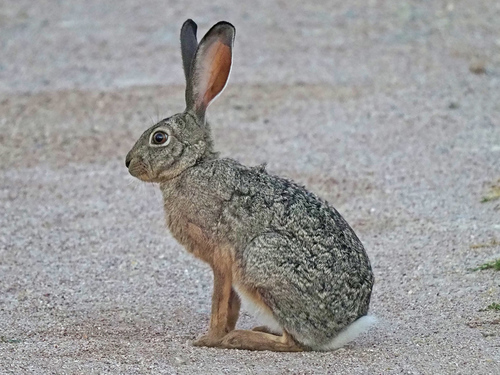
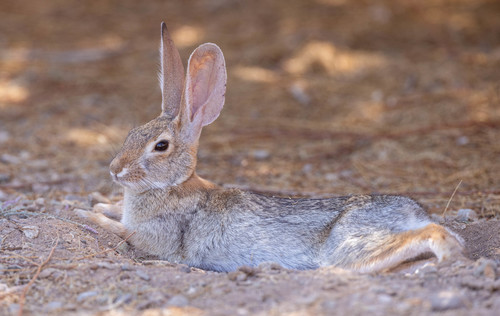
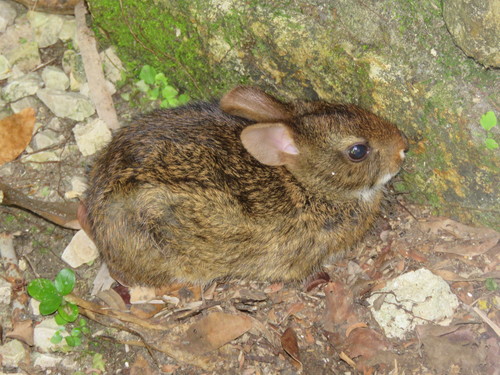
Its back is brown with a speckled pattern, created by black hair tips, and it has a rufous spot on its neck.
Ventral and Tail Coloration
Its belly and the underside of its tail are also rufous.
Mammary Gland Count
This species has six mammae.
Karyotype Variation
Two different karyotypes have been recorded for the common tapeti: 2n=36, FN=68; and 2n=40, FN=76.
Social Structure and Activity Pattern
Common tapitis are solitary, primarily crepuscular animals most active after nightfall or before dawn.
Diet
They feed on grass and browse, and have also been recorded eating Harrya chromapes, a bolete mushroom.
Broad Habitat Types
This species inhabits forested areas close to swamps and river edges, as well as disturbed areas including gardens and plantations.
Specific Forest and Edge Habitats
More specifically, it lives in tropical rain forests, deciduous forests, and second-growth forests, as well as pastures surrounding forest habitat.
North and Central American Distribution
Its distribution starts in southern Tamaulipas, Mexico, extending south along Mexico's eastern coast through Guatemala, possibly El Salvador, Honduras, eastern Nicaragua, eastern Costa Rica, and Panama.
South American Distribution
It also occurs across the northern half of South America, including Peru, Bolivia, Paraguay, northern Argentina, and most of Brazil.
Southernmost Distribution Limit
The southernmost point of its confirmed distribution is in Tucuman province, Argentina.
Elevation Range and Ecological Status
It can be found at elevations ranging from sea level up to 4,800 m (15,700 ft), and it is the only leporid species present across most of its range.
Nest Construction
Female common tapitis build above-ground nests from dry grasses to raise their young.
Nest Structure
These nests have a central chamber connected to a corridor that ends in three or four smaller side chambers.
Gestation Period Variation
The species' gestation period varies by geographic location.
Chiapas Population Reproductive Traits
Populations in Chiapas, Mexico, have a gestation period of around 28 days and produce three to eight offspring per litter.
Andes Páramos Population Reproductive Traits
Populations in the Andes Páramos have a 44-day gestation period and an average litter size of 1.2.
Breeding Pattern
Both populations breed year-round.
Myxoma Virus Reservoir Status
Like its close relative the California brush rabbit (Sylvilagus bachmani), the common tapeti is a natural reservoir for the myxoma virus.
Myxoma Virus Discovery Context
This relationship was first discovered in the 1940s by Brazilian physician Henrique de Beaurepaire Rohan Aragão.
Myxoma Virus Pathogenicity Difference
The virus causes only benign cutaneous fibroma in common tapeti hosts, but it causes the lethal disease myxomatosis in European rabbits.