About Struthio molybdophanes Reichenow, 1883
Taxonomy and Common Name
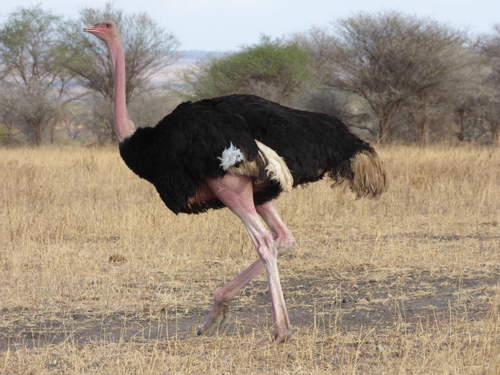
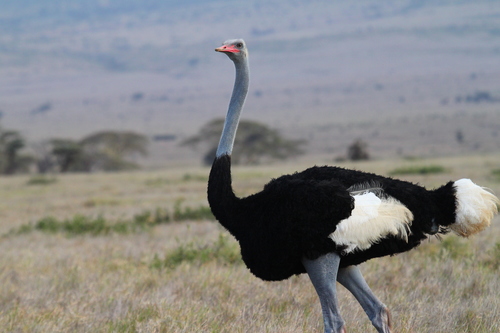
Struthio molybdophanes, commonly known as the Somali ostrich, is generally similar to other ostriches, but can be distinguished by the blue skin of its neck and thighs.
Mating Season Coloration
Male Somali ostriches develop bright blue neck and thigh skin during the mating season.
Plumage and Markings
Unlike other ostriches, its neck does not have a characteristic broad white ring, and its tail feathers are white.
Sexual Size Dimorphism
Males of this species are larger than females.
Size Comparison to Other Ostriches
As far as is currently known, the Somali ostrich is similar in size to other ostriches, and its average body mass may be slightly smaller than that of some common ostrich subspecies, particularly the nominate race S. c. camelus.
Captive Weight Data
Captive Somali ostriches have been reported to weigh around 105 kg (231 lb), but this weight may not accurately represent wild individuals, because captive birds have access to more consistent food than wild ostriches.
Species Size Ranking
The Somali ostrich is one of the two largest extant bird species.
Geographic Distribution
It occurs mostly in the Horn of Africa, especially in north-eastern Ethiopia, southern Djibouti, most of Kenya, and across most of Somalia.
Ecological Niche Differentiation
Ecologically, the Somali ostrich differs from the common ostrich, even though their ranges overlap in some areas.
Habitat and Feeding Habits
The Somali ostrich prefers bushier areas with denser vegetation, where it feeds primarily by browsing, while the common ostrich is mainly a grazer that lives in open savanna.
Interspecies Breeding Compatibility
There have also been reports of interbreeding difficulties between these two taxa.