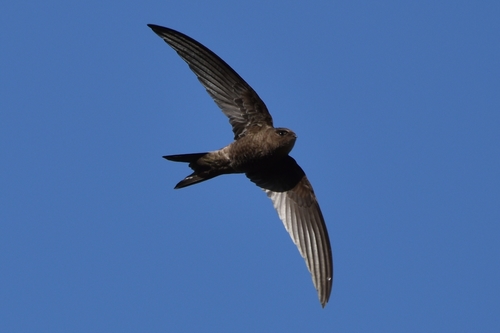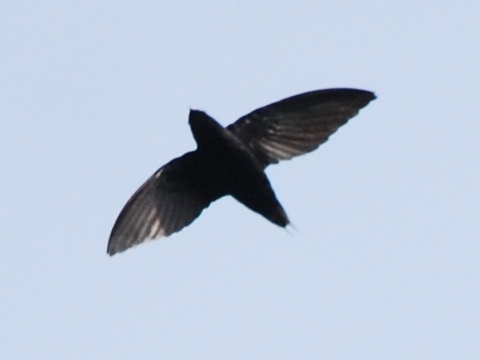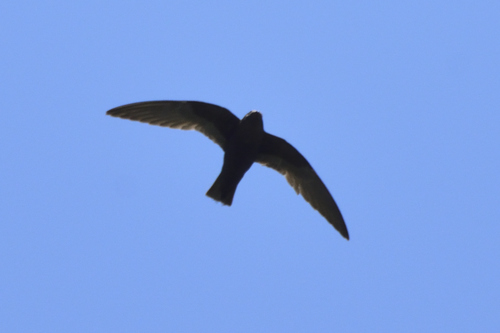
About Streptoprocne semicollaris (DeSaussure, 1859)
Taxonomy and Size Ranking
The white-naped swift, scientifically named Streptoprocne semicollaris, is the largest swift species in the New World and one of the two largest swift species in the world. Only the Asian purple needletail may be slightly larger than this species.
Geographic Distribution
The white-naped swift is primarily found in western and central Mexico, with a single recorded sighting on the Guatemalan border.
Habitat Landscapes
It mainly inhabits wild highland landscapes, and prefers cliff faces, deep river gorges and high crags. Its main habitat types include pine-oak forests, tropical deciduous forests and second-growth scrub.
Elevation Range
This swift usually occurs at elevations between 1,500 and 3,000 m (4,900 to 9,800 ft), and descends to sea level only very rarely.
Body Length
The white-naped swift is unusually large for a swift, measuring 20.5–25 cm (8.1–9.8 in) in length, which is around 20% larger than its more common and far more widespread relative, the white-collared swift.
Weight
Its weight ranges from 115 to 225 g (4.1 to 7.9 oz), with a reported average weight of 175 g (6.2 oz).
Adult Plumage
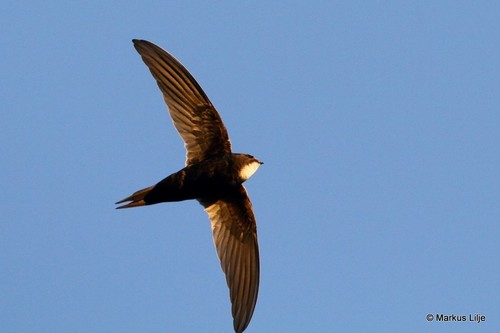
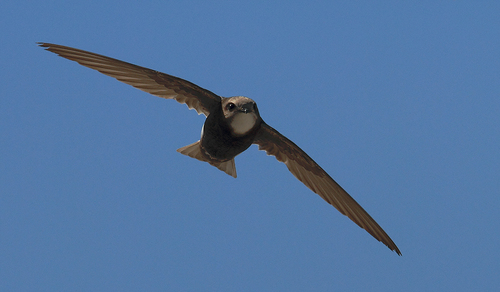
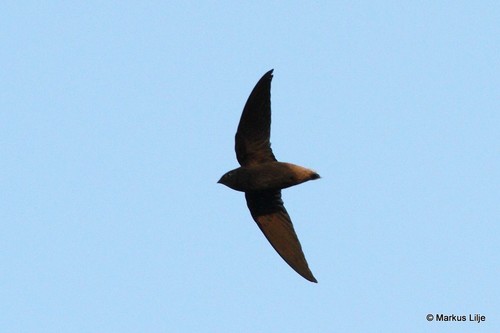
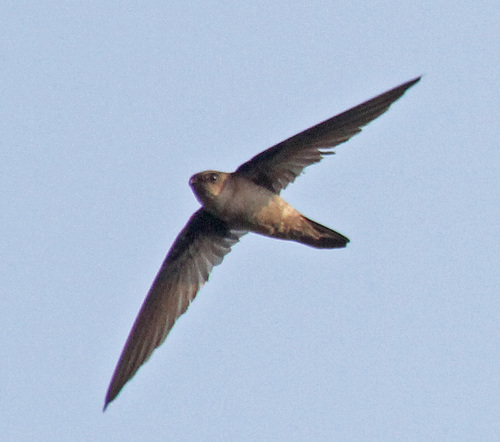
Adult white-naped swifts are brown-black, with a blue gloss on the back and a white crescent marking on the nape.
Tail Morphology
Their tail is fairly square, but can be held in a slightly notched shape during flight.
Similar Species Comparison
The more widespread white-collared swift is similar in appearance and can sometimes reach nearly the same size. However, the white-collared swift has a complete white collar (while the white-naped swift has no white marking on the underside) and a strongly notched tail.
Gregarious Behavior
The white-naped swift is a gregarious species, and breeding colonies can sometimes include up to 200 individuals. It has been observed roosting alongside several other swift species.
Foraging Range
Birds from breeding colonies often forage together several miles away from their breeding site.
Flight Characteristics
This species has a powerful, fast and direct flight, and can climb thermals to great heights.
Diet
White-naped swifts feed in flight on a variety of flying insects, including beetles, bees and flying ants.
Nest Construction
Their nests are typically shallow depressions dug by the parent birds in dry sand, and usually do not incorporate any additional materials or saliva, though the birds appear to be selective about the texture of the soil they use.
Nest Placement
Nests have most often been found in caves, located on ledges leading off the main chamber.
Clutch Details
The female lays two white eggs per clutch.
Brooding Behavior Knowledge Gap
Details of the species' brooding behavior are not yet known.
Vocalization Context
Solitary white-naped swifts are normally silent, while groups of the species are noisy.
Call Description
Their call is described as cree-cree-cree, and is produced both while the bird is in flight and while it is perched on the walls of the nesting cave.