About Stigmochelys pardalis (Bell, 1828)
Scientific Classification and Size Ranking
The leopard tortoise, scientifically named Stigmochelys pardalis (Bell, 1828), is the fourth largest tortoise species in the world.
Typical Adult Size
Typical adult leopard tortoises grow to 40 cm (16 in) long and weigh 13 kg (29 lb).
Geographic Size Variation
Adults tend to be larger at the northern and southern ends of the species' range, where typical specimens can weigh up to 20 kg (44 lb), and exceptionally large individuals may reach 70 cm (28 in) and weigh 40 kg (88 lb).
Carapace Structure
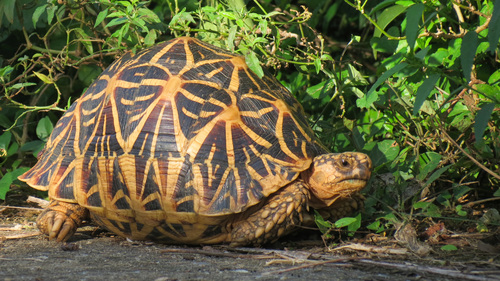
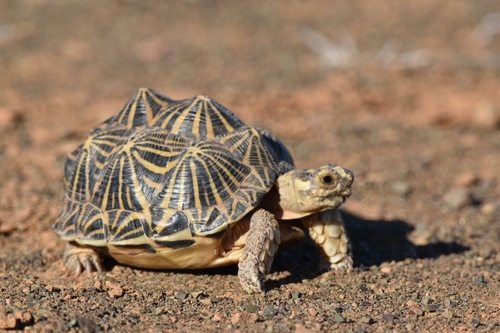
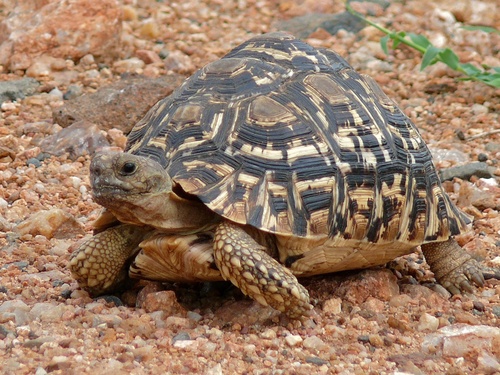
The species' carapace is high, domed, and has steep, nearly vertical sides.
Juvenile Shell Markings
Juveniles and young adults have distinctive attractive markings: black blotches, spots, dashes, or stripes on a yellow background.
Adult Shell Markings
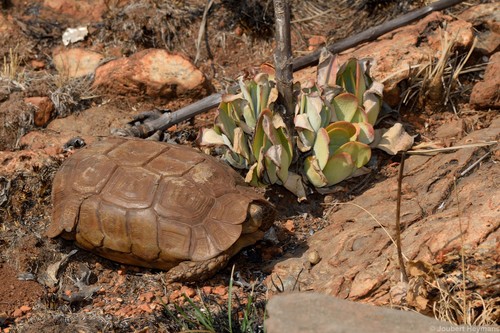
The markings fade to a plain brown or grey in fully mature adults.
Head and Limb Coloration
The head and limbs are uniformly yellow, tan, or brown.
Geographic Range
Leopard tortoises are widely distributed across arid and savanna regions of eastern and southern Africa, ranging from South Sudan and Somalia, through East Africa, to South Africa and Namibia.
Range Exclusions
The species is generally not found in the humid forest regions of Central Africa.
Habitat Types
Across their range, leopard tortoises occupy a wider variety of habitats than any other African tortoise, including grasslands, thorn-scrub, mesic brushland, and savannas.
Altitudinal Range
They can be found at altitudes from sea level up to 2,900 m (9,500 ft).
Herbivorous Diet Components
Leopard tortoises are herbivorous, with a diet that includes a wide variety of plants such as forbs, thistles, grasses, and succulents.
Fruit Consumption
They eat berries and other fruits when these are available.
Calcium Intake Sources
They sometimes gnaw on bones, ash, and even hyena feces to get calcium, which is needed for bone development and eggshell production.
Seed Dispersal Role
Seeds can pass undigested through the leopard tortoise's gut, so the species plays a significant role in seed dispersal.
Activity Patterns
Leopard tortoises are normally active during the day, and become less active in hot weather or the dry season.
Maturity and Lifespan
The species reaches sexual maturity between 12 and 15 years old, and can live 80 to 100 years.
Male Mating Competition
During mating season, males fight over females by ramming and butting competing males.
Male Courtship Behavior
Males trail after females over long distances, often ramming them until they submit.
Mating Vocalizations
Males produce grunting vocalizations while mating.
Nesting Period
Nesting takes place between May and October.
Clutch Laying Behavior
The female digs a hole to lay a clutch of 5 to 30 eggs, and can lay as many as 5 to 7 clutches in a single breeding season.
Incubation Period
Incubation lasts 8 to 15 months, with the duration varying based on temperature.
Egg and Hatchling Predators
Many predators hunt leopard tortoise eggs and hatchlings, including monitor lizards, snakes, jackals, and crows.
Adult Predators
Adult leopard tortoises have few natural predators, though lions and hyenas have been recorded preying on them occasionally.