About Sternotherus minor (Agassiz, 1857)
Nomenclature
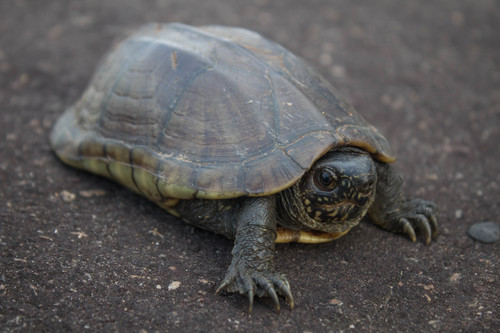
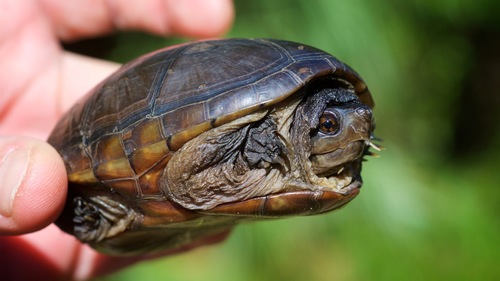
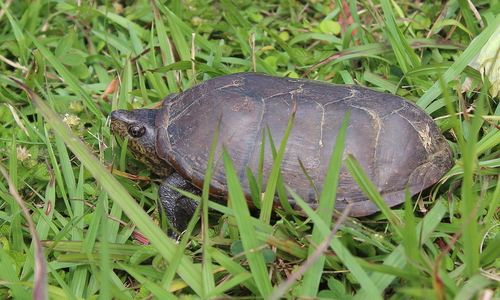
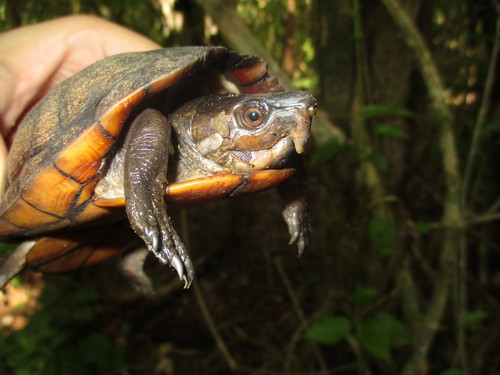
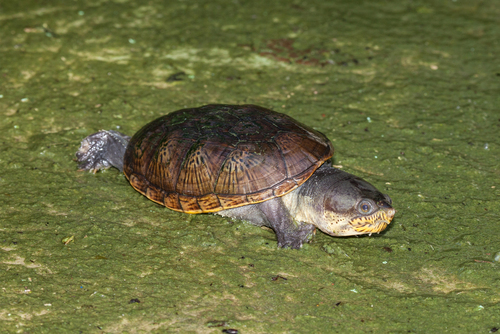
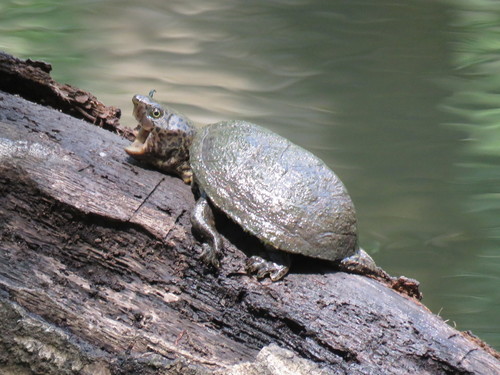
This species has the scientific name Sternotherus minor (Agassiz, 1857), and is commonly called the loggerhead musk turtle. It gets this common name from its unusually large head, when compared to the common musk turtle Sternotherus odoratus.
Head Coloration
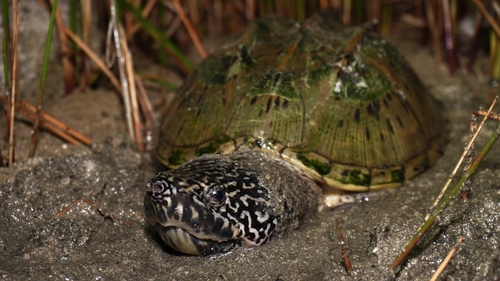
Its head has a light-colored base marked with dark spots or stripes.
Carapace Size
Hatchlings measure about 1 inch (2.5 cm) in straight carapace length, and adults reach an overall straight carapace length of 3 to 5 inches (about 8 to 13 cm).
Carapace Keels
Juvenile loggerhead musk turtles have three keels on their carapace, and these keels usually disappear once the turtle reaches adulthood.
Barbel Distribution
This species only has barbels on its chin, with no barbels present on the throat.
Native Range
S. minor is native to the freshwaters of Alabama, Florida, and Georgia in the United States, where it occurs specifically in the Ogeechee, Altamaha, and Apalachicola river systems.
Range Overlap
Its range overlaps with the stripeneck musk turtle Sternotherus peltifer in southeast Alabama, west Florida, and west Georgia; both species can be found together in rivers such as the Choctawhatchee and Perdido.
Habitat
The loggerhead musk turtle lives in clean freshwater habitats, including springs, streams, runs, wetlands, ponds, and rivers.
Reproduction Type
This species is oviparous.
Clutch Characteristics
Between June and August, female S. minor can lay up to five clutches, with one to four eggs in each clutch. Larger females generally produce larger eggs and more eggs per clutch.
Nesting Behavior
Females dig 8–15 cm (3.1–5.9 in) deep holes on shore to lay their eggs.
Hatchling Size
Hatchlings typically have a carapace length of 2.47 cm (0.97 in).