About Stercorarius parasiticus (Linnaeus, 1758)
Species Identification Challenges
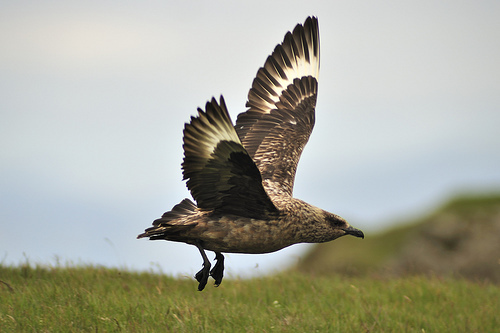
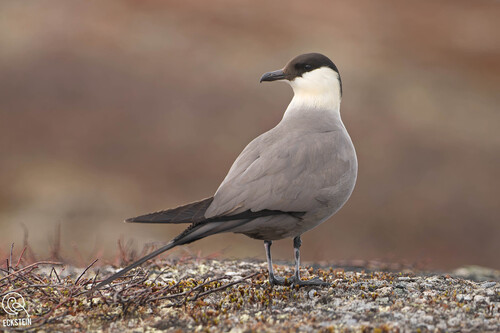
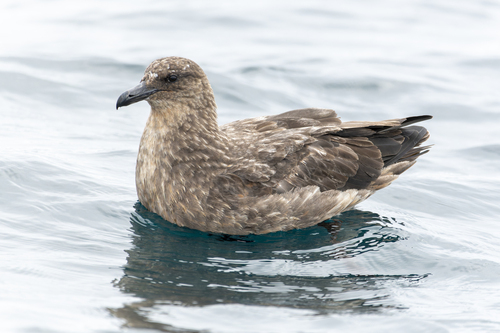
Identification of Stercorarius parasiticus (Linnaeus, 1758), commonly called the parasitic jaeger, is complicated by similarities to the long-tailed jaeger and pomarine jaeger, as well as by the existence of three distinct colour morphs.
Adult Size Measurements
This species is small for a skua: adult parasitic jaegers measure 41–48 cm (16–19 in) in total length, have a wingspan of 107–125 cm (42–49 in), and weigh 300–650 g (11 oz – 1 lb 7 oz).
Breeding Adult Tail Feature
The elongated tail streamer of a breeding adult makes up about 7 cm (3 in) of the species' total length.
Light-Morph Adult Plumage
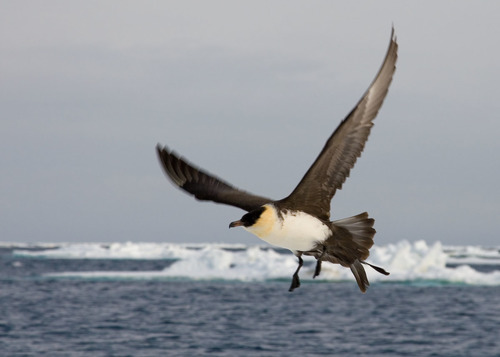
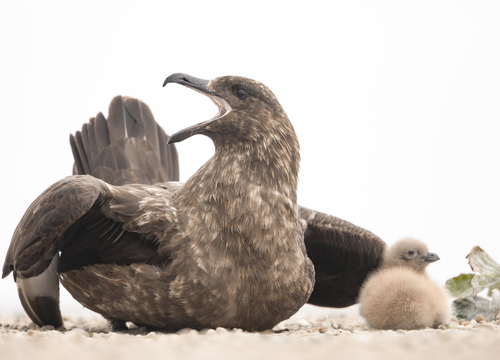
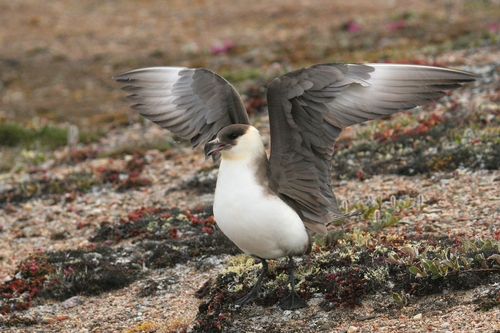
Light-morph adults have a brown back, mostly white underparts, and dark primary wing feathers marked with a white "flash". Their head and neck are yellowish-white with a black cap, and they have a pointed projection on their central tail feathers.
Dark and Intermediate Morph Plumage
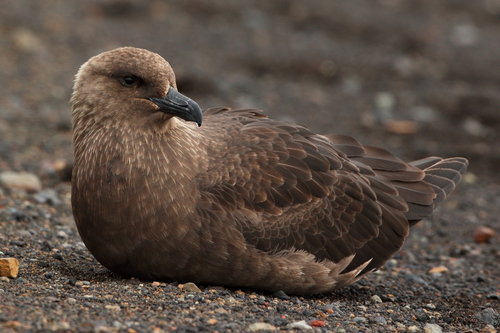
Dark-morph adults are entirely dark brown, while intermediate-phase birds are dark overall with somewhat paler underparts, head, and neck. All three morphs have the characteristic white wing flash.
Juvenile Identification Challenges
Identifying juvenile parasitic jaegers is even more challenging, and it can be difficult to distinguish them from juvenile long-tailed jaegers.
Morphological Comparison to Long-Tailed Jaegers
Compared to long-tailed jaegers, parasitic jaegers are bulkier, have shorter wings, and have a less tern-like overall shape. They are usually warmer in tone, with browner coloring instead of grey.
Plumage and Flight Traits
Like long-tailed jaegers, parasitic jaegers show the same wide range of plumage variation, and their flight is more falcon-like.
Shore Observation Frequency
The parasitic jaeger is the most common of the three jaeger species observed from shore.
Typical Vocalization
The species' typical call is a nasal mewing sound, repeated a few times during display.
Alarm Call
Its alarm call is a shorter vocalization.
Global Breeding Range
This species breeds in northern Eurasia and North America.
UK Breeding Distribution
In the United Kingdom, significant breeding populations extend as far south as northern Scotland, occurring in Shetland, Orkney, the Outer Hebrides, Sutherland, Caithness, and some islands in Argyll.
North American Breeding Distribution
In North America, breeding populations are found in Alaska, Yukon, the Northwest Territories, Nunavut, the coast of Hudson Bay, and parts of Northern Quebec and Nunatsiavut.
Wintering Habitat
The parasitic jaeger is a migratory species that winters at sea in the tropics and southern oceans.
North American Migration Routes
While most of its migration occurs over open sea, spring overland migration takes place in the Canning River Valley, Alaska.
Eurasian and North American Fall Migration Routes
For Eurasian populations, fall overland migration occurs from northern Russia to the Persian Gulf, and for North American populations, fall overland migration occurs over the Great Lakes, particularly Lake Ontario.