About Stercorarius longicaudus Vieillot, 1819
Adult Plumage
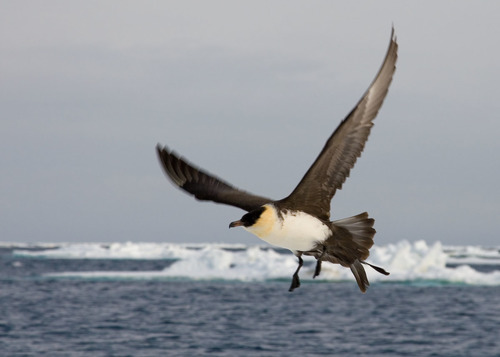
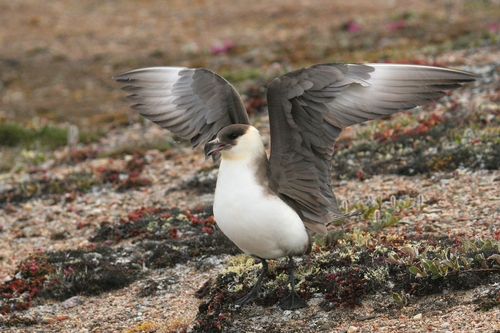
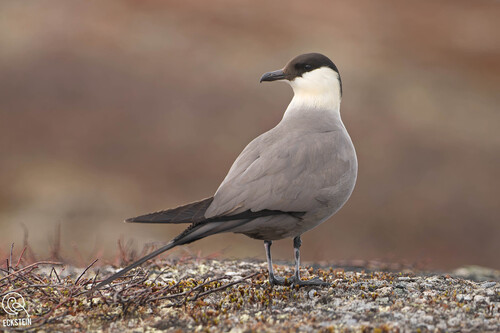
Adult Stercorarius longicaudus are easy to identify, with a grey back, dark primary wing feathers that lack a white "flash", a black cap, and a very long tail.
Adult Breeding Behavior
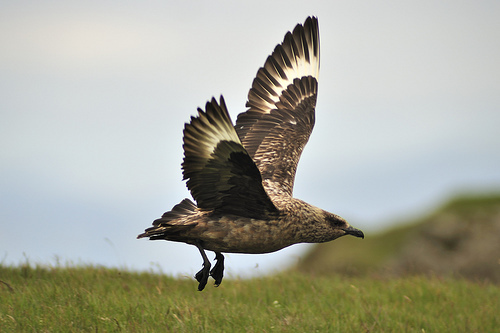
Adults often hover over their breeding territories.
Juvenile Identification Difficulty
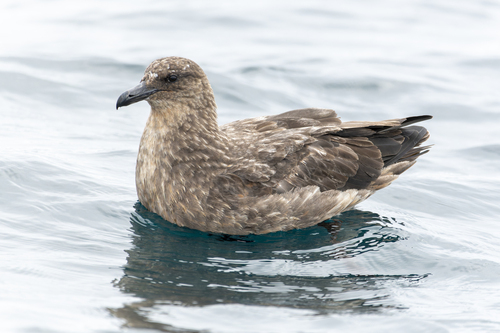
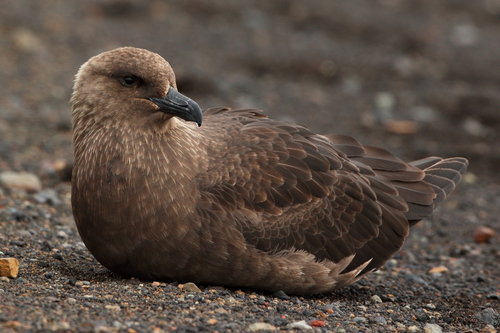
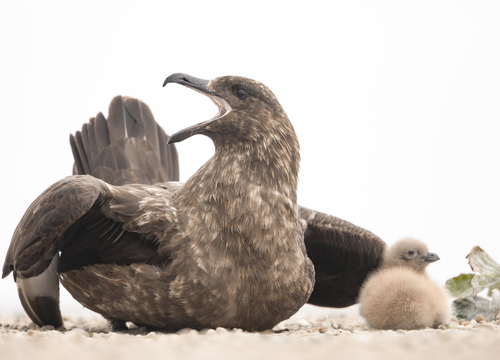
Juveniles are far harder to identify, and are difficult to distinguish from parasitic jaegers when out at sea.
Juvenile Morphology vs Parasitic Jaegers
Compared to parasitic jaegers, juvenile Stercorarius longicaudus are slimmer, have longer wings, and have a more tern-like shape, while sharing the same wide range of plumage variation.
Juvenile Plumage Tone
They are usually colder in tone than parasitic jaegers, with greyer shades rather than brown.
Species Size Rank and Total Length
This species is the smallest in the skua family, with a total length ranging from 38 to 58 cm (15 to 23 in) that varies by season and age.
Tail Length Details
Up to 29 cm (11 in) of this total length comes from the tail; summer adults have tail streamers that can measure up to 15 cm (5.9 in).
Wingspan and Body Mass
This species has a wingspan ranging from 102 to 117 cm (40 to 46 in) and a body mass ranging from 230 to 444 g (8.1 to 15.7 oz).