About Stenocarpus salignus R.Br.
Nomenclature and Growth Form
Stenocarpus salignus R.Br., commonly known as scrub beefwood, grows as a shrub or small tree.
Size
Occasional mature specimens reach up to 30 metres (98 feet) in height, with a trunk diameter of 60 cm (24 inches).
Trunk and Bark
The trunk is often irregular and buttressed, covered in dark brown scaly bark.
Leaf Arrangement and Shape
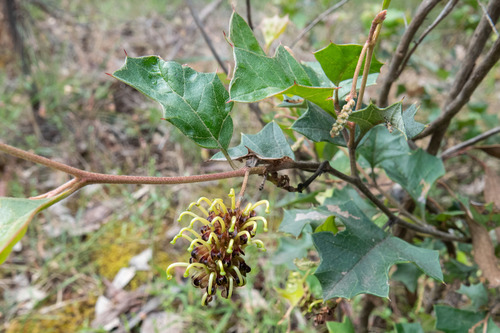
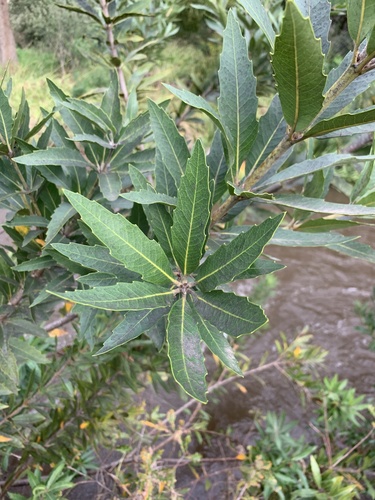
Its leaves are alternate, simple, and entire, with shapes ranging from ovate to lanceolate or elliptic.
Leaf Veins and Margins
Leaves have wavy edges, one to three main longitudinal veins, a distinct hard point at the tip, and gradually taper toward the base.
Leaf Size and Coloration
They measure 8 to 15 cm (3.1 to 5.9 in) long and 3 to 5 cm (1.2 to 2.0 in) wide, glossy dark green on the upper surface and paler underneath.
Leaf Variation
Leaf form varies considerably across individuals of this species.
Flower Characteristics
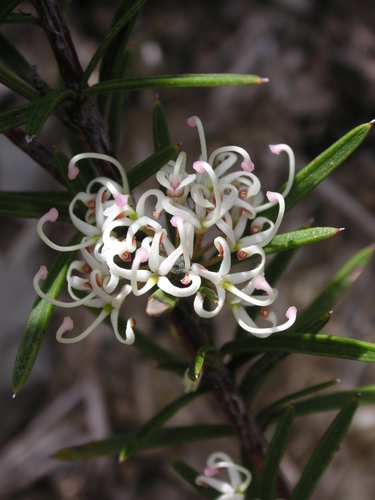
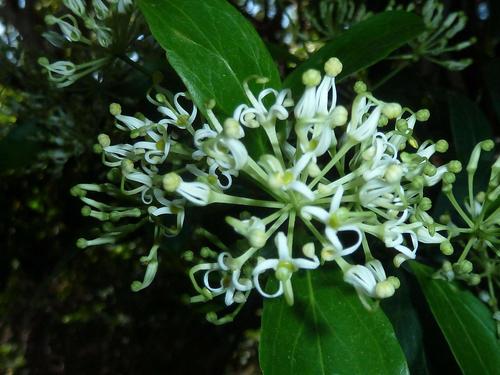
White fragrant flowers grow in umbels from October to January, and resemble the flowers of the related genus Grevillea.
Seed Pod Size
After flowering, the plant produces narrow follicle seed pods that are 5 to 10 cm (2.0 to 3.9 in) long.
Pod Maturation
Pods start green and mature to a brown colour, with fruit ripening between March and June.
Seed Traits
Each pod holds many thin, papery, oblong-shaped seeds around 12 mm long.
Propagation
Fresh seeds germinate quickly, and cuttings also root successfully.
Cultivation Availability
In cultivation, this species is sometimes available from specialist native plant nurseries in Eastern Australia.
Cultivation Growth Requirements
It grows well in partial shade on well drained, mildly acidic soils.
Related Species Comparison
It is grown less commonly than its better known relative, Stenocarpus sinuatus.