About Stemodia durantifolia (L.) Sw.
Growth Form and Stem Characteristics
Stemodia durantifolia (L.) Sw. is a perennial herbaceous or suffrutescent plant with stiffly erect or ascending stems that reach 10–100 cm (3.9–39.4 in) in height. Its herbage is glandular- or eglandular-hairy; the variety chilensis has crinkly hairs, and more verticillate leaves than the typical variety.
Leaf Arrangement and Shape
Leaves are arranged opposite or verticillate, with a lanceolate to oblong leaf blade 15–50 mm (0.59–1.97 in) long and 3–15 mm (0.12–0.59 in) wide. Larger leaves are subsessile and clasping, and leaf margins are serrate along their distal portion.
Branching Pattern
Branching occurs both basally and axially.
Inflorescence Structure
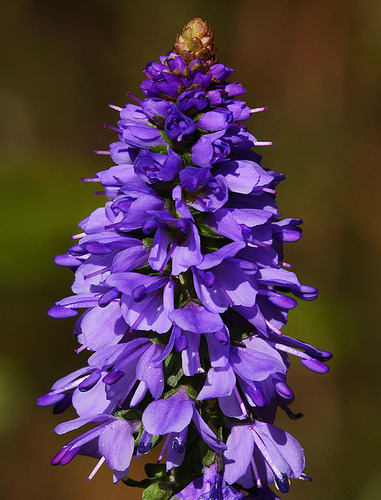
Inflorescences are ascending, with the upper section of flowering stems forming a spiciform (spike-like) structure where leaves reduce to become bracts. Bracts are equal to or slightly longer than the flowers, or roughly equal in length to the sepals.
Pedicel and Calyx Features
Pedicels measure 2–12 mm (0.079–0.472 in) long. The calyx splits into 5 sepals, which are usually equal in size, though the posterior sepal is sometimes longer.
Sepal Size and Shape
Sepals are 5–7 mm or 3–5 mm long, narrowly lanceolate and long-tapered, and are equal to or longer than half the length of the corolla.
Corolla Characteristics
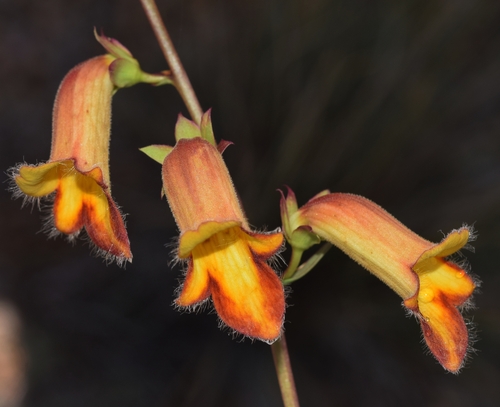
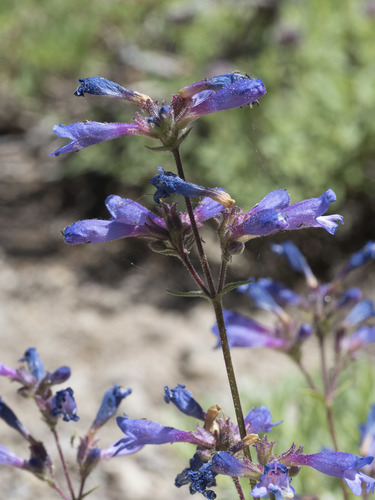
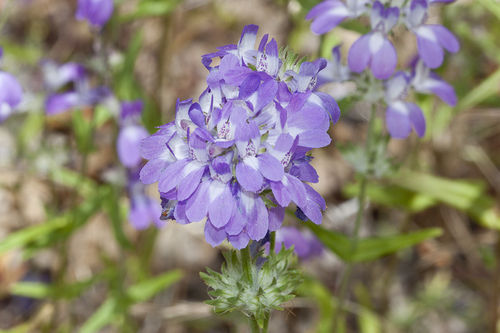
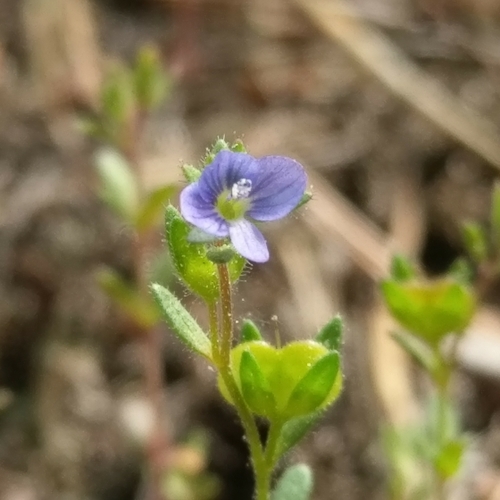
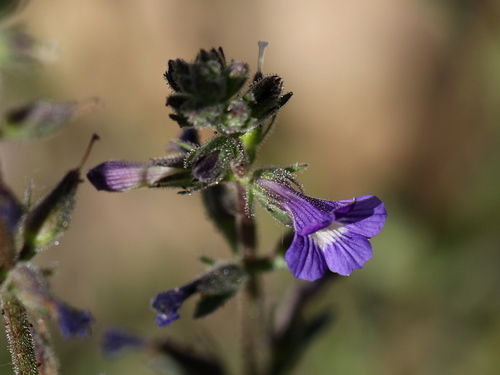
The corolla is tubular, puberulent, two-lipped, 7–10 mm or 5–8 mm long depending on variety, and violet or purple; the upper corolla lobe is suberect, and the lower lip is 3-lobed.
Style and Fruit Traits
The style is 2–4 mm long, and often persists into the fruiting stage. Fruits are ovoid-cylindric capsules 4–5 mm long, containing 10 to 150 brown ellipsoid seeds that measure 2–3 mm.
Distinguishing Features from Congeners
Stemodia durantifolia can be distinguished from other Stemodia species in its range by these combined characteristics. Compared to S. durantifolia, S. pusilla is an annual plant with petiolate leaves and non-spike-like inflorescences.
Comparison with S. lanceolata and S. stricta
S. lanceolata grows taller, only branches basally, and has longer bracts and sepals. S. stricta is slightly taller, has a flexuous inflorescence, and has shorter bracts and sepals.
Comparison with S. hyptoides and S. maritima
S. hyptoides shares basal and axillary branching with S. durantifolia, but has an axillary inflorescence, shorter bracts, and sepals that are equal to or shorter than those of S. durantifolia. S. maritima has corollas less than 5 mm long, stalked pollen sacs, and is typically found in the Caribbean and other tropical regions.
Flowering Period
Stemodia durantifolia flowers year-round.
Overall Native Distribution
This species is native to the Americas, with a broad distribution ranging from the southwestern United States down to Chile.
Distribution in the United States
In the United States, it is native to California, Arizona, and Texas, with introduced populations present in Florida. It is uncommon in California, found rarely in San Diego County and in canyons near Palm Springs in Riverside County.
Distribution in Arizona and Mexico
In Arizona, it occurs in Gila, Maricopa, Pinal, and Pima counties. In Mexico, it is found across 29 states, ranging from Baja California to Tamaulipas to Quintana Roo.
Distribution on the Baja California Peninsula
On the Baja California Peninsula, which includes Baja California and Baja California Sur, it occurs sparsely in canyons of the eastern Sierra de Juarez, and is more common in wetlands from the Sierra de la Libertad to the southern Cape of the peninsula.
Variety Distribution in Chile and Argentina
Stemodia durantifolia var. chilensis is found in Chile and Argentina, and the typical variety is absent from these regions. In Chile, it grows in northern, central, and southern parts of the country, from the Atacama Region to the Araucania Region.
Argentina Distribution and Misidentification Notes
In Argentina, it is found in the province of Rio Negro, and may also occur in Patagonia. Older records of the typical S. durantifolia var. durantifolia in Argentina are presumed to be misidentifications of Stemodia stricta, Stemodia lanceolata, and Stemodia hyptoides.
Habitat Preferences
S. durantifolia most often grows in wet, riparian, and sometimes disturbed sites, including stream banks, ditches, pool margins, rocky areas, and seepy hillsides. It prefers substrates of wet sand and rock, and is usually found at elevations below 400 m (1,300 ft).