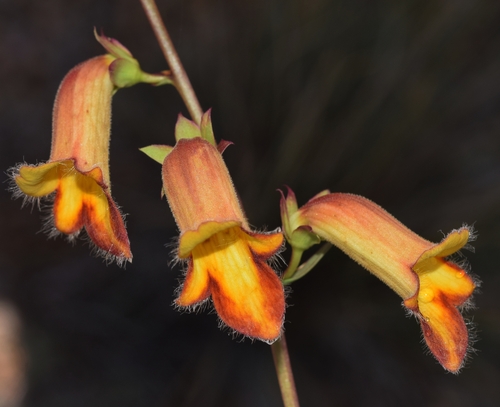
About Digitalis obscura L.
Growth Form and Height
Digitalis obscura L. is a shrub or herbaceous perennial that grows from a woody base, reaching 0.30 to 1.19 m (1 to 3.9 feet) in height. Its stems are smooth and erect.
Leaf Arrangement
Long leaves grow from the plant’s base in a rosette arrangement, spreading out close to the ground, while smaller leaves grow alternately along the stems.
Leaf Characteristics
The thick, glossy leaves are lanceolate in shape with pointed tips, blue-green in color, and have a leathery texture that gives them their shine. A mature plant spreads 0.75 to 1.5 feet across the ground.
Native Range
Digitalis obscura is native to the western Mediterranean: specifically eastern and southern Spain and northern Morocco. It grows in dry, open woods, and is often found on limestone.
Subspecies Features
Digitalis obscura subsp. laciniata occurs in the mountains of southern Spain and northern Morocco, and has serrate or deeply toothed leaf margins, unlike the smooth leaf margins of the main species.
Habitat and Bloom Period
The species grows in both mountain habitats and lowlands near the coast, and blooms in late spring.
Toxicity Basics
All parts of Digitalis obscura are poisonous if eaten raw, including the roots and seeds. The upper leaves are the most potent part of the plant.
Cardiac Glycoside Content
All foxgloves are highly toxic when consumed because they contain various cardiac glycosides, including digitoxin, digitalin, digitonin, digitalosmin, gitoxin and gitalonin. When digested, these glycosides break down to release aglycones and a sugar.
Toxicity Mechanism
The aglycones act directly on heart muscles, and can slow heart rate until cardiac arrest occurs.
Medical Applications
Like many other foxgloves, Digitalis obscura has been used in medicine as a diuretic, and to treat heart conditions by regulating heart rate for people with heart disease or other heart-related issues.
Human Folk Medicine Uses
In human folk medicine, D. obscura was used for a range of additional purposes, including treating wounds and toothaches. Use of herbal remedies made from Digitalis obscura has decreased greatly, due to widespread awareness of its high toxicity.
Ethnoveterinary Uses
In ethnoveterinary medicine, the flowering stems of Digitalis obscura were traditionally used to promote wound healing and treat toothaches in animals. It is one of 23 species traditionally used in Granada to treat trauma or poisoning in animals.