About Sphiggurus mexicanus (Kerr, 1792)
Species Nomenclature
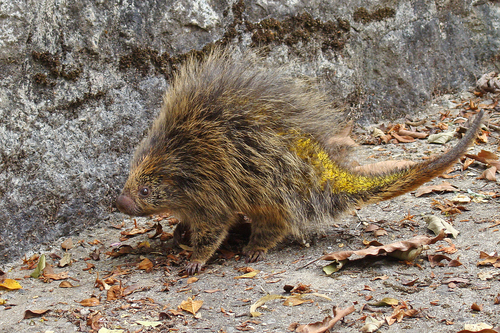
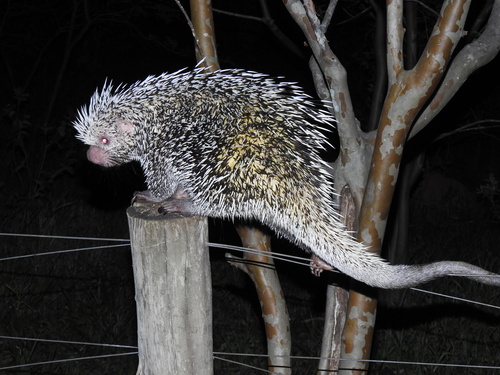
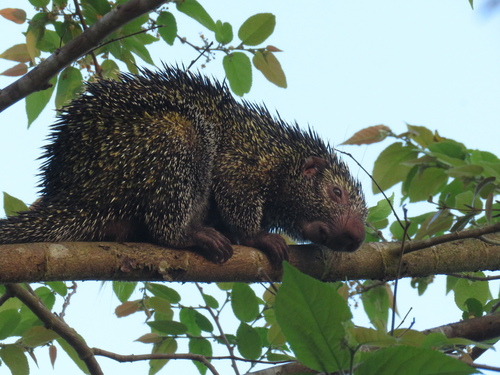
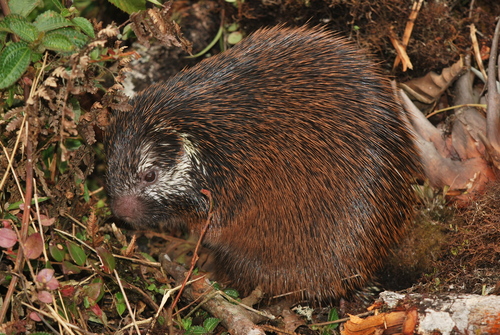
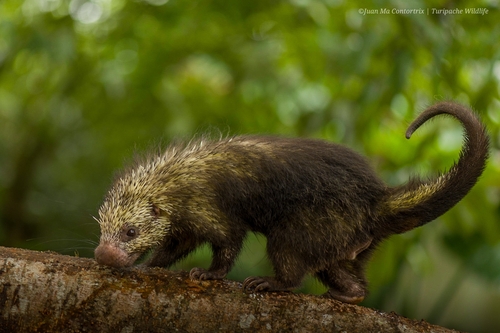
This species of porcupine, Sphiggurus mexicanus, has a pale head and a dark-colored body.
Body and Tail Length
Its head-and-body length ranges from approximately 320 to 457 mm (12.6 to 18.0 in), and its tail measures between 200 and 358 mm (8 to 14 in).
Maximum Recorded Weight
The maximum recorded weight for this porcupine is about 2.6 kg (6 lb).
Body Spine and Hair Coverage
Its body is covered in short yellowish spines, which are almost entirely hidden by the long black body hair.
Exposed Spine Locations
Sometimes, the spines on the shoulders and back can be seen sticking through the hair.
Head Spine and Hair Characteristics
In contrast to the hairy body, the head has no hair, exposing its yellowish spines.
Snout and Eye Features
The snout is pink, broad, and bulbous, and the eyes are small.
Tail Morphology
The tail is prehensile, spiny, and broad at the base, tapering to a point.
Taxonomic Distinction from Rothschild's Porcupine
Sphiggurus mexicanus differs from Rothschild's porcupine (Coendou rothschildi) because Rothschild's porcupine has much more visible spines and does not have a hairy coat.
Arboreal Adaptation
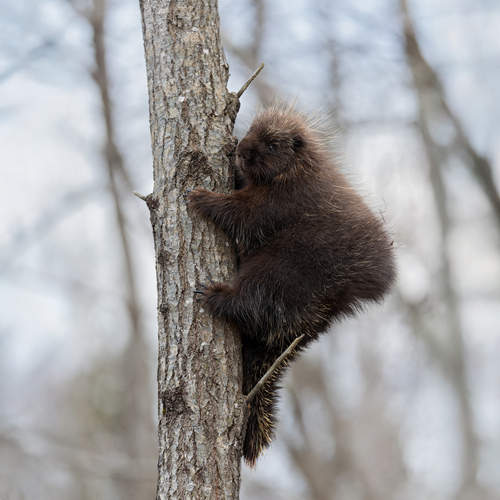
Sphiggurus mexicanus is an arboreal species, and it uses its prehensile tail to grip onto branches.
Activity Pattern
It is nocturnal, and is typically most active during dark nights.
Daytime Hiding Habitats
During the day, it hides in a hollow tree, on a leafy branch, or in clumps of bamboo in highland habitats.
Hiding Spot Odor Accumulation
Since it uses the same hiding spot every day, a pile of droppings builds up there, creating a strong odor.
Diet Composition
Its diet is made up of buds, young leaves, fruits, and seeds, and it especially favors fruiting trees from the genera Inga, Cecropia, Ficus, and Brosimum.
Social Behavior and Vocalization
Individual porcupines usually live alone and are silent, but they become more vocal during the breeding season, producing screams and yowls.
Reproductive Litter Size
Females typically give birth to a single offspring at a time.