About Sphagnum fuscum (Schimp.) H.Klinggr.
Nomenclature
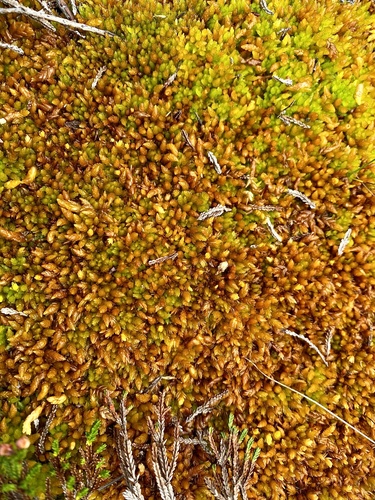
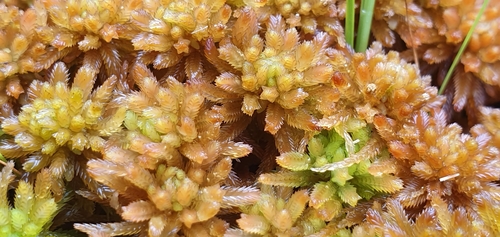
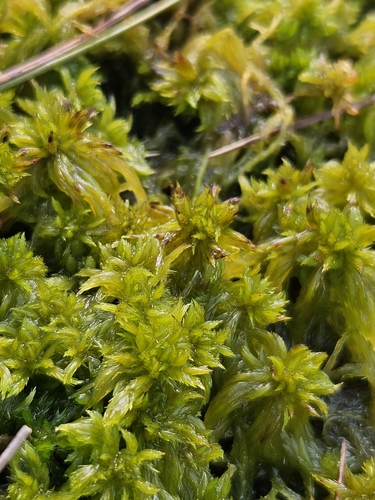
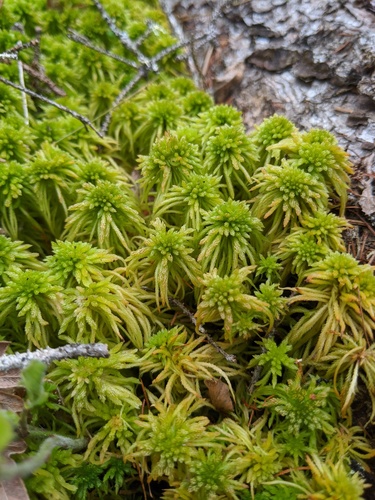
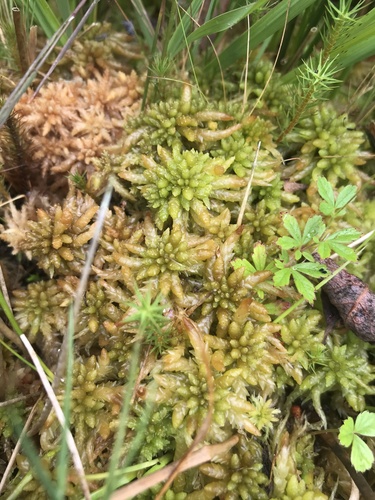
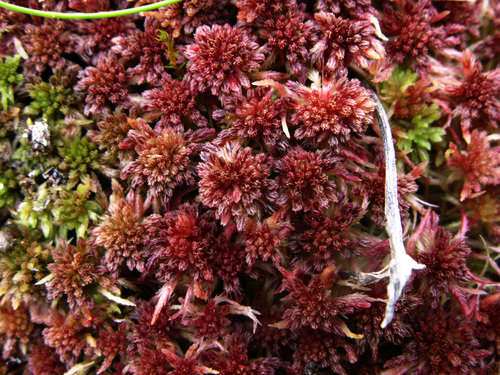
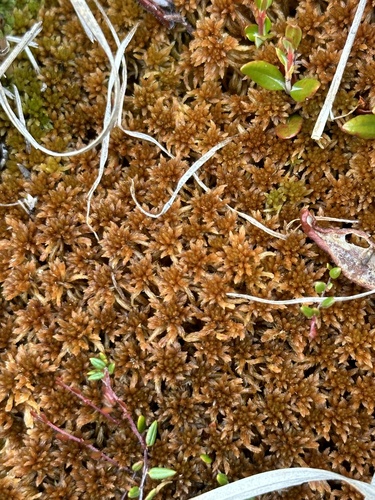
Sphagnum fuscum (Schimp.) H.Klinggr. ranges in color from brown to greenish brown, and has slender brown stems.
Plant Robustness
Individual plants are less robust than other peat moss species, particularly when they grow clumped into compact hummocks.
Branch Structure
This moss produces thread-like branches that become interwoven within these hummocks.
Leaf Morphology
Its stem leaves are tongue-shaped, while its branch leaves are pointed and lance-shaped.
Sporophyte Characteristics
During the sporophyte stage, this species grows a short stalk around 1 to 2 millimeters long, topped with a brown capsule that measures about 1 to 1.5 millimeters.
Habitat Preference for Bog Age
Sphagnum fuscum prefers to grow in older, drier bogs, where it forms hummocks.
Ground Cover in Black Spruce Bogs
In bogs dominated by black spruce, it grows as extensive ground cover.
Soil and Elevation Range
It most often inhabits more acidic soils, with a pH range of 3.6 to 7.5, and can colonize areas at high elevations.
Geographic Distribution
This is a circumpolar species.
Climatic Habitat Range
Its primary habitats are boreal forests and marshlands, and it is more commonly found in colder climates.
Isotope Climate Indicator Use
Recent studies from Eastern Europe found that stable carbon and oxygen isotope ratios in α-cellulose from Sphagnum fuscum stems subsampled from hummocks and peat plateau profiles act as useful indicators of summer temperature and winter precipitation across decadal to millennial timescales.
Deposition Indicator Use
A study conducted in Alberta, Canada found that Sphagnum fuscum serves as an indicator of high sulphur and nitrogen deposition in growing substrates.
Soil pH Association with Deposition
Its presence in areas with high sulphur and nitrogen deposition coincides with decreased soil pH.
Historical Medicinal Use of Sphagnum Moss
Historically, Sphagnum moss has been used for medicinal purposes.
Antimicrobial Wound Dressing Use
Sphagnum fuscum has antimicrobial properties, so it was used as an effective wound dressing filler to prevent infection.
Moisture Retention Wound Care Benefit
It also retains large amounts of moisture, which was useful for keeping the skin around a wound moist to prevent tissue death.