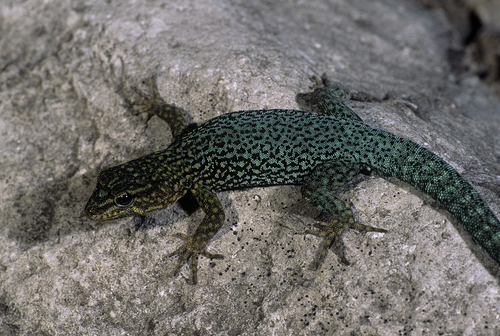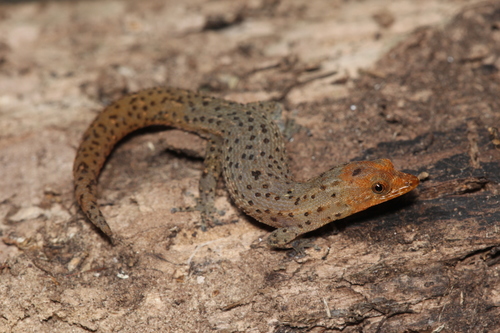
About Sphaerodactylus notatus (Baird, 1859)
Common Name and Size
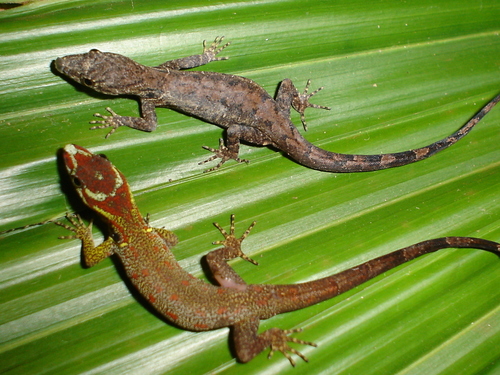
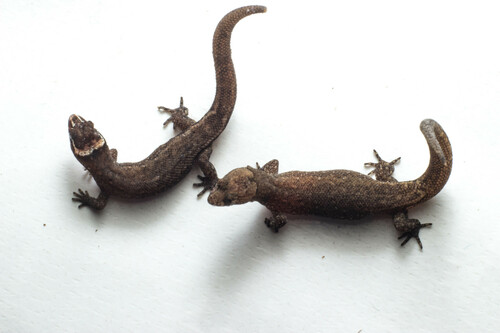
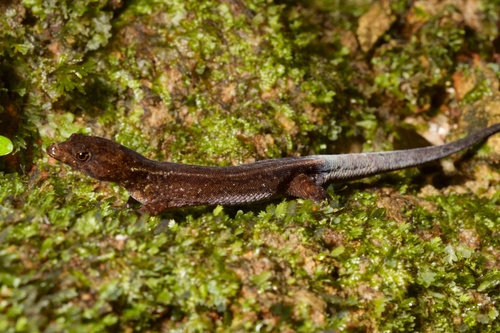
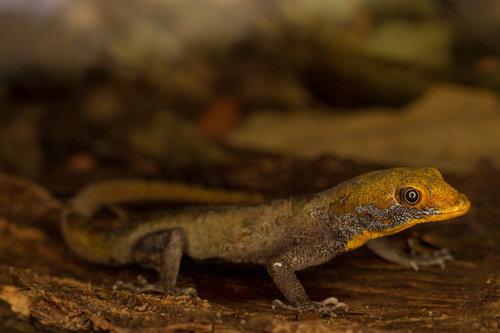
Sphaerodactylus notatus, also called the reef gecko, is a small lizard that reaches roughly two inches in length.
Diet
This species feeds on insects and spiders.
Native and Introduced Distribution
It is naturally distributed across Florida, Cuba, and the Bahamas, and has been introduced to several offshore islands of Jamaica.
U.S. Native Status Controversy
Because it occurs in Florida, it is widely regarded as one of the few gecko species native to the United States. However, many herpetologists have questioned whether the species is truly native to the region.
1933 Introduction Hypothesis
In 1933, Stejneger and Barbour argued that Sphaerodactylus notatus was accidentally introduced to Key West in 1878, when trade between Florida and Cuba was much more common. This same trade route is responsible for establishing at least seven other herpetofaunal species in Florida.
Past Listing Attempt Outcomes
Past attempts to list this gecko as threatened or endangered were denied due to the ongoing debate over its native status.
Shipping Introduction Evidence
The species was first detected in Florida around 1850, roughly the time Florida became a U.S. territory, which supports the theory that it was introduced via shipping.
Natural Colonization Evidence
On the other hand, genetic evidence suggests the species first naturally colonized Key Largo (not Key West) likely by rafting, which supports a natural origin for the Florida population.
Habitat Types
Sphaerodactylus notatus occurs in both natural and human-altered habitats. It is most often found in damp forests, living in shrubs and bushes, under logs, or inside hollow timber.
Seagrape Habitat Association
In Florida, the species’ survival is closely tied to seagrape (Coccoloba uvifera); after events like Hurricane Irma extirpated the gecko from some localities, it recolonized these areas once seagrape populations recovered.
Current Threats
In Florida, Sphaerodactylus notatus is currently threatened by sea level rise, and has already disappeared from several of its known habitats, including Everglades National Park, parts of Big Pine Key, and parts of Miami Beach.
Endangered Listing Petition
There is an active petition to list the Florida population of this species as endangered within the state of Florida, a designation that would grant the species legal protective benefits.