About Sphaenorhynchus lacteus (Daudin, 1800)
Adult Size
Adult male Sphaenorhynchus lacteus measure 26–42 mm (1.0–1.7 in) in snout–vent length, while adult females measure 38–46 mm (1.5–1.8 in).
Snout Morphology
In dorsal view, the snout is pointed, and it angles sharply backward when viewed from the side.
Tympanum
The tympanum is visible.
Limb Webbing
The fingers are one-half to two-thirds webbed, and the toes are fully webbed.
Dorsal Coloration
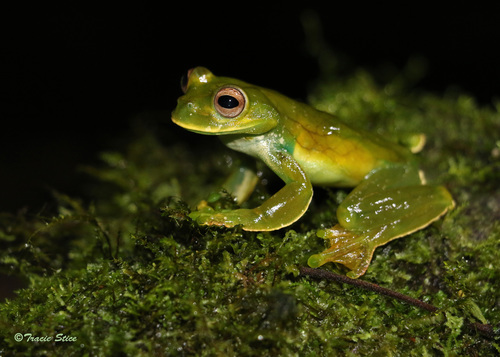
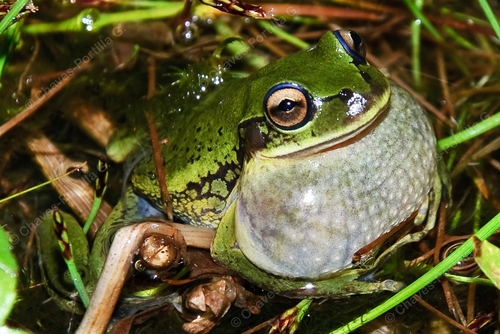
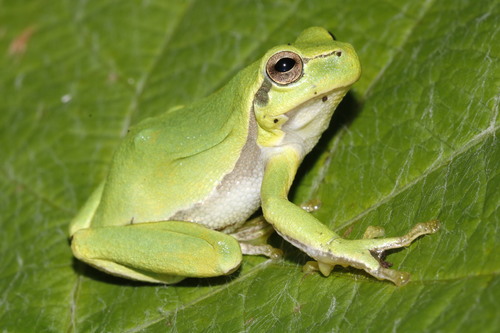
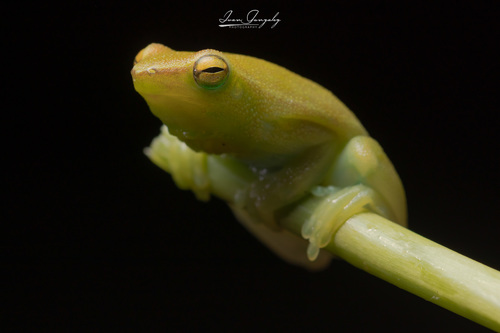
The dorsum is bright green with a dark brown canthal stripe.
Ventral Coloration
The venter and outer margins of the limbs are white, while the ventral surfaces of the limbs are bluish green.
Iris Color
The iris is a pale creamy bronze.
General Habitat Type
Sphaenorhynchus lacteus is a semi-aquatic frog.
Primary Habitats
It inhabits flooded plains, floating meadows, ponds, and large lagoons in forest clearings, at forest edges, and in savanna.
Secondary Habitats
It has also been recorded in leaf litter in tropical rainforest, in seasonally flooded agricultural land, and in flooded roadside ditches.
Elevation Range
It occurs at elevations up to 300 m (980 ft) above sea level.
Male Calling Behavior
Males call from floating vegetation and emergent grasses at night.
Species Abundance
Across most of its range, Sphaenorhynchus lacteus is a common species.
Local Threats
It can face local threats from habitat loss and pollution.
Conservation And Trade
Its distribution overlaps with multiple protected areas, and it appears in the pet trade.