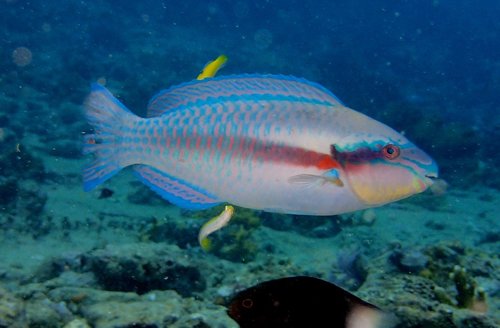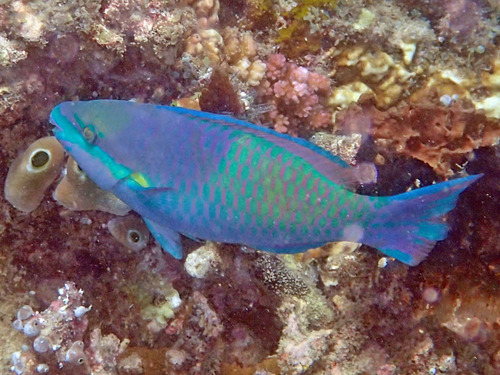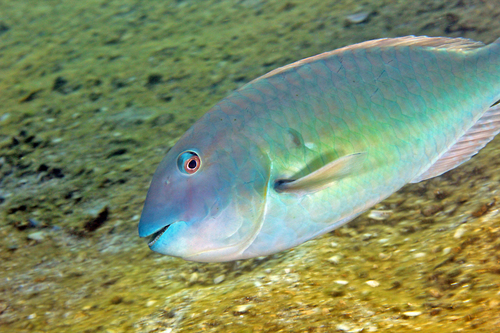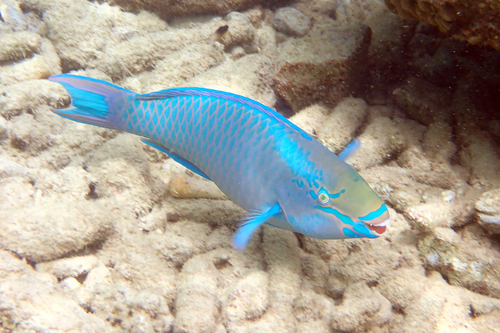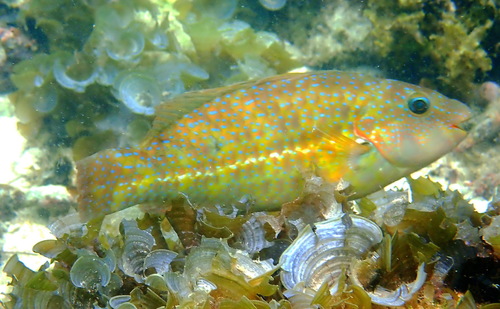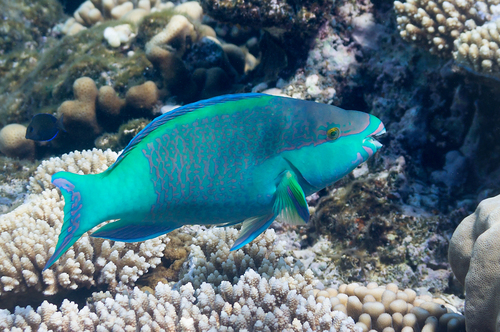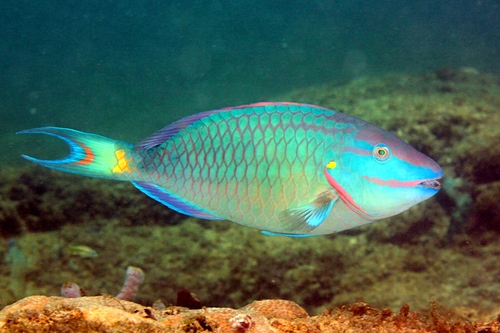
About Sparisoma viride (Bonnaterre, 1788)
Taxonomy and Naming
The stoplight parrotfish, scientifically named Sparisoma viride, is a species of marine ray-finned parrotfish belonging to the family Scaridae.
Geographical Range
It inhabits coral reefs ranging from Florida, the Caribbean Sea, the Gulf of Mexico, and Bermuda, south to Brazil.
Diet
Its primary food source is algae, which it scrapes and excavates using its teeth.
Sex Change Ability
Like most other parrotfish, this species is capable of changing sex.
Common Name Origin
Its common name 'stoplight' comes from a distinct yellow spot located near the pectoral fin, which is only clearly visible on individuals in the terminal life phase.
Habitat
Stoplight parrotfish live in shallow, undisturbed coral reefs within the same range mentioned above.
Diurnal Activity Patterns
They are only active during the day, and spend most of their active time foraging, swimming, or hovering. At night, they hide under coral boulders.
Size-Based Activity Differences
Large individuals usually spend more time swimming and sheltering in crevices, while smaller individuals spend more time hovering.
Population Density Drivers
Stoplight parrotfish reach high population densities in areas with higher algal production.
Home Range Behavior
Adult stoplight parrotfish are site-attached, with limited home ranges.
Florida Keys Habitat Preference
In the Florida Keys, they are most commonly found in areas with high cover of the macroalgae Dictyota. They also show selection for the branching coral Porites porites, though Dictyota acts as an effective recruitment substrate when branching corals are not available.
Ecological Importance
Because it is abundant across the Caribbean, the stoplight parrotfish is ecologically very important in this region.
Reproductive Period
Stoplight parrotfish reproduce year-round.
Mating System
They form harems: territorial terminal phase males defend areas shared with 1 to 14 initial phase individuals that they mate with.
Territorial Defense Triggers
More territorial defense occurs in areas with higher-quality food.
Solitary Male Territoriality
Solitary terminal phase males also defend deeper reef areas from other members of their species.
Territory Structure for Breeding
Territorial terminal phase males typically control territories that contain multiple sexually mature females to breed with.
Testosterone Level Differences
Males that hold territories have vastly different testosterone levels compared to males that do not hold territories.